

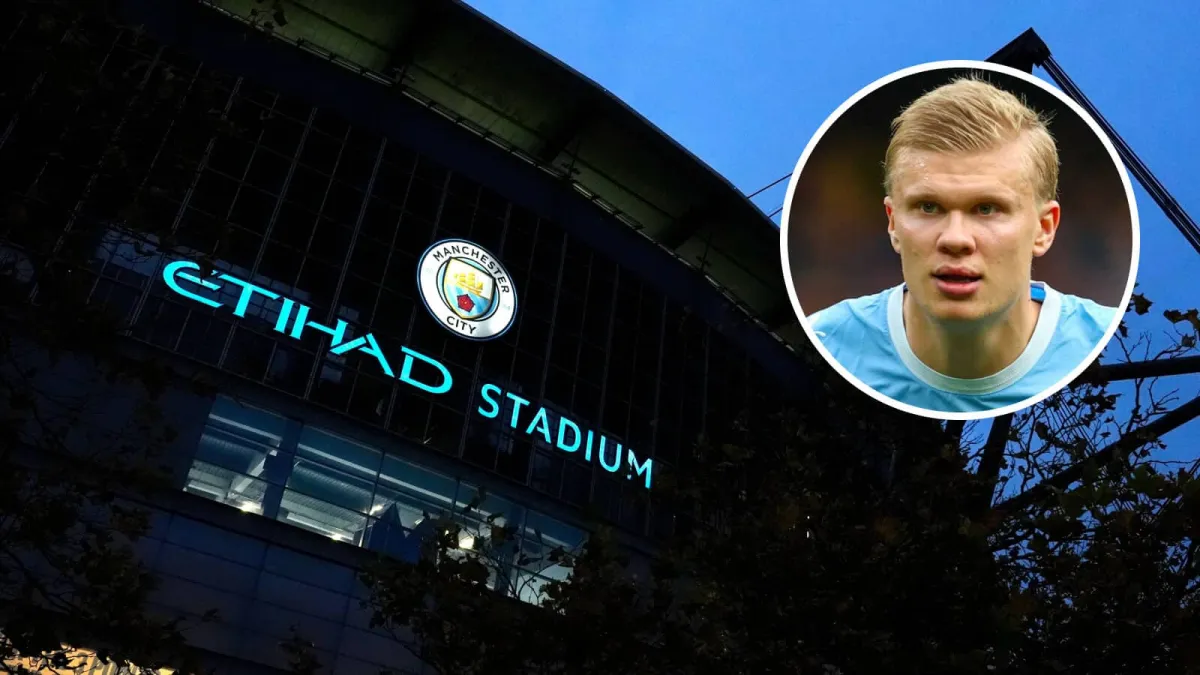
Manchester City’s financial fair play nightmare has reached its most consequential juncture. After years of legal battles, an independent panel has found the club guilty on all but one of the 114 charges levied by the Premier League, covering a span of nearly a decade—from 2009 to 2018. The verdict, which includes allegations of inaccurate financial reporting, rule breaches, and obstruction of the investigation, has sent shockwaves through the Etihad Stadium. Yet, despite the severity of the findings, City’s leadership insists there remains a plausible scenario where they could avoid the most devastating outcomes: relegation or prolonged exclusion from European competition.
The most pressing uncertainty revolves around Erling Haaland. A former Manchester City defender, now speaking exclusively, has suggested the striker may not abandon the Premier League entirely if the club’s punishment is mitigated. ‘The best outcome would be for the findings to be overturned,’ the source stated. ‘Beyond that, City would want to remain in the Premier League and continue competing.’ The implication is clear: Haaland’s future could hinge on whether the club secures a reprieve—whether through an appeal, a reduced penalty, or a last-minute intervention from the Premier League’s governing bodies. If City is spared relegation or a crippling transfer embargo, Haaland’s loyalty to the club may hold. But if the sanctions are severe—points deductions, financial penalties, or a multi-year ban from European football—his departure becomes a near-certainty.
The stakes could not be higher. A mass exodus of international stars, including Haaland, would not only destabilise City’s title ambitions but also trigger a domino effect across English football. Arsenal and Manchester United have already entered the fray, with both clubs reportedly exploring Haaland’s availability as a contingency plan. The former’s pursuit, in particular, has drawn attention, though the striker’s allegiance to City remains unwavering—for now. ‘Player exits seem likely if City are relegated or face years out of European competition,’ the source added. ‘Haaland would be the first name on everyone’s lips.’ The financial fallout of the FFP ruling could force City into a fire sale of its most valuable assets, with Haaland at the centre of the debate.
The road ahead is fraught with tactical and emotional complexities. City’s appeal process could drag on for months, delaying any definitive resolution. Meanwhile, the club’s leadership must navigate internal divisions—players, staff, and even the board—over how to respond. The Premier League’s decision to uphold the majority of charges has already prompted speculation about broader implications for the league’s financial integrity. If City’s punishment sets a precedent, other clubs could face heightened scrutiny, potentially altering the competitive landscape. For Haaland, the decision is personal: does he stay and fight for a club he has built into a global powerhouse, or does he capitalise on a moment of crisis to secure a move to a rival that can offer financial security and a fresh challenge?
One thing is certain: the next few weeks will determine whether Manchester City’s legacy is defined by resilience or reckoning. The Premier League’s verdict has created a paradox—an opportunity for redemption or a catalyst for collapse. For Haaland, the choice may ultimately come down to whether the club he loves can survive the fallout. And for English football, the fallout could redefine the very nature of competition in the league’s most prestigious division.



