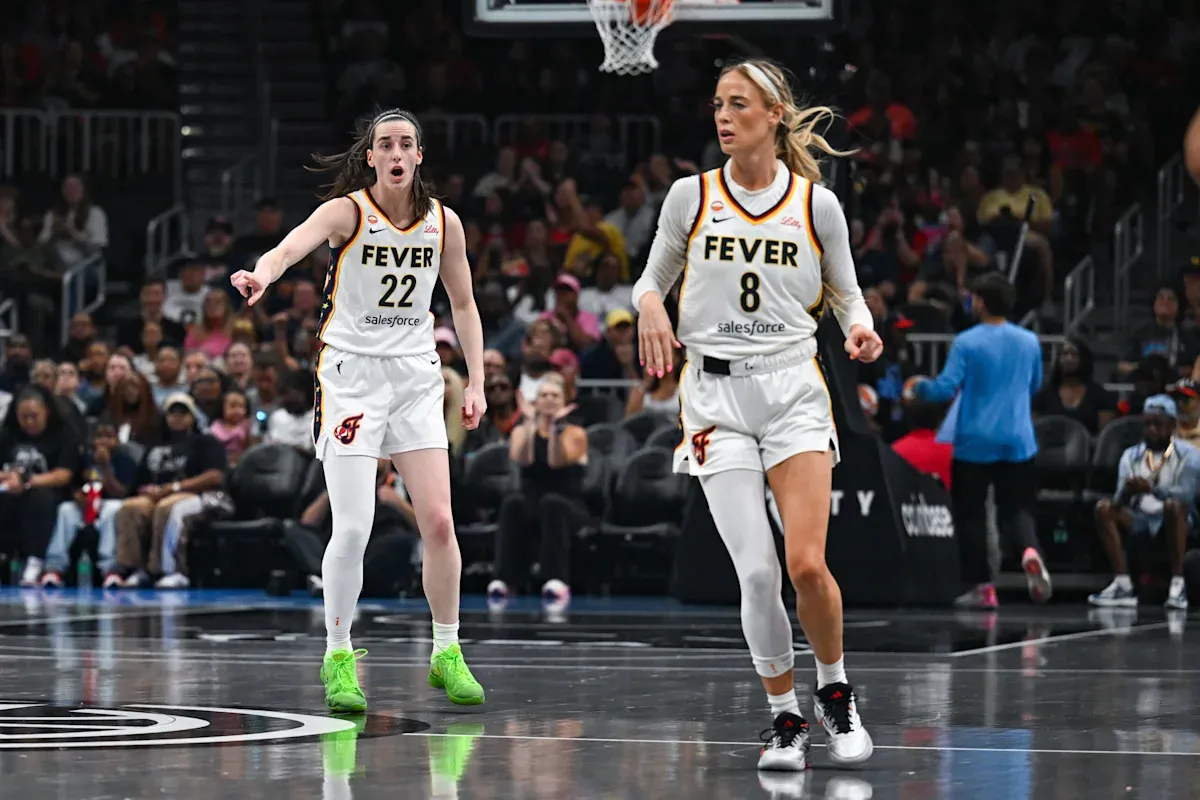
Team USA claimed its fifth consecutive FIBA Women’s Basketball World Cup gold medal in Germany, capping off a flawless 6-0 tournament run without star player A’ja Wilson. Head coach Kara Lawson navigated the squad through a dominant campaign, but one central debate lingering over the tournament was the role and rotation of point guard Caitlin Clark. Making her senior national team debut on the international stage, Clark spent the tournament operating primarily off the bench, prompting widespread discussion surrounding the tactical decisions behind her limited starting opportunities despite her standout impact.
Clark’s individual statistics made a compelling case for an expanded role throughout the tournament. In Team USA’s opening 94-61 victory over China, she logged over 25 minutes off the bench, delivering 14 points on 4-of-9 shooting—including 3-of-7 from beyond the arc—alongside three rebounds and a game-high 11 assists. Following a tough group-stage encounter against Italy, she rebounded emphatically in a 105-64 win over Eliska Joklova’s Czechia team to sweep Group D with a 3-0 record. In the quarterfinals against Hungary, who advanced via a play-in matchup against Japan, Clark tallied 10 points and nine assists while registering a plus/minus rating of +36 during the 108-56 victory. Her overall plus/minus stood as the highest of any player across the entire tournament, putting her on the verge of breaking a 28-year-old Team USA record.
The decision to keep Clark in a reserve capacity drew direct commentary from Indiana Fever teammate Sophie Cunningham, who openly questioned the rotation after the squad secured top honors. Cunningham acknowledged her personal allegiance while making it clear where she stood on her teammate’s contributions. While admitting she might hold a natural bias due to their close bond, Cunningham emphasized that Clark deserved a starting spot in the lineup. She noted that while she does not manage tactical decisions, the primary objective of winning gold was accomplished, adding that with international duties concluded, attention shifts back to domestic play with four regular-season games remaining before the postseason.
Throughout the campaign, debate persisted over how Lawson balanced her rotation alongside core players such as Paige Bueckers, Rhyne Howard, Breanna Stewart, and Napheesa Collier. While many advocated for Clark to join that high-powered group in the starting five, Clark’s efficiency as a primary orchestrator off the bench proved instrumental in maintaining continuous pressure on opposing defenses. By leading the offense and establishing control during critical stretches, she generated game-changing momentum that carried Team USA through every knockout challenge.
Ultimately, Team USA’s depth and tactical adaptability proved insurmountable for their tournament rivals, culminating in another world title. Although questions regarding Clark’s exact standing in the starting hierarchy lingered from the opening night against China to the final whistle in Germany, her historic statistical output firmly established her presence on the international stage. As the squad returns to domestic competition, Clark’s historic debut at the FIBA World Cup leaves behind both a gold medal and a defining milestone in her national team career.