

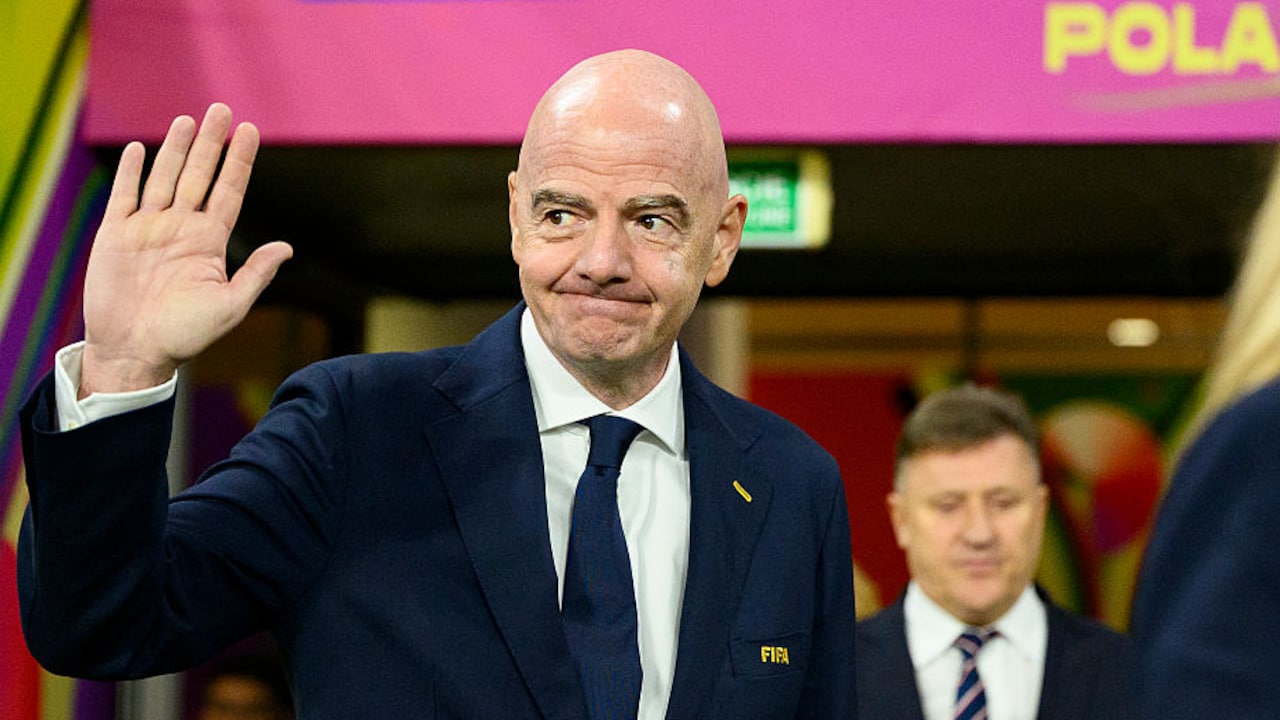
Gianni Infantino’s presidency has always been defined by audacity—whether it was his bold restructuring of FIFA’s financial model or his relentless pursuit of commercial expansion. But even the most seasoned tactician can find themselves outmaneuvered by the game’s shifting winds. Now, as the 56-year-old Swiss faces a wave of criticism unlike any other in his tenure, his bid for a fourth term as FIFA president appears increasingly fragile. The catalyst is the abrupt shelving of his controversial plan to permit private investment in the World Cup, a move that has alienated associations and eroded trust in his leadership.
The fallout has been swift and severe. The English Football Association is among the first to formally withdraw its support, signalling a broader exodus of confidence among member bodies. Former Bank of England governor Mark Carney, whose vocal opposition has gained traction, has made his disdain for Infantino’s direction unmistakable. Yet the most damaging factor may be the absence of a heavyweight challenger—an omission that, if unchecked, could allow Infantino to secure re-election through default.
Infantino’s tenure has been marked by high-stakes gambles, from the 2026 World Cup expansion to the controversial 2022 Qatar tournament. But the private investment plan—once touted as a revolutionary step to modernise FIFA’s finances—was met with such resistance that it was quietly shelved. The backlash exposed a fundamental fracture: while some associations saw potential in leveraging commercial partnerships, others viewed it as a threat to the sport’s integrity.
The plan, known as FIFA Forward Enterprise (FFE), would have created a commercial subsidiary to run FIFA’s biggest events, including the World Cup. It was abandoned in July after opposition from UEFA, the Asian Football Confederation and CONCACAF, with the proposal having explored the sale of a 20% stake in FIFA’s commercial operations for around $4.2 billion.
The stakes could not be higher. A re-elected Infantino would face a FIFA in disarray, with member associations increasingly sceptical of his ability to navigate the sport’s future. His critics argue that his leadership has prioritised short-term commercial gains over long-term governance. Yet if no viable alternative emerges, the “Houdini” analogy becomes more than metaphor: Infantino could slip through the cracks of his own controversies, leaving the associations with little choice but to accept another term.
Infantino has confirmed he will stand for re-election in March 2027, despite the backlash. The deadline for candidates to declare is November 18, and only Swiss former defender Ramon Vega has so far declared an intention to run, though he is unlikely to secure the five federations needed to become an official candidate.
The coming weeks will determine whether FIFA’s leadership crisis is resolved through reform—or simply deferred. Infantino has proposed an independent review of FIFA’s decision-making processes, but several member associations, including Germany, the Netherlands, Sweden and Wales, have questioned whether the reforms go far enough.
The FIFA Council will meet in Zurich on Thursday, October 15, the first formal gathering since the failed plan became public. Infantino will use the meeting to elaborate on his reform proposals, but the broader question remains whether the associations will tolerate another term under a leader whose vision has been repeatedly undermined by his own hand.



