

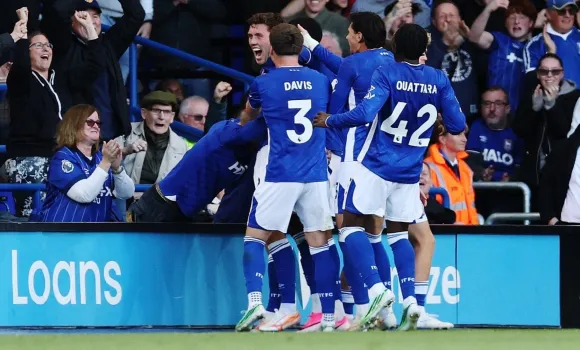
Dara O’Shea’s leadership has never been more evident than in Ipswich Town’s 2-1 victory over Fulham in Matchweek 6, a performance so compelling it has earned him a nomination for the Premier League Player of the Matchweek award. The Town skipper’s ability to dictate defensive shape, intercept key passes, and inspire his team with quiet authority was on full display as Ipswich navigated a challenging fixture. His nomination joins a shortlist of elite performers, including Chelsea’s Jordan Henderson and Joao Pedro, whose own contributions in a dominant 5-1 win over Bournemouth underscore the high caliber of this round’s standout players.
What sets O’Shea apart in this context is his consistency across multiple defensive metrics. While wide players and wingers often dominate top-speed rankings—Anthony Elanga, Anthony Gordon, and Amadou Onana among them—O’Shea’s value lies in his positional intelligence and composure under pressure. His nomination reflects a broader trend where defensive midfielders and central defenders are increasingly recognized for their tactical influence, not just physical attributes. At 24, O’Shea is in the prime years for such development, a phase where his ability to read the game and execute under duress becomes a defining trait.
The match against Fulham was a microcosm of O’Shea’s season: a blend of defensive solidity and occasional counterattacking flair. His nomination arrives at a pivotal moment for Ipswich, a club navigating the complexities of Premier League survival with a mix of youth and experience. O’Shea’s leadership extends beyond statistics—his presence on the pitch elevates his teammates, a quality that resonates in a league where individual brilliance is often overshadowed by collective resilience. Whether he secures the award or not, his performance reaffirms his status as one of the league’s most reliable figures.
For fans and pundits alike, O’Shea’s nomination adds another layer of intrigue to Matchweek 6’s narrative. The shortlist includes players from top-tier teams, each with distinct roles—from Henderson’s experience to Benitez’s attacking prowess at Crystal Palace. Yet O’Shea’s inclusion speaks to the depth of talent across the Premier League, where even mid-table clubs can produce standout performances. His nomination also highlights the evolving criteria for such awards, where defensive mastery and tactical awareness are now as valued as traditional attacking metrics.
As the voting period closes, O’Shea’s candidacy will be judged not just on his individual stats but on his impact on the game’s outcome. In a league where every point counts, his leadership in Ipswich’s victory was the difference between progress and stagnation—a reminder that the Premier League’s most memorable players are often those who make the intangibles tangible.



