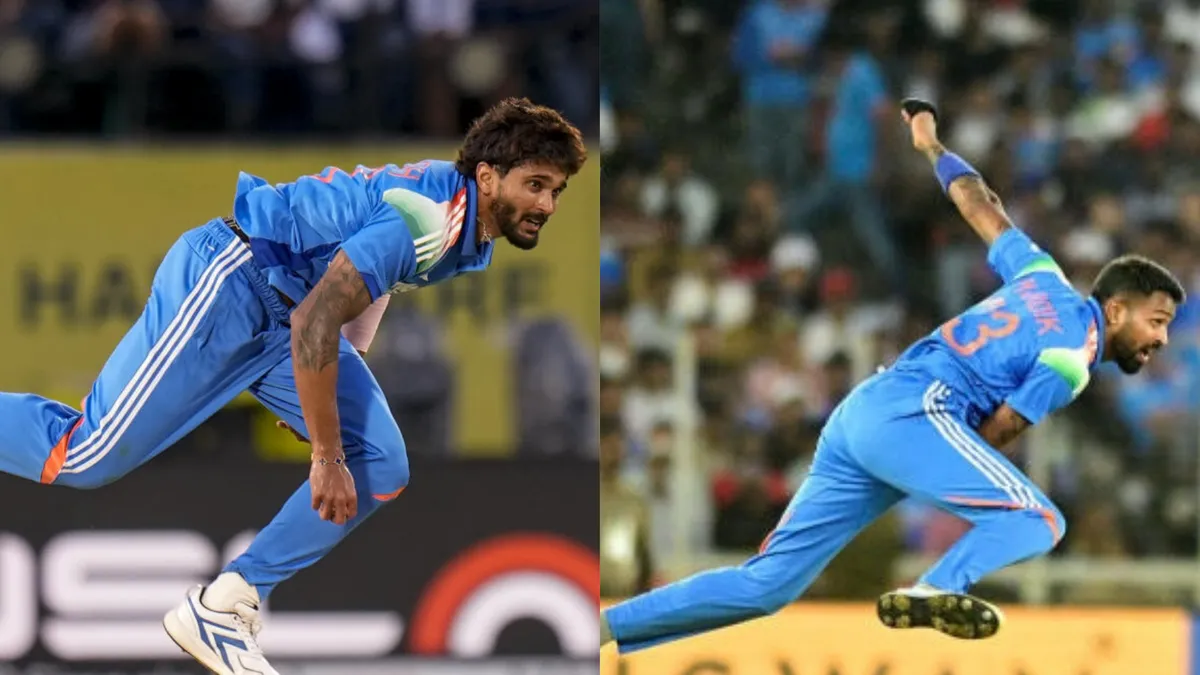
India’s ODI World Cup preparations have been derailed by an unexpected crisis: the prolonged absence of Hardik Pandya, a player whose ability to dictate games with both bat and ball has been central to the team’s recent success. Now, with the third and final ODI against Afghanistan in Chennai just days away, selectors face an urgent question—one that extends far beyond this series. Can Nitish Kumar Reddy, the emerging all-rounder, fill the void left by Pandya’s injury, or will India’s World Cup campaign in South Africa next year begin with a structural weakness?
The injury to Pandya isn’t just a setback; it’s a strategic headache. The all-rounder, who has been India’s most consistent performer in limited-overs cricket over the past two years, has been ruled out of the Afghanistan series due to a leg strain that has persisted despite intensive rehabilitation. His exclusion isn’t just a loss of a key performer—it’s a loss of a player who, in the past 18 months, has delivered in high-pressure moments with both bat and ball. In ODIs, Pandya’s ability to accelerate the scoring rate while maintaining economy with the ball has been invaluable, particularly in the middle overs where India’s balance often wavers. His absence forces the team to rely on a squad that, while talented, lacks the same depth in all-rounders.
Enter Nitish Kumar Reddy, the 26-year-old who has been quietly building his case as India’s future No. 7. Assistant coach Ryan ten Doeschate has already signaled Reddy’s potential, describing him as the ‘natural successor’ to Pandya—a role that demands more than just batting or bowling prowess. It requires the ability to anchor an innings, disrupt opposition batting lines, and adapt to the demands of a format where every wicket and every run matters. Reddy’s journey to this point hasn’t been without challenges. Since the T20 World Cup in 2024, he has shown glimpses of his potential, particularly in the ODI format where his ability to rotate strike and contribute with the ball has been noted. However, the question remains: can he replicate Pandya’s consistency when it counts most?
The stakes couldn’t be higher. The 2027 ODI World Cup in South Africa is less than 15 months away, and India’s preparation for it begins now. The Afghanistan series is a critical warm-up, but the real test will come in the months leading up to the tournament, where India will need to balance domestic commitments, franchise cricket, and international obligations. Pandya’s injury has already pushed his return further down the road, and his absence from the squad for the Asian Games is another sign that his road back will be a gradual one. For Reddy, this means an accelerated timeline—he must prove in the next 12 months that he can handle the pressure of India’s top-tier limited-overs cricket, where even a single weak performance can have ripple effects across the squad.
What’s clear is that India’s ODI setup is at a crossroads. The team has long relied on a handful of all-rounders to carry the burden, but the departure of Pandya—even temporarily—has exposed a fragility in that structure. Reddy’s rise is inevitable, but his readiness is the variable. The Afghanistan series will be a test, but the real measure of his potential will come in the white-ball swing between now and 2027. For now, India’s selectors are watching closely, knowing that the World Cup isn’t just about talent—it’s about who can deliver when it matters.