The verdict has arrived. Manchester City have been found guilty on 114 of 115 charges for alleged breaches of Premier League financial regulations, a ruling that could redefine the boundaries of football governance and force the club into uncharted territory.
The independent commission’s decision—delivered after an 18-month investigation—leaves little room for doubt: the club’s financial conduct has been deemed so egregious that even the most hardened skeptics must now confront the implications.
With an appeal already in motion, the next phase will determine whether City faces fines, point deductions, or—most dramatically—stripped titles, a prospect that would shatter the club’s recent dominance and reshape the Premier League’s landscape.
The scale of the ruling is unprecedented.
While Everton and Nottingham Forest were each docked points for a single breach in recent years, City’s 114 violations suggest a pattern of systemic non-compliance that stretches across multiple seasons.
The charges, first filed in February 2023, targeted everything from salary structures to transfer spending, with the hearing itself lasting eight weeks—a testament to the complexity of the case.
Pep Guardiola, who left the club this summer, had reportedly been assured by leadership that the allegations were unfounded, a claim now overshadowed by the commission’s verdict.
The financial rules in question were designed to prevent the kind of aggressive spending that has defined City’s era under the ownership of the Abu Dhabi United Group, yet the club’s defense—if it exists—has failed to sway the panel.
The fallout extends beyond the boardroom.
Arsenal fans, who have long accused City of exploiting loopholes to outspend rivals, will point to this ruling as proof of a system rigged in favor of the wealthy.
Liverpool and Manchester United, who finished second to City in back-to-back seasons, may also argue that their past struggles were compounded by an uneven playing field.
Yet the most immediate casualty could be the club’s relationship with its supporters.
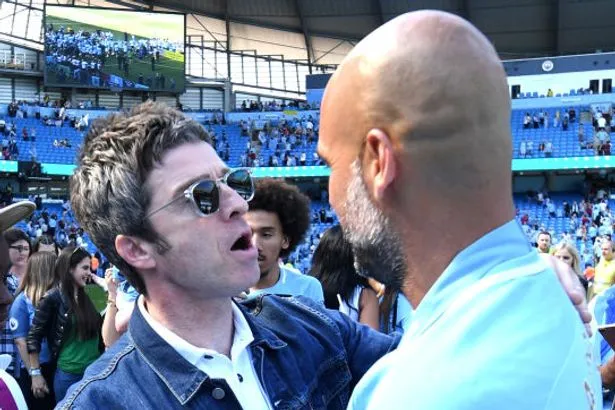
Noel Gallagher, whose Oasis tour will return to Manchester next year, has reacted with shock and frustration.
‘Whatever goes on in the boardroom, it’s nothing to do with the supporters or the players,’ he stated. ‘Our focus as fans is always on the pitch, and we know what we saw—they won it on the pitch.’
His plea to Premier League authorities to avoid punishing the fans underscores a broader tension: how much of this scandal is about governance, and how much is about the spectacle of football’s elite being held to account.
The appeal process will now become the focal point, with City’s legal team likely arguing for a reduction in penalties or a more nuanced interpretation of the rules.
Yet the sheer volume of violations suggests little room for leniency.
If the Premier League proceeds with the most severe measures—including title stripping—it would mark a watershed moment, forcing the club to confront the consequences of its financial strategy.
For the first time in decades, Manchester City’s dominance could be tested not just on the pitch, but in the courts of football’s regulatory bodies.
The question now is whether the game’s governing bodies will treat this as a one-off failure or the beginning of a reckoning for the clubs that have long operated beyond traditional financial constraints.