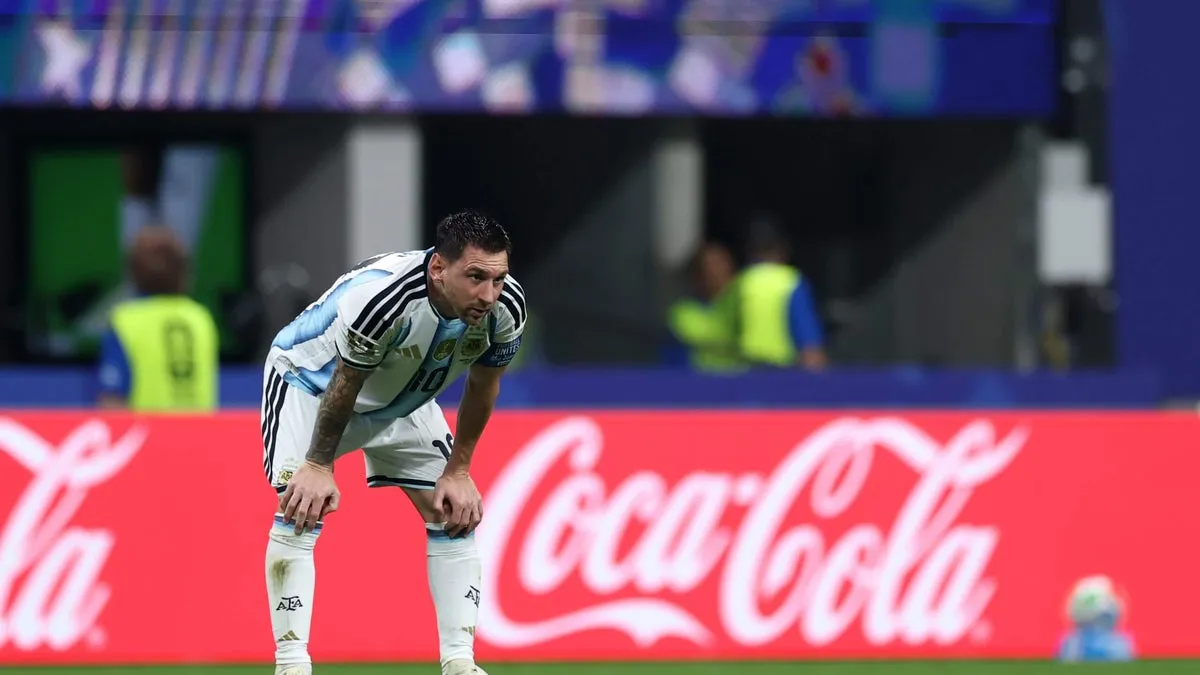
The 2026 FIFA World Cup was supposed to be a celebration of football’s global unity—but for millions of viewers, it was also an unrelenting barrage of branding for products that undermine public health. New research from the University of Bristol and the University of Oxford has quantified the extent of this phenomenon, revealing that unhealthy food and drink brands dominated sponsorship, appearing in over 93,000 visible instances across the tournament’s 104 matches. That translates to one brand appearance every seven seconds of live play, with logos for companies like Coca-Cola, McDonald’s, and Lays dominating the visual landscape for nearly a quarter of the total footage analyzed—39.3 hours in total.
The study, the first of its kind to examine branding across an entire World Cup, found that unhealthy food and drink brands accounted for 70.4% of all visible sponsorship, far outpacing other categories. Prediction markets (9,360 appearances), alcohol (9,266), gambling (6,429), and cryptocurrency (2,632) followed, but none came close to the saturation of junk food and beverage marketing. Dr. Elisa Becker, a co-author from the University of Oxford, warned that this saturation is not just a coincidence but a deliberate strategy: ‘Sport should be part of the solution to poor health—not one of the world’s most powerful advertising platforms for the products driving it.’ The data makes clear that for viewers, particularly children and young people, the World Cup has become an unavoidable conduit for marketing that contradicts the tournament’s own health and social messaging.
The implications are stark. The study’s authors emphasize that exposure to such branding is not passive—it is linked to increased consumption of unhealthy products, alcohol, and gambling behaviors, with particularly harmful effects on younger audiences. Dr. Raffaello Rossi, a co-author from the University of Bristol, noted that the World Cup’s global reach—billions of viewers across three host nations—amplifies the impact: ‘This is an unparalleled platform for advertising, and the sheer scale of branding makes it impossible for viewers to escape.’ The concentration of sponsorship among a handful of global brands further ensures that the most harmful products are the most visible, reinforcing cycles of consumption that public health campaigns struggle to counter.
Critics have long questioned FIFA’s sponsorship policies, but this study provides hard evidence of the scale of the issue. The dominance of unhealthy food and drink brands—more than seven times that of alcohol or gambling—suggests a prioritization of commercial interests over health and social responsibility. As the World Cup expands to include more nations and matches, the problem is likely to worsen unless there is a fundamental shift in how sponsorship is regulated. The findings should serve as a wake-up call: if football is to remain a force for positive change, it must confront the contradiction between its ideals and the brands it promotes.
The research leaves little room for debate. The World Cup is not just a sporting event; it is a global advertising spectacle, and the brands that benefit from its exposure are often those that harm the very communities it claims to unite. Until FIFA and its partners take meaningful steps to rebalance sponsorship priorities, the tournament will continue to serve as a powerful—but problematic—platform for the products that define modern public health crises.