

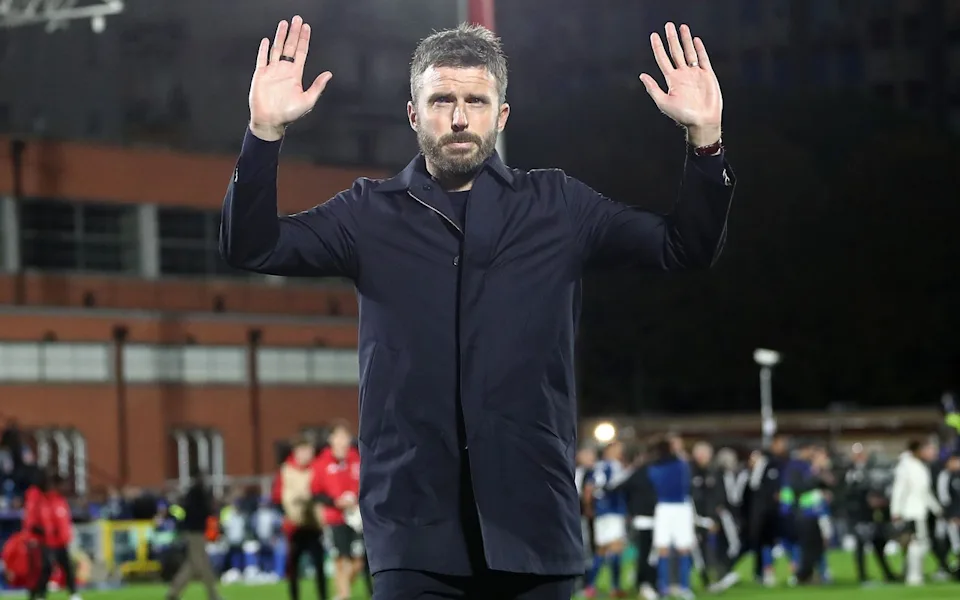
Manchester United’s current predicament is not merely a managerial crisis—it is a structural one, and the weight of blame cannot be pinned solely on Michael Carrick. That assessment comes from a respected football commentator who argues that the club’s recent decline stems from deeper issues: a squad that lacks the necessary depth, tactical flexibility, and cohesion to compete at the highest level. Carrick, now in his first full season as head coach, is tasked with extracting performance from a group of players who, by his own admission, are ‘not particularly good enough’ for the demands of the Premier League.
The analyst’s critique underscores a critical truth: Carrick inherited a squad shaped by years of financial instability and poor decision-making. The summer transfer window failed to address glaring deficiencies, particularly in defensive positions and forward play—areas where United’s recent form has been most exposed. His predecessor, Erik ten Hag, left behind a squad that, despite its individual talent, lacked the tactical discipline and leadership to sustain success. Carrick’s challenge is not just to motivate but to rebuild a hierarchy from the ground up, a task made harder by the club’s reluctance to invest in high-profile reinforcements. The result has been a team that struggles to maintain intensity, a hallmark of United’s recent struggles.
Yet the pressure on Carrick is not just tactical—it is existential. Internal reports suggest that while the club’s leadership remains divided on the future of its managerial structure, there is no immediate push to replace him. This stance, according to insiders, reflects a cautious approach: United’s board recognizes that Carrick’s tenure has been defined by survival rather than failure, and they are unwilling to accelerate a transition that could destabilize the squad further. His survival through the tenure of Ruben Amory and ten Hag speaks to his resilience, but it also highlights the precarious nature of his position. The question now is whether he can deliver sustained improvement before the window to act closes entirely.
What remains clear is that Carrick’s success—or failure—will be measured not just by results but by his ability to navigate a club in flux. United’s recent form has been a symptom of broader issues, but the responsibility for addressing them ultimately rests with those in charge. For now, Carrick remains the focal point, a man tasked with turning a struggling project into a competitive force. The road ahead is fraught with challenges, but the path forward is no longer about whether he will leave—it is about whether he can stay long enough to change the trajectory of a club at a crossroads.



