

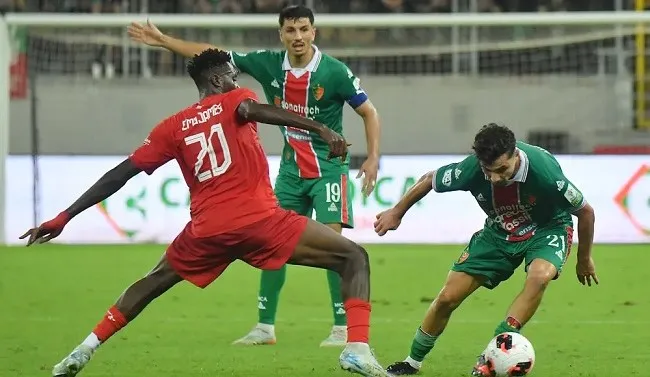
Enugu Rangers’ 3-0 demolition by Algerian champions MC Alger in the CAF Champions League has laid bare the stark realities of Nigerian football’s competitive deficit, with Rivers United assistant coach Olanrewaju Yemi Daniel delivering a searing critique of the sport’s structural shortcomings.
Daniel, who once led Enyimba to NPFL success as the league’s youngest head coach, has repeatedly warned that Nigerian clubs lack the resources, infrastructure, and competitive depth to match their North African rivals. His comments, made following Rangers’ elimination—a club that had qualified consecutively for continental group stages—are not mere tactical observations but a diagnosis of systemic underdevelopment. ‘We don’t have what it takes to compete with a lot of African clubs,’ he stated bluntly. ‘Our budgets, facilities, and level simply do not reach those people.’ The remarks, met with criticism when first voiced, underscore a truth few in Nigerian football dare to articulate publicly: the gap is not just tactical but existential.
Daniel’s perspective is rooted in firsthand experience. As a former Enyimba manager, he navigated the NPFL’s challenges while observing the scale of continental competition. The disparity he describes extends beyond individual performances to the very foundations of club football in Nigeria. Training facilities, player development pipelines, and financial stability—all critical to sustained success—remain woefully inadequate when measured against the standards of CAF’s elite. Even Rivers United, a club that has repeatedly punched above its weight in continental qualifiers, faces an uphill battle when the group stage demands a different level of preparation.
The implications of Daniel’s assessment are profound. For Nigerian football to progress, systemic reforms are not optional but necessary. The NPFL’s top clubs must either invest in infrastructure that aligns with continental competition or accept that their ambitions will remain constrained by the current reality. The exit of Rangers—once a beacon of Nigerian football’s continental aspirations—serves as a stark reminder that without meaningful change, the cycle of disappointment will persist. Daniel’s words, though bitter, may finally force the conversation Nigeria’s football leaders have long avoided.



