

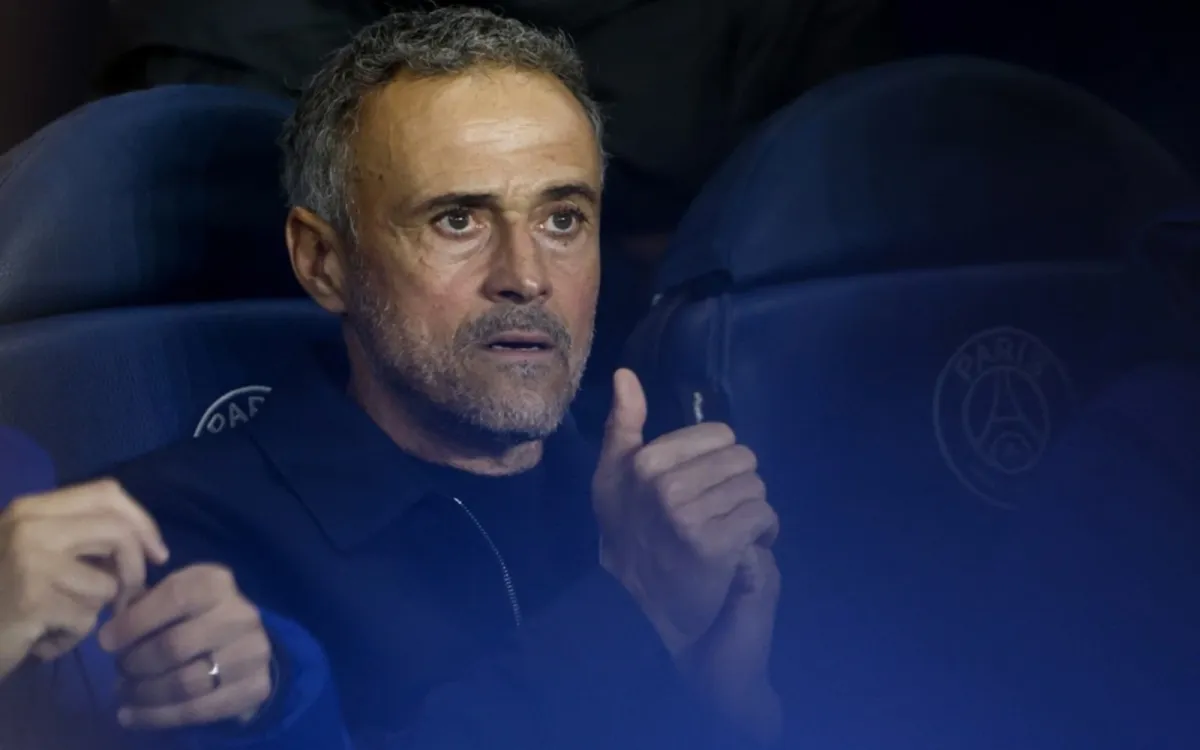
Paris Saint-Germain’s Ligue 1 campaign has entered its most critical phase, and Luis Enrique’s response to the rescheduling of their clash with Lyon—now set for Monday—reveals a manager who refuses to be distracted by logistical inconveniences. ‘We do not care,’ he stated bluntly, framing the delay as immaterial to the team’s focus. The words carry weight given PSG’s current position: 14 points from seven games, leading the table by goals scored over Lille and Monaco, with a visit to Lorient looming on Sunday. Yet the manager’s dismissive tone masks a more complex reality. The team’s recent form—four straight Ligue 1 wins, including six on the bounce—has been built on tactical pragmatism, not just individual brilliance. Rotation has been the cornerstone, with key players like Dembélé and others rested in preparation for Champions League fixtures against Manchester City and Barcelona. The reschedule, while inconvenient, does not alter the underlying strategy: PSG’s priority remains consistency, not administrative efficiency.
The tactical flexibility on display against Strasbourg Alsace on Saturday underscored this approach. PSG entered the match with a rotated side, a common practice in modern football where managers balance short-term competitiveness with long-term sustainability. Yet even in such a setup, the team’s resilience was evident. Dembélé, one of the rested players, made his impact in the 77th minute, setting up Illia Zabarnyi’s equalizer before scoring himself in the 85th. His third goal, added in injury time by Désiré Doué, completed a 3-1 victory that extended PSG’s unbeaten run to 12 games in Ligue 1. Enrique’s words to Dembélé—‘If you play for 25 minutes and give an assist and score a goal, you don’t need to play any longer’—reveal a philosophy that values contribution over duration. It is a pragmatic stance, one that acknowledges the physical toll of a season where European commitments demand peak performance at unpredictable intervals.
Dembélé’s playful remark about holiday leave—‘He’s the boss! If he wants holiday, he makes the request; he will get it’—was not merely a jest but a reflection of the team’s dynamic. Enrique’s response, while framed as lighthearted, carried a deeper message: ‘I am always open if players need rest.’ The comment exposes a tension inherent in modern football, where players are both machines and individuals. ‘Ousmane and the other players are not machines,’ Enrique clarified, ‘and they will not always be at their best.’ The admission is rare in a sport that often glorifies relentless endurance. PSG’s recent performances suggest they have found a balance—one where tactical acumen compensates for occasional fatigue. The team’s ability to rotate without sacrificing competitiveness is a testament to Enrique’s management, but it also highlights the human element: even the most elite athletes require periods of recovery.
Barcelona await on Tuesday, and the tactical adjustments PSG make in their next Ligue 1 fixture against Lorient will be crucial. The reschedule with Lyon, while inconvenient, does not alter the fundamental challenge: maintaining momentum in both domestic and European competitions. PSG’s current trajectory—top of the table by goals scored, with a string of wins—positions them as serious contenders. Yet the path forward is not without obstacles. The physical demands of the season, the need for rest, and the tactical intricacies of facing Barcelona all demand precision. Enrique’s approach, blending pragmatism with adaptability, may be the key to navigating these challenges. For now, the focus remains on the next match, the next assist, the next goal. The reschedule is a footnote; the game is the priority.



