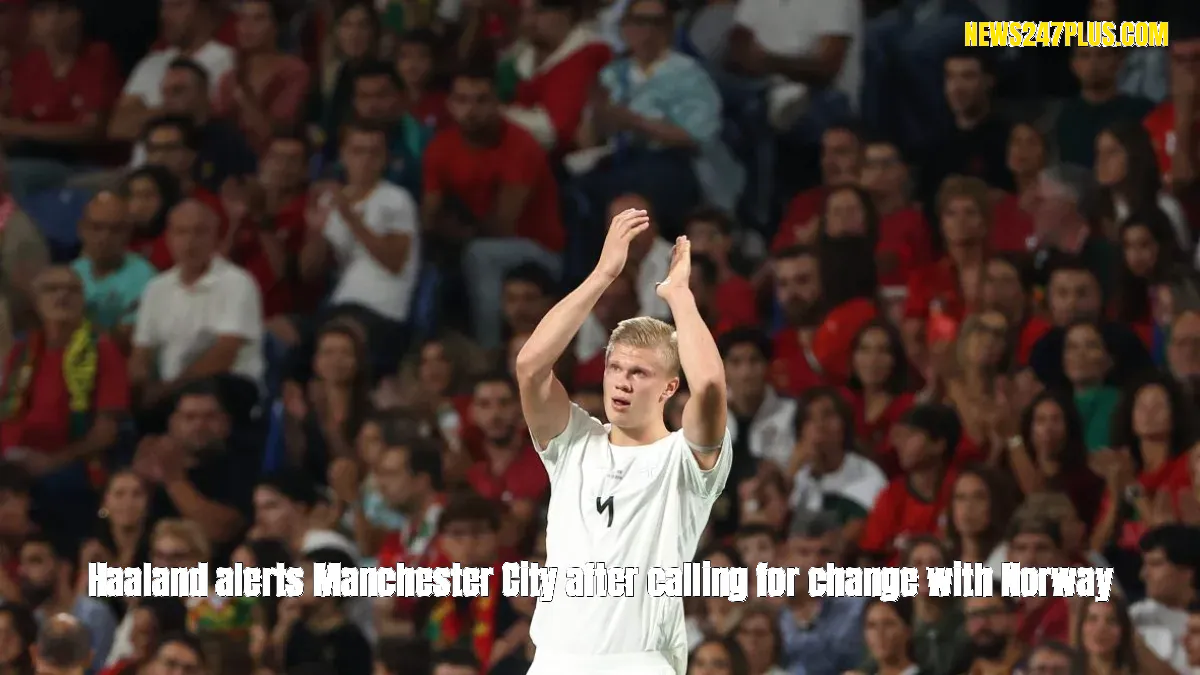
The image of Erling Haaland limping onto the bench during Norway’s 2-1 Nations League defeat to Portugal was not just a moment of tactical necessity—it was a public signal. The Manchester City striker, who had just delivered a goal and an assist in a 3-0 win over Brazil earlier in the tournament, made his intentions clear with a gesture to the bench, asking to be substituted in the 67th minute. His departure came after a ‘heart-to-heart conversation’ with Norway coach Ståle Solbakken, who acknowledged the striker’s concerns about his workload ahead of a match that would ultimately expose his physical limits.
Haaland’s benching was not an isolated incident. The striker has repeatedly spoken about the toll of balancing Norway’s historic World Cup campaign with his Premier League duties, a schedule that has seen him play every minute of Manchester City’s domestic fixtures while also leading his national team to their first World Cup in 28 years. His post-match reflection—‘How is it to be Erling Haaland right now after being in the quarterfinals with Norway and going straight to holiday?’—revealed a man both exhilarated and exhausted by the dual demands. The fact that he described the experience as ‘quite nice’ belies the reality: the physical and mental strain of maintaining elite performance across two continents is no small feat. For a player who has already led the Premier League in goals three of the last four seasons, the question now is whether his body can sustain the pace required to challenge the all-time scoring record he is on track to break.
The timing of this revelation could not be more critical. Manchester City’s return to Premier League action looms, with a trip to Liverpool on the horizon—a fixture that will test not just Haaland’s fitness but also the club’s resolve amid the ongoing financial scandal that has dominated headlines. While Haaland himself has remained unfazed by the controversy, his public display of fatigue raises legitimate concerns about his availability. The striker’s ability to deliver in high-pressure moments, whether for club or country, has been his defining trait, but the cumulative effect of his workload cannot be ignored. His limping exit in Porto was a rare glimpse into the human cost of his success, a moment that underscores the delicate balance between ambition and sustainability.
For Norway, Haaland’s performance has been nothing short of transformative. His leadership in the World Cup—where he became a global phenomenon, particularly in the United States, where every game was broadcast widely—has redefined the nation’s footballing identity. Yet even as he celebrates the historic achievement of guiding Norway to the quarterfinals, the reality of his workload remains. The striker’s comments about the campaign ‘changing Norway’ and ‘changing him’ carry weight, but the next chapter will hinge on whether he can carry that momentum into the Premier League without succumbing to injury. The challenge for Manchester City now is to ensure that their most valuable asset does not become a liability—either through fatigue or, worse, an avoidable setback.
Haaland’s situation is a microcosm of modern football’s paradox: the same players who dominate the game’s biggest stages are often the most vulnerable to its demands. His public acknowledgment of fatigue is a rare but necessary reminder that even the greatest talents are not invincible. For Manchester City, the question is no longer whether Haaland can perform—it’s how they will manage his workload to ensure he does so consistently. The answer will determine whether his legacy as a Premier League legend is built on records or compromised by the very pressures that have made him a superstar in the first place.