

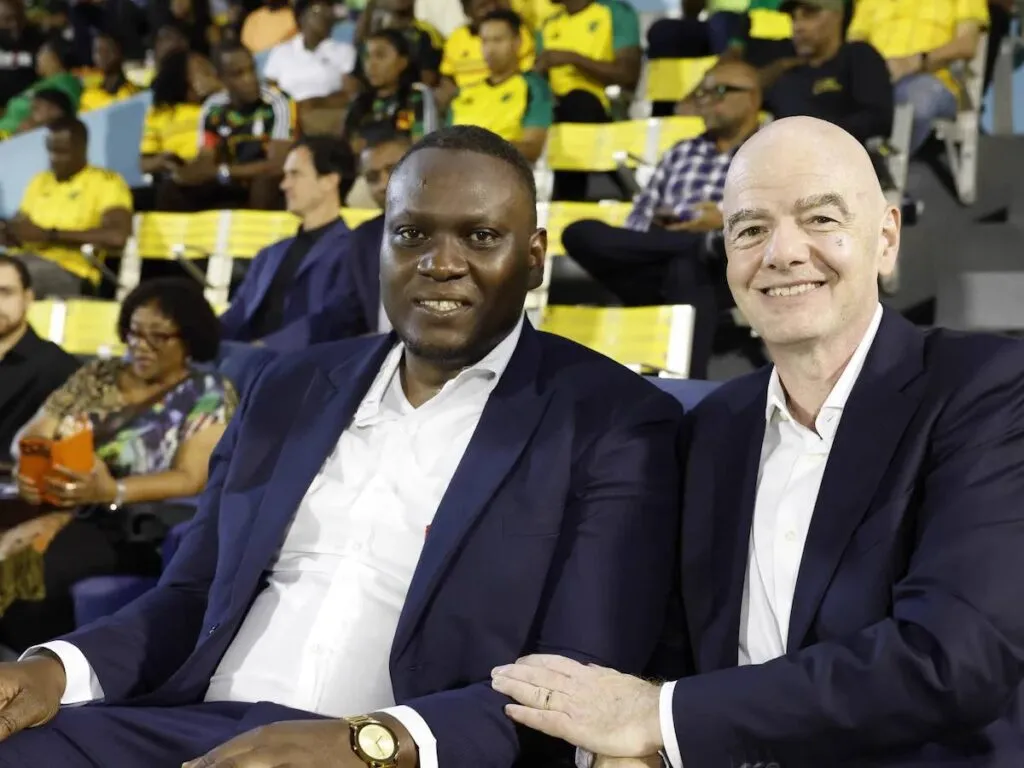
For the football associations of the Caribbean Football Union, FIFA President Gianni Infantino is not just a figurehead—he is a lifeline. The funding he delivers, whether through expanded World Cup quotas, direct infrastructure grants, or grassroots development programs, is not an optional perk but a necessity. In a region where resources are scarce and the path to global recognition is steep, the promise of FIFA’s financial support—often accompanied by high-profile visits, turf-cutting ceremonies, and political photo opportunities—is hard to resist. Yet beneath the surface of these gestures lies a fundamental tension: the money from Zurich comes with strings attached, and the Caribbean’s football leaders must decide whether the benefits outweigh the compromises.
The calculus is simple. Smaller nations, including Jamaica Football Federation President Michael Ricketts, have framed their support for Infantino’s re-election as a pragmatic choice, arguing that his track record delivers tangible results. His administration has secured expanded World Cup participation for CFU nations, injected capital into local stadiums, and provided grants that would otherwise be unattainable. For a region where football is both a passion and a pathway to economic opportunity, these outcomes are undeniably valuable. But the trade-offs are not. Infantino’s leadership has repeatedly demonstrated a willingness to prioritize commercial expansion and geopolitical alliances over the principles that define the game. The 2022 World Cup, for instance, was a case study in monetization at the expense of authenticity, with questionable affiliations and a creeping commercialization that threatened the soul of international football. His shelved proposal to sell off future FIFA commercial rights—including those for the World Cup—further exposed a leadership style that treats the sport’s heritage as collateral for financial gain.
The irony is not lost on those who benefit from Infantino’s policies. Compared to the traditional European powerhouses, which often hoard their influence and resources, Infantino offers Caribbean nations direct access and immediate cash. His administration has made it clear that development is a priority, and no one can blame smaller federations for demanding their fair share of FIFA’s vast reserves. Yet the question remains: at what point does financial dependence become a form of surrender? By aligning so closely with an administration that consistently bends the sport’s values for financial and political gain, CFU nations risk allowing the erosion of the very principles they are trying to uphold locally. The funding they receive may expand their World Cup fields and improve their infrastructure, but it also comes with the risk of normalizing a leadership model that treats football’s integrity as secondary to profit.
The Caribbean’s football leaders are at a crossroads. On one side is the promise of continued growth, with more opportunities for players and greater visibility for the region’s leagues. On the other is the specter of a sport that, over time, may bear little resemblance to the one they grew up admiring. The decision to back Infantino for another term is not just a political one; it is a moral one. It requires asking whether the short-term gains of FIFA funding are worth the long-term cost of compromising the values that make football more than just a game. For now, the answer remains unclear, but the stakes could not be higher. The Caribbean’s football future may hinge on whether they can demand more than just money from Zurich—or if they will settle for the illusion of progress at the expense of the game’s soul.



