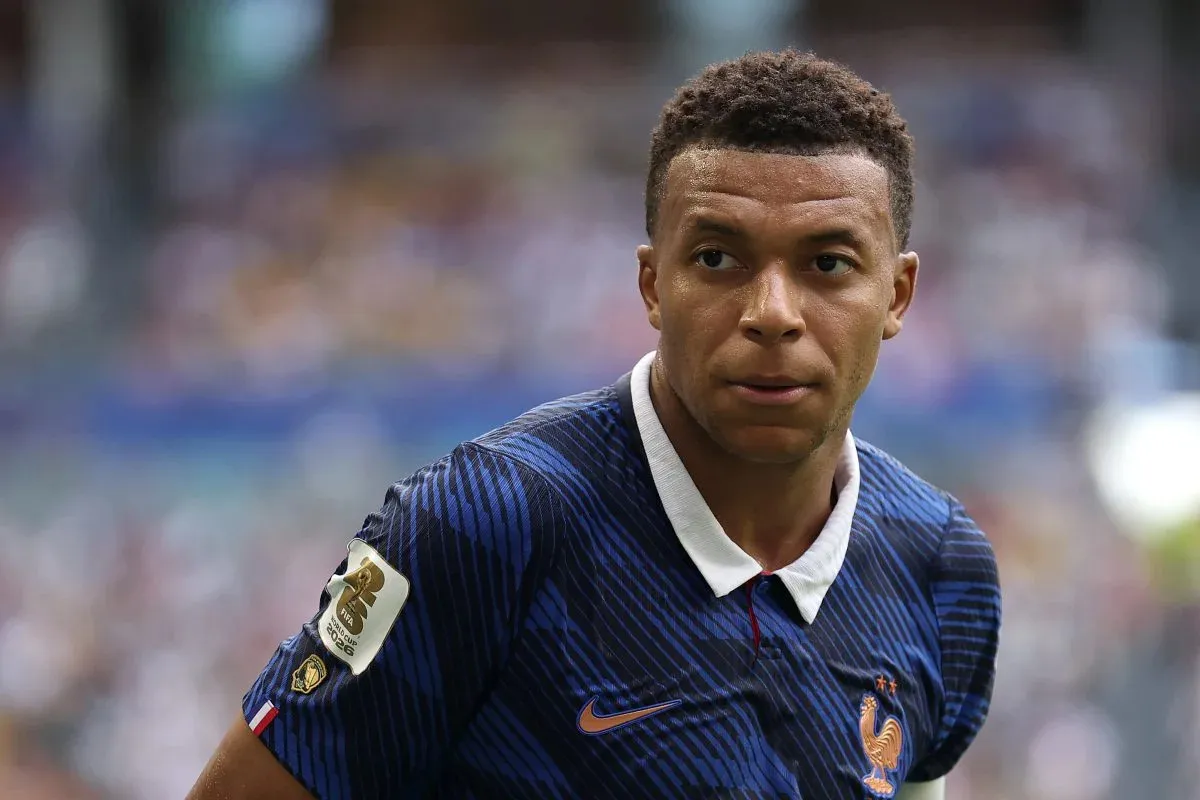
The arrival of Zinedine Zidane as France’s manager has already sparked tactical intrigue, and his first major decision—repositioning Kylian Mbappé on the left wing—could reshape Les Bleus’ attacking identity. While Mbappé has spent the last two seasons as a central striker, his formative years at Monaco and PSG were defined by his fluidity on the left flank, a position where he has scored 21 goals in 32 international starts. Zidane’s preference for this role isn’t just nostalgia; it’s a tactical reset. With Olivier Giroud’s retirement and Ousmane Dembélé’s emergence as a false nine, Mbappé’s return to the wing could create a dynamic where he operates as a direct threat, while Dembélé drops deeper to link play—a system that has proven effective in recent World Cup qualifiers.
The left wing isn’t entirely unfamiliar territory for Mbappé. He played there consistently during France’s 2022 World Cup campaign, where his movement and finishing dragged Les Bleus to the final. Yet his most iconic international role came in 2018, when he operated on the right flank in Didier Deschamps’ 4-2-3-1 formation, a position that allowed him to exploit space between the lines. Zidane’s decision to revert to the left could be a deliberate nod to Mbappé’s versatility, but it also signals a broader shift in France’s attacking philosophy. The left wing offers Mbappé a different kind of freedom—one where he can cut inside, stretch defenses, and create space for Dembélé to operate as a deeper-lying playmaker. This isn’t just about Mbappé’s comfort; it’s about optimizing France’s front three in a way that Deschamps’ rigid central striker role never fully achieved.
The tactical implications extend beyond Mbappé’s positioning. With Dembélé now set to play as a false nine, France’s midfield could shift to accommodate Michael Olise on the right wing—a role that aligns with his direct, attacking style. This would create a fluidity where both wingers feed into Dembélé’s movement, while Mbappé’s directness on the left could provide a counterbalance to Olise’s more traditional wide play. The system has shown promise in recent friendlies, where France’s defensive solidity improved when Dembélé moved wider, allowing him to track back and shield the midfield. If Zidane’s vision holds, this could be the missing piece in France’s transition from Deschamps’ more conservative approach to a more fluid, possession-based attack.
Yet the repositioning isn’t without risks. Mbappé’s recent form at Real Madrid has been inconsistent, and his return to the left wing—after years as a central striker—could take time to adjust to. The left flank demands a different kind of movement: more direct runs, sharper cuts inside, and an ability to hold up play when needed. For a player used to operating as a pure finisher, this could be a significant adaptation. But if history is any indicator, Mbappé’s ability to thrive in unfamiliar roles is precisely what makes him France’s most valuable asset. His 2018 World Cup heroics on the right flank proved he could excel in unexpected positions, and his early career at Monaco—where he was a left-winger before becoming a striker—shows he’s built for versatility.
Zidane’s first press conference made it clear: this isn’t just about Mbappé’s comfort. It’s about reinventing France’s attack. With Giroud gone and Dembélé now firmly established as a creative force, the left wing could become the most dangerous position in Les Bleus’ arsenal. The question now isn’t whether Mbappé can adapt—it’s whether France’s opponents will be ready for the new Mbappé: a player who can dominate on the left, dictate the tempo from the right, and still finish like no other. If Zidane’s experiment works, it could be the most significant tactical overhaul in France’s recent history.