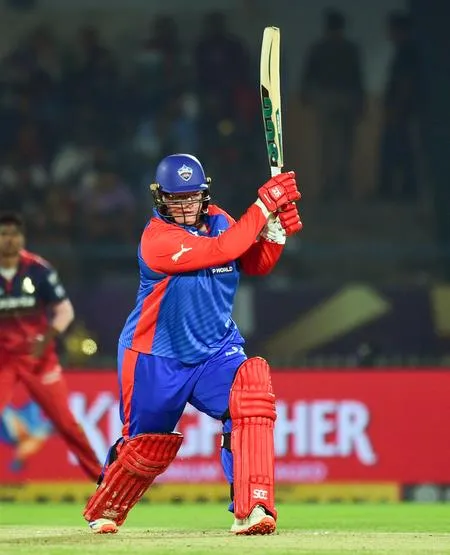
The Women’s Premier League’s 2027 edition has already been reshaped by personnel decisions that ripple far beyond the domestic stage. South Africa wicketkeeper-batter Lizelle Lee will not be available for the tournament due to personal reasons, a development that leaves her team’s batting depth compromised at a pivotal moment in the league’s schedule.
Lee’s absence isn’t merely a roster adjustment—it’s a tactical void. Her ability to anchor innings while providing firepower in the lower order has been a cornerstone of South Africa’s limited-overs dominance.
Teams in the WPL will now scramble to fill the gap, whether through acquisitions in the transfer window or by accelerating the development of emerging talents.
The league’s competitive balance hinges on such variables, and Lee’s withdrawal underscores how quickly dynamics can shift in a franchise-based competition where every player carries weight.
Meanwhile, the Gujarat Giants’ decision to release England opener Danni Wyatt-Hodge adds another layer of complexity. Head coach Michael Klinger’s rationale—though not detailed—suggests a strategic realignment, possibly to accommodate younger talent or address specific matchup needs.
Wyatt’s departure leaves a hole at the top of the order, a position where consistency and aggression are paramount.
Her exit could force the Giants to pivot their batting approach, potentially relying more on middle-order firepower or adjusting their bowling plans to exploit weaknesses in opposition defenses.
The fallout extends beyond the WPL’s immediate boundaries. For South Africa’s U19 World Cup campaign, the release of Kamalini—another key player—creates a direct clash between domestic priorities and international obligations.
The timing of these moves suggests a deliberate prioritization of the U19 World Cup, where Kamalini’s experience could be critical.
The WPL, however, remains a proving ground for talent, and her absence there may limit her availability for pre-tournament preparations.
This duality—domestic competition versus international duty—is a recurring theme in women’s cricket, where players often navigate conflicting demands with little margin for error.
What emerges is a league in flux, where every roster decision carries implications beyond the scoreboard.
The WPL’s 2027 season is already proving to be a microcosm of the sport’s evolving challenges: balancing personal commitments, international commitments, and the relentless pursuit of competitive edge.
For fans and analysts alike, the next few months will reveal how teams adapt to these shifts, whether through tactical ingenuity or last-minute reinforcements.
One thing is certain: the league’s narrative is far from written.