

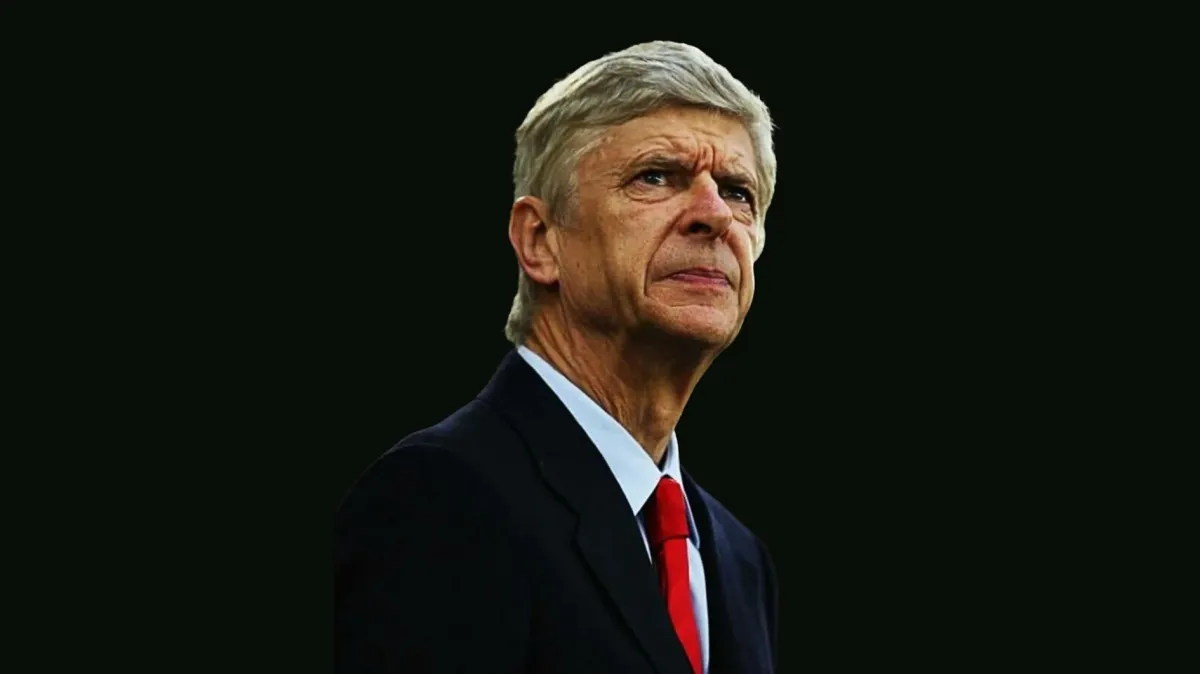
The World Cup has never been closer to an African winner. That was the unmistakable message from Arsène Wenger, FIFA’s Chief of Global Football Development, as he dissected Africa’s record-breaking 2026 campaign during a high-stakes strategy conference in Cabo Verde. Wenger, whose tactical acumen has shaped generations of players, didn’t just acknowledge progress—he declared it irreversible. ‘We are going to win the World Cup,’ he stated flatly, a claim underpinned by the cold, undeniable numbers: nine of Africa’s ten teams advanced past the group stage, a feat that would have been unimaginable just a decade ago.
The transformation wasn’t accidental. Wenger pinpointed the tactical discipline of African sides as the decisive factor, a shift that erased the old stereotypes of chaotic formations and inconsistent concentration. ‘In the past, African teams sometimes lost because of a lack of compactness, too much distance between the lines and inconsistent concentration,’ he explained. ‘At this World Cup, it was difficult to beat any African team because the discipline and organisation were at the top level.’ The proof lay in the margins: most knockout-stage losses were decided by a single goal, a detail that exposes how finely balanced modern football has become. Egypt’s dramatic 3–2 defeat to Argentina in the Round of 16—after leading 2–0—epitomised this new reality. Even Morocco, the tournament’s most formidable underdog, held Brazil scoreless in their opening match and dismantled the Netherlands on penalties, proving that African sides could now match the technical precision of their European and South American rivals.
Yet Wenger’s confidence isn’t blind. He recognised that while the foundations are stronger than ever, the final step—World Cup glory—demands relentless attention to the intangibles. ‘A small percentage can cost you the game,’ he warned, highlighting how late-game management, counter-pressing transitions, and chance creation will separate contenders from pretenders. The panel discussion he led in Cabo Verde, featuring coaches like Bubista (Cabo Verde), Hossam Hassan (Egypt), and Sébastien Desabre (DR Congo), will delve deeper into these areas, offering a roadmap for how African nations can refine their edge. The message to delegates was clear: the road to 2030 begins now, and the investments in infrastructure and opportunity—urged by FIFA President Gianni Infantino—must match the tactical progress already achieved.
What’s undeniable is that Africa’s World Cup trajectory has shifted from aspiration to inevitability. The 2026 tournament wasn’t just a stage for improvement; it was a proving ground. Morocco’s resilience against Brazil and the Netherlands, Egypt’s clinical efficiency in the group stage, and the collective depth of the continent’s squads all signal a new era. Wenger’s declaration—that ‘one of the nations from Africa will win the World Cup’—isn’t hyperbole. It’s a reflection of a continent that has closed the gap in every measurable way. The question now isn’t whether Africa will win; it’s which nation will be the first to lift the trophy—and how quickly the rest of the world will have to adapt to a footballing landscape where African dominance is no longer a question of if, but when.



