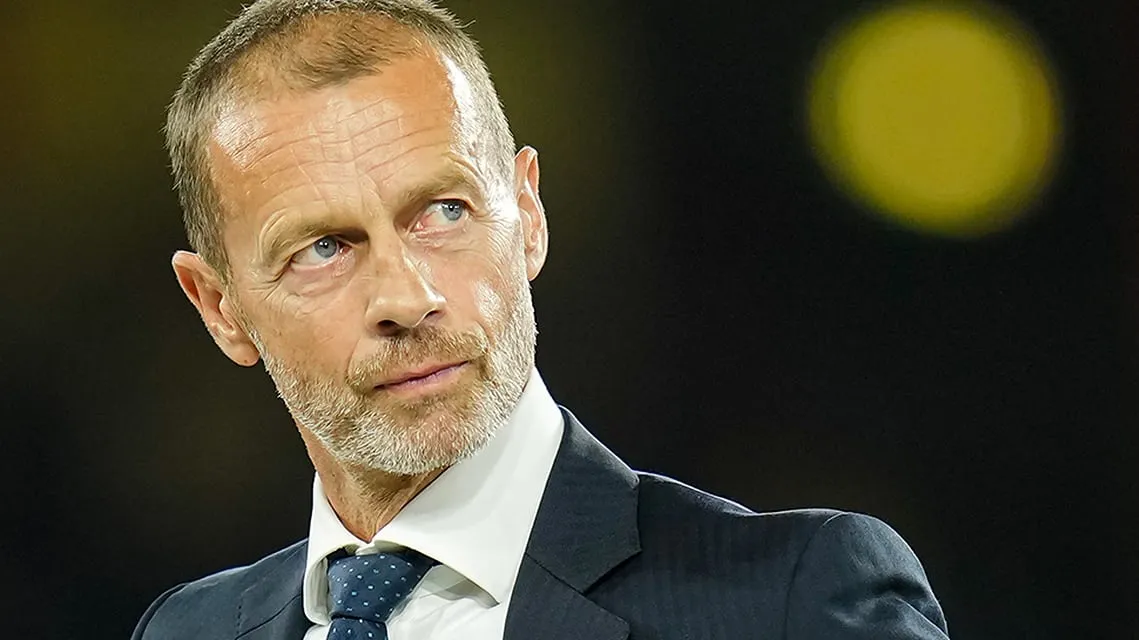
Aleksander Ceferin has delivered one of the most direct critiques yet of FIFA’s leadership, warning that the trust broken by Gianni Infantino’s controversial World Cup sell-off plan has not been restored—despite the proposal’s formal abandonment. Speaking in a video address to the Portugal Football Summit in Lisbon, the UEFA president framed the fallout as a defining moment for the future of world football, insisting that the unity shattered by the private investment scheme remains irreparable without decisive action.
Ceferin’s intervention came two months after Infantino’s plan to sell a 20% stake in FIFA’s commercial rights—including the World Cup—was abandoned amid fierce opposition from UEFA, AFC, and CONCACAF. While the proposal itself has been scrapped, Ceferin’s language was uncompromising: *“The project that shattered the unity of world football may be abolished, but the trust it broke has not returned, and repairing it is our work now.”* His remarks carried the weight of a man who has spent years defending football’s principles against commercial exploitation, and his refusal to name Infantino directly only heightened the significance of his message. *“Football is not for sale,”* he declared, a mantra UEFA has championed for years—but one that now faces its most severe test since the plan’s collapse.
The timing of Ceferin’s comments was deliberate. They arrived just days after Infantino had attempted to address the fallout in a letter to the FIFA Council and the presidents of all 211 member associations, signaling a rare acknowledgment of the damage done. Yet Ceferin’s address suggested that words alone would not suffice. His intervention was not just a critique of the sell-off plan but a broader indictment of a leadership culture in which *“not everyone places the game above their own ambitions.”* The implication was clear: FIFA’s governance crisis extends beyond a single proposal, and the path to reconciliation will require more than policy reversals—it will demand a fundamental shift in how the game is governed.
What remains uncertain is whether Infantino’s leadership can navigate this divide. Ceferin has explicitly ruled out running for the FIFA presidency himself, leaving the door open for others to challenge Infantino’s 15-year tenure—though no serious contenders have emerged. The next FIFA election, set for 2027, will test whether the governing body can heal its divisions or if the controversy will persist as a defining legacy of Infantino’s era. For now, Ceferin’s warning stands as the most authoritative assessment of the crisis: the trust deficit is not a temporary setback but a structural challenge that will define the future of world football.