

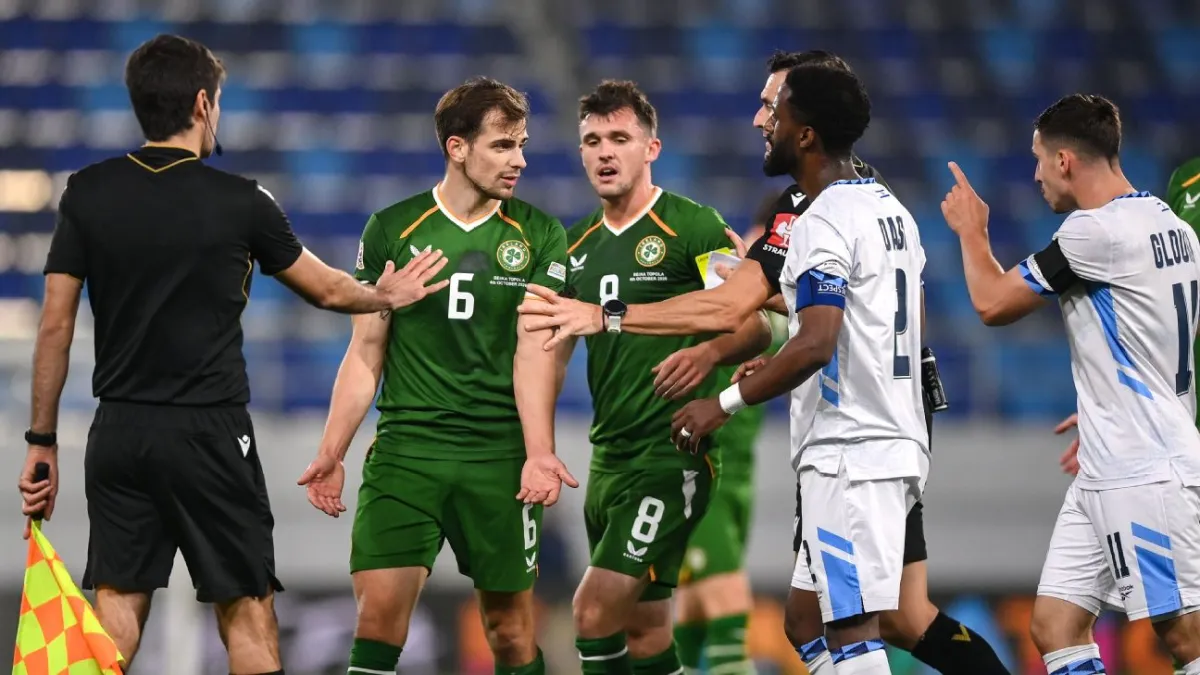
The UEFA Nations League has descended into controversy as the governing body launches a formal disciplinary investigation into allegations of misconduct during the Republic of Ireland’s 1-1 draw with Israel on Sunday. The probe, triggered by reports of an incident in or around the tunnel at halftime, marks the latest escalation in a match already marred by tension and verbal exchanges.
UEFA confirmed the appointment of an ethics and disciplinary inspector to examine ‘potential misconducts from player(s)’ during the encounter played in neutral Backa Topola, Serbia. The investigation follows claims by Ireland’s head of athletic performance, Damien Doyle, who alleged an Israeli player spat at him as the teams exited the pitch. The incident occurred amid a match already defined by heated exchanges—including accusations from Ireland’s coach, Heimir Hallgrimsson, that Israeli players had attempted to intimidate his squad from the first whistle.
The confrontation unfolded against a backdrop of deep-seated political tensions. Ireland’s decision to relocate the fixture from Dublin to Serbia in June—following widespread calls for a boycott—highlighted the sensitivity of the fixture. Hallgrimsson has since requested UEFA separate the two nations in future draws, citing ‘structural risks for security’ and the need to avoid further escalation. The request reflects broader concerns about the match’s atmosphere, particularly after an Israeli journalist claimed during pre-match briefings that Irish players had used racial slurs against their opponents—a claim vehemently denied by Ireland’s communications team.
The investigation comes as UEFA navigates delicate diplomatic waters. While the governing body has not disclosed further details, the appointment of an inspector signals a serious approach to resolving the allegations. The probe will focus solely on the incident at halftime, though the broader context of the match—marked by physical altercations between players and officials as they left the pitch—underscores the volatility of the encounter. With the Nations League’s political undertones continuing to dominate proceedings, this latest development underscores the challenges of hosting high-stakes international fixtures amid unresolved geopolitical tensions.



