

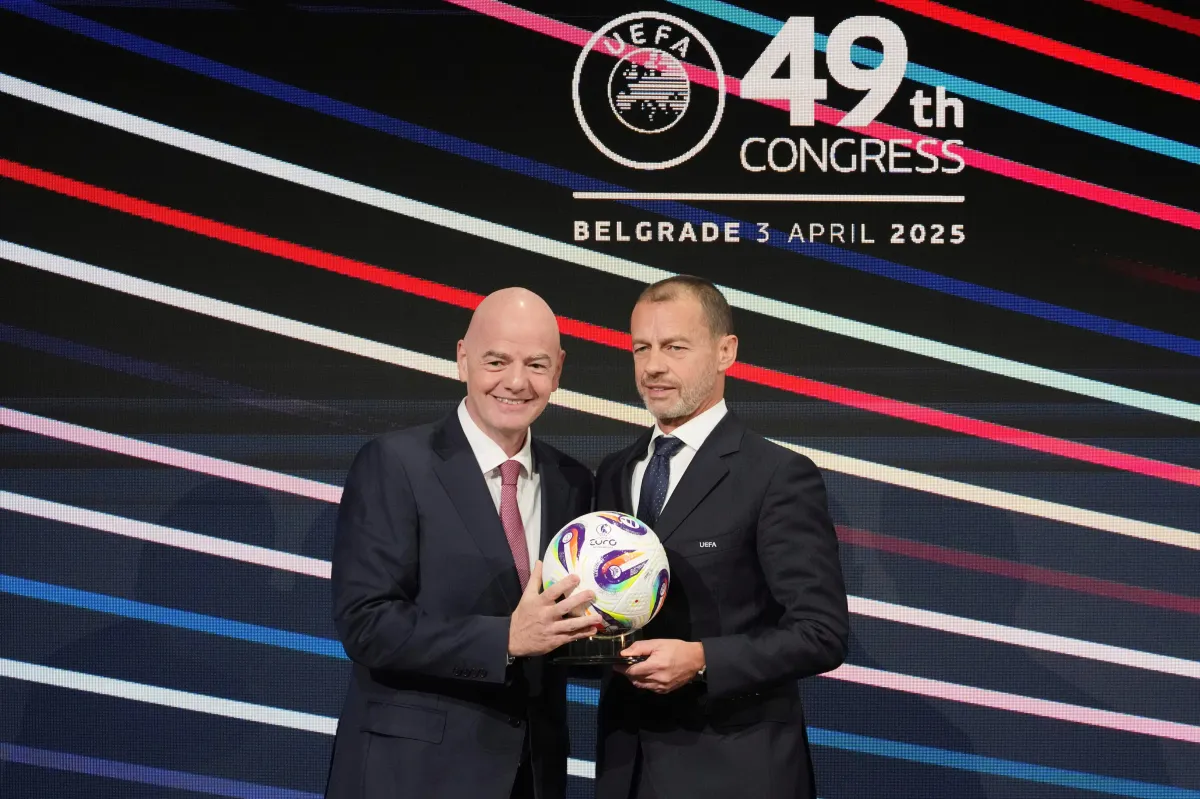
The power struggle between UEFA and FIFA has escalated to a formal deadline. UEFA has given FIFA President Gianni Infantino until **November 2** to disclose documents related to his abandoned $4.2 billion World Cup sell-off plan and respond to **42 detailed governance questions**, a demand that underscores the urgency of accountability in football’s highest echelons. The European governing body has made clear that these issues cannot be deferred to the next FIFA Council meeting in Doha on **December 16**, insisting that transparency must precede the upcoming presidential election in March 2027.
The origins of this confrontation lie in Infantino’s July announcement of a secretive investment scheme, which proposed selling off World Cup assets to private investors. The plan was met with immediate skepticism from FIFA’s member associations, particularly in Europe, who questioned its feasibility and the lack of consultation. Within weeks, Infantino abandoned the initiative, instead proposing a **$3.4 billion increase in football development funding**—a shift that left many wondering about the motives behind the original proposal. UEFA’s 42 questions now demand clarity on why FIFA pursued private investment despite its **massive financial reserves**, why the company behind the scheme was selected without competition, and whether additional payments to Infantino were involved.
The stakes are high. UEFA’s letter warns that any refusal to disclose information must be justified individually, reinforcing that accountability cannot be postponed. The questions extend beyond the World Cup sell-off to include disciplinary decisions from the **2026 World Cup**, the FIFA Peace Prize, and broader governance concerns. The timing is deliberate: with nominations for the FIFA presidency closing before the December meeting, UEFA is signaling that these issues must be resolved before the next leadership cycle begins. The European body has not yet outlined escalation measures, but the ultimatum itself sends a clear message—FIFA’s transparency deficit can no longer be ignored.
This development marks a critical juncture in the ongoing tensions between UEFA and FIFA. While Infantino, who has led FIFA since 2016, is seeking a third term, the controversy over his governance style has intensified. The demand for documents and answers reflects a broader demand for accountability in football’s administration, where past decisions—such as the controversial 2018 World Cup bidding process—have fueled distrust. Whether FIFA complies by the deadline or pushes back will determine whether this confrontation remains a diplomatic spat or escalates into a full-blown governance crisis ahead of the 2027 election.



