

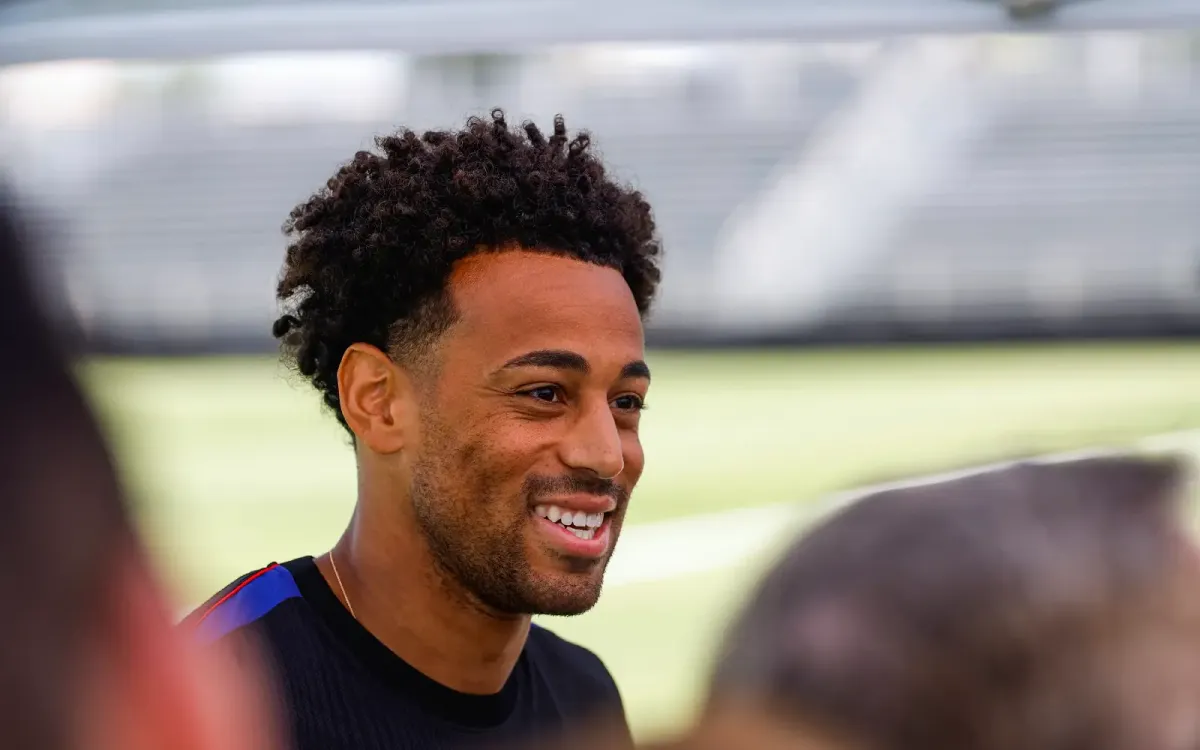
The United States men’s national team has a new captain. Tyler Adams, the Bournemouth midfielder and 2022 World Cup veteran, has been named the leader of the USMNT for the 2030 World Cup cycle, a decision announced by head coach Mauricio Pochettino following the retirement of Tim Ream. Adams, who previously captained the team at the age of 23 during the 2022 tournament in Qatar—leading the USMNT into the knockout rounds—returns to the role with a proven track record of composure and tactical intelligence.
Pochettino, who took charge of the national team in late 2024, had initially entrusted the armband to Ream for the 2026 World Cup. However, with Ream’s retirement now confirmed and the team’s focus shifting toward the 2030 tournament, the coaching staff identified Adams as the logical successor. His ability to command respect on and off the pitch, coupled with his 60 international appearances since 2017, positions him as the ideal figurehead for a new era. Pochettino described Adams as the ‘perfect person’ for the role, emphasizing his professionalism and leadership qualities—traits that were evident during his tenure as captain in Qatar, where he navigated media scrutiny with poise, including a notable press conference before the USMNT’s 1-0 win over Iran.
The announcement comes ahead of a critical four-match window, including a Saturday friendly against Mexico, where Adams will immediately be tested as the team’s leader. His return to the captaincy underscores the USMNT’s continuity in leadership, as Pochettino’s staff sought a player who could bridge the gap between the 2026 World Cup campaign and the 2030 tournament. Adams’ experience in high-pressure situations—from World Cup knockout stages to handling international media—will be crucial as the team prepares for the challenges ahead. His versatility as a midfielder, both defensively and creatively, also aligns with Pochettino’s tactical vision, making him a natural choice for the role.
Beyond the symbolic importance of the armband, Adams’ leadership extends to the team’s cultural fabric. His ability to inspire younger players, such as those who emerged during the 2026 World Cup, will be vital as the USMNT transitions into a new cycle. With the 2030 World Cup in Argentina, Colombia, and Paraguay on the horizon, Adams’ return to the captaincy signals a commitment to stability and experience—a departure from the youth-centric approach that defined the 2026 campaign. His leadership will now be measured not just in results but in how he guides the team through the next phase of its development, ensuring continuity in a squad that has evolved rapidly over the past decade.
The decision reflects a deliberate strategy by Pochettino’s staff to prioritize stability and proven leadership at a pivotal moment. Adams’ return to the captaincy is more than a ceremonial change; it is a statement of intent as the USMNT prepares to rebuild after the 2026 World Cup’s early exit. His ability to adapt to different systems, his tactical awareness, and his reputation as a team player make him the ideal candidate to lead the team into the next World Cup cycle with confidence and purpose.



