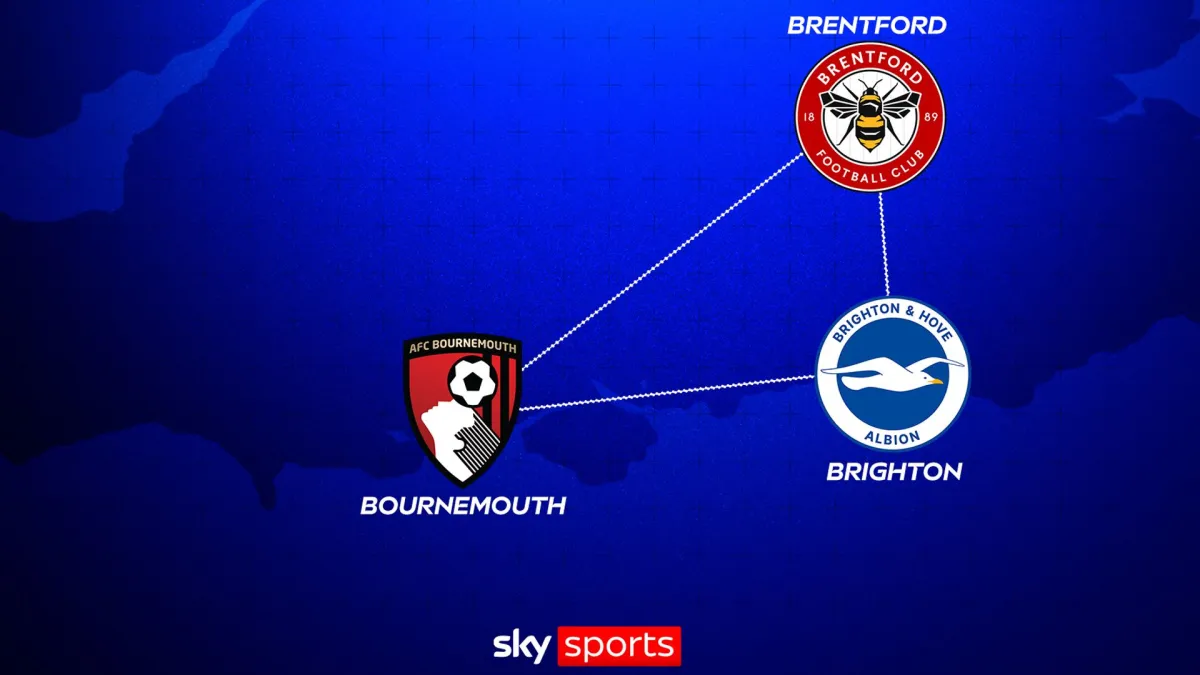
A strange patch of Premier League territory stretches from west London to the south coast, where top clubs cannot pass through easily. Brentford, Brighton and Bournemouth have formed the top-flight’s ‘Bermuda Triangle,’ a region where the established elite increasingly find themselves caught in a web of smart recruitment and stubborn resilience. This isn’t merely a geographical curiosity; it represents a fundamental challenge to the traditional hierarchy of English football, where three clubs have cracked the code of competing against the extraordinary financial muscle of the biggest names in the game.
These three Bs have turned smart recruitment, succession planning and a strong club culture into a formula for Premier League success. Players leave and managers move on, yet the trio keep defying the odds. The trio have found a formula not only to survive but to compete against the extraordinary financial muscle of the big clubs and, increasingly, upset them. In an era where transfer fees and wages have reached absurd heights, Brentford, Brighton and Bournemouth have proven that strategic thinking and organizational coherence can level the playing field, creating a model that the established elite are increasingly finding difficult to counter.
The current 2026/27 campaign provides striking evidence of this phenomenon. After five matches, Brighton & Hove Albion sit third in the Premier League table with 10 points from three wins, one draw and one loss, boasting a +9 goal difference having scored 14 and conceded just five. Brentford occupy fourth position with nine points from two wins and three draws, maintaining an undefeated record with 10 goals scored and only four conceded. Bournemouth complete the triangular formation, contributing to a collective defiance that has reshaped the early season narrative. Meanwhile, traditional powers Arsenal and Manchester City lead the table with 12 points each from four wins, but the gap between the elite and the rest has proven narrower than many predicted, with the three Bs firmly in the conversation.
Looking at the broader picture, the statistical footprint of this phenomenon is undeniable. Over a recent 50-game sample, Brighton accumulated 69 points with a +3 goal difference, Brentford 49 points with an -18 goal difference, and Bournemouth 46 points with a -51 goal difference. These numbers reflect a sustained capability to punch above their weight across an entire season’s worth of fixtures. While the very top of the table remains dominated by the usual suspects, the trio’s ability to consistently compete—and occasionally pull off upsets—has created a geographical and psychological barrier that visiting teams struggle to penetrate, forming what has been described as a territory where top clubs cannot pass through easily.
The implications for the Premier League landscape are profound. As the season progresses, the established elite will continue to navigate this Bermuda Triangle, knowing that a trip to west London or the south coast is never a straightforward three points. The formula of smart recruitment, succession planning, and strong club culture has proven difficult to replicate, giving these three clubs a sustainable advantage in an increasingly expensive game. The triangle isn’t just a geographical curiosity; it’s a testament to the power of strategic thinking over raw financial power, and a reminder that in the Premier League, cleverness can still triumph over brute force.