

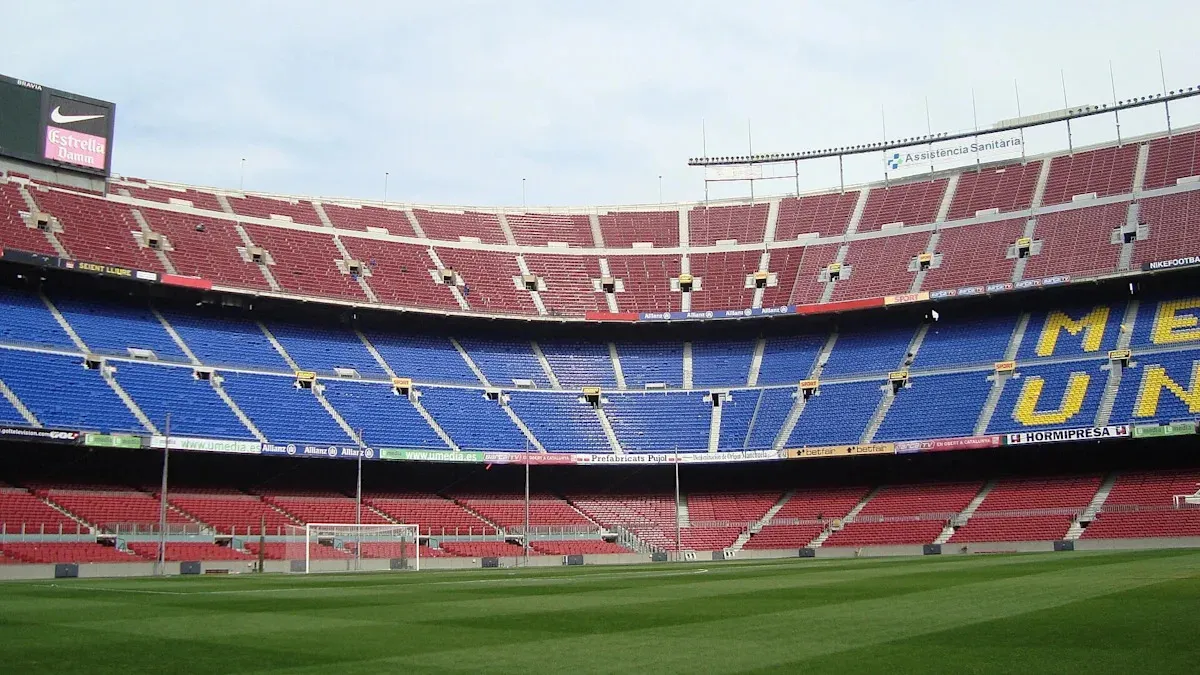
The 2030 World Cup final is shaping up to be a contest between architectural ambition and historical prestige, with Barcelona’s Spotify Camp Nou now leading the race for the tournament’s showpiece match. According to recent evaluations, the stadium’s planned capacity of 105,000 seats—once its Espai Barça reconstruction is complete—places it ahead of Spain’s other leading contender, the Santiago Bernabéu, which currently seats around 85,000. While the Bernabéu boasts a legacy of hosting major events, including Champions League finals and the 2010 FIFA World Cup, the sheer scale of Camp Nou’s renovation gives it a tactical edge in the bidding process. FIFA’s own inspections of the venue have already taken place, and the stadium’s ability to accommodate a crowd of over 100,000 could be a decisive factor in the final selection, which is not expected until 2028.
The race for the final is far from settled, however. Morocco’s Hassan II Stadium, designed for 115,000 spectators, remains a formidable wildcard, though its completion and operational readiness will be critical. Spain’s Royal Spanish Football Federation has publicly pushed for a domestic final, with president Rafael Louzán emphasizing the country’s status as a world champion in both men’s and women’s football. Yet even with the Bernabéu’s prestige and Camp Nou’s capacity, the decision hinges on more than just numbers. FIFA’s broader vision for the 2030 tournament—a multination event spanning three countries—may favor a venue that can symbolize unity and scale, making the final a statement piece rather than just a traditional host.
Barcelona’s bid is not just about infrastructure; it’s a strategic move to position the city as a global football capital. The announcement of the city’s intent to host the final came after mayor Jaume Collboni formally entered the race, leveraging the stadium’s transformation into a modern, flexible venue. Unlike the Bernabéu, which has a fixed capacity, Camp Nou’s adaptability—with its modular design and expanded seating—could appeal to FIFA’s desire for a venue that can host not just the final but also other high-profile matches. The stadium’s proximity to Barcelona’s existing infrastructure, including its transport links and cultural significance, further strengthens its case.
The timeline for the decision adds another layer of uncertainty. With FIFA not expected to finalize the venue until 2028, none of the leading candidates—Camp Nou, the Bernabéu, or Hassan II—can yet claim victory. The process will involve further inspections, political negotiations, and logistical assessments, ensuring that the final’s host is not just the most impressive stadium but also the most viable choice. For Barcelona, this moment represents more than a footballing milestone; it’s a chance to cement its legacy as a city that can deliver the world’s biggest stage on its own terms.



