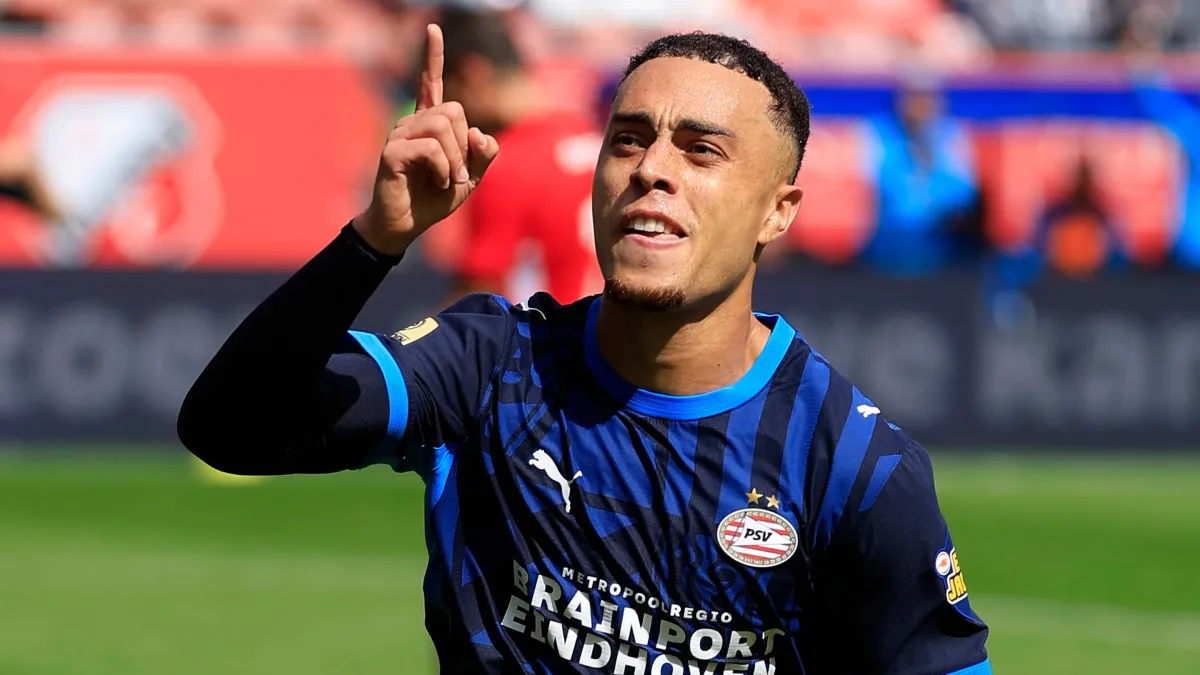
Sergiño Dest is playing at a level that suggests his World Cup injury setback was merely a blip. The 25-year-old USMNT fullback has already delivered two goals and two assists in PSV Eindhoven’s opening six Eredivisie matches, a statline that mirrors the club’s renewed Champions League ambitions. His 48th-minute winner against Shakhtar Donetsk in the group stage—PSV’s lone goal in a hard-fought 1-1 draw—was the kind of moment that defines a tournament. But what makes Dest’s current form even more compelling is the context: after an ACL injury in March, he’s not just returning to his pre-injury self. He’s surpassing it.
Dest’s tactical profile is the first clue to why. While he’s nominally a fullback, his true strength lies in his ability to unbalance defenses from wide areas. Whether starting on the left or right, he often operates like a winger in possession, dictating tempo with his dribbling and vision. PSV’s system under manager Mark van Bommel has clearly embraced this, deploying him in a way that maximizes his strengths—whether as a traditional fullback or, as the USMNT might consider for the 2026 World Cup, a wingback off the bench. His adaptability is a double-edged sword: while it makes him a nightmare for opponents, it also exposes defensive vulnerabilities when asked to play strictly in his natural position. Yet with his hamstring injury now behind him, the timing couldn’t be better for Dest to cement his place in PSV’s first team and, by extension, the USMNT’s 2026 World Cup plans.
Beyond the pitch, Dest’s personal journey adds another layer to his story. Born in Almere to a Dutch mother and Surinamese-American father—a man who spent 25 years in the U.S. military—he chose to represent the United States in 2019, a decision that has only deepened his connection to the country. His pride in wearing the USMNT jersey is palpable, a sentiment he describes as ‘ready for war on the field.’ Yet his curiosity extends beyond football. Whether it’s his love for exploring cultures—he’s spoken of two months in Thailand without a phone—or his appreciation for the ‘clean, organized’ food culture in the Netherlands, Dest embodies a global mindset that sets him apart. Even his home reflects this: a painting gifted by a Portuguese artist, chosen for its creativity and personal meaning, sits as a testament to his eclectic tastes.
The USMNT’s roster includes other players with European roots—Malik Tillman, Antonee Robinson, and Jordan Balogun—but Dest’s path is uniquely his own. While Balogun, for instance, might not recognize ‘Country Roads’ after a 2-0 win over Australia, Dest’s relationship with the country is rooted in something more tangible. His father’s military service, his own dual citizenship, and the deliberate choice to play for the U.S. all underscore a commitment that goes beyond the national team’s tactical needs. For a player who has spent most of his career in Europe, his ability to navigate both worlds—professionally and personally—is a rare asset.
With PSV’s Champions League campaign just beginning and the USMNT’s 2026 World Cup preparations in full swing, Dest’s next chapter is wide open. His current form suggests he’s not just recovered from injury; he’s reinventing himself. Whether it’s his goal-scoring flair, his cultural adaptability, or his tactical versatility, Dest is the kind of player who thrives in high-pressure moments. And if the World Cup is the ultimate stage, he’s already proven he’s ready for it.