

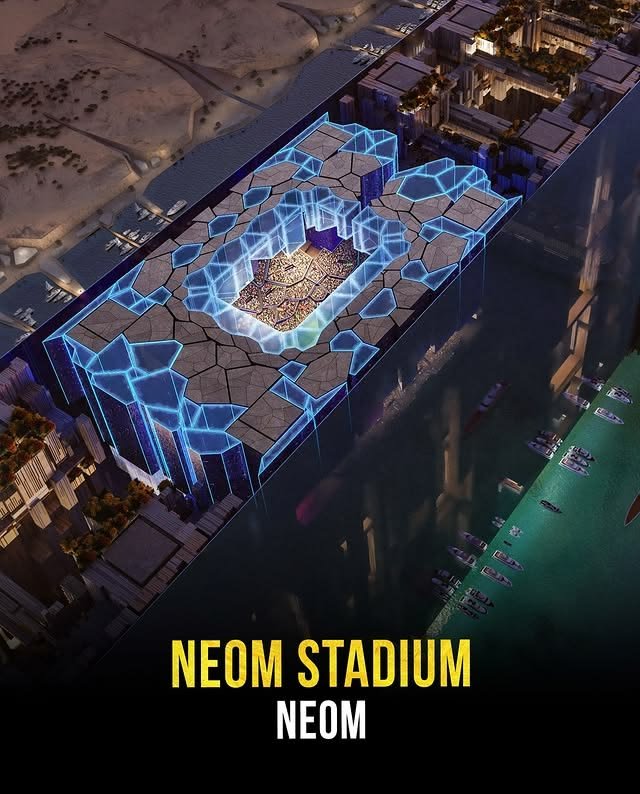
The Saudi Arabian government has suspended construction of its $2.5 billion NEOM Stadium, a centerpiece of the kingdom’s bid to host matches in the 2034 FIFA World Cup, as part of a broader review of its Vision 2030 infrastructure projects. The decision follows a fiscal downturn, with Saudi Arabia’s Ministry of Finance projecting a widening deficit and a 3.6% contraction in real GDP this year. The 46,000-seat venue, designed to rise 350 meters above ground within NEOM’s futuristic The Line development, was slated to become one of the tournament’s most ambitious stadiums. However, two sources familiar with the project confirm plans have been shelved indefinitely, with no completion date set—a stark contrast to the kingdom’s earlier ambitions.
The pause comes against a backdrop of mounting pressures. Saudi Arabia is grappling with disruptions to energy exports and heightened security risks stemming from regional conflicts, including sustained attacks by Iran-backed Houthi forces. These challenges have compounded the economic strain, forcing a reassessment of high-profile initiatives under Vision 2030. While NEOM’s broader development—including its 160-kilometer steel-and-glass megacity—remains a priority, the stadium’s fate now hinges on whether Saudi Arabia can realign its spending amid fiscal constraints. The delay also raises questions about the feasibility of hosting World Cup matches in a venue that was once positioned as a symbol of the kingdom’s global sporting ambitions.
Elsewhere, the 2030 World Cup’s final venue decision looms, with FIFA expected to announce its choice in 2028. Morocco’s bid to host the showpiece match remains a front-runner, though the Saudi suspension underscores the volatility of infrastructure commitments in the lead-up to the tournament. Meanwhile, the footballing world’s focus has shifted to transfer markets, with Barcelona and Bayern Munich locked in a high-stakes race for Newcastle United’s Anthony Gordon. The La Liga champions have joined forces with the Bundesliga giants in their pursuit of the 22-year-old forward, whose potential arrival would further intensify the competition for top talent in Europe’s elite leagues.
The Saudi decision also reflects broader shifts in global sporting infrastructure. As nations balance economic diversification with immediate fiscal realities, the 2034 World Cup’s venue plans face growing uncertainty. For Saudi Arabia, the NEOM Stadium’s suspension signals a pragmatic shift—one that prioritizes financial stability over long-term sporting legacy. Yet the move could also reshape the tournament’s geographic footprint, forcing FIFA to reconsider its host selections in the coming years. One thing remains clear: the 2034 World Cup’s path forward will depend on more than just ambition—it will demand unyielding financial discipline.



