

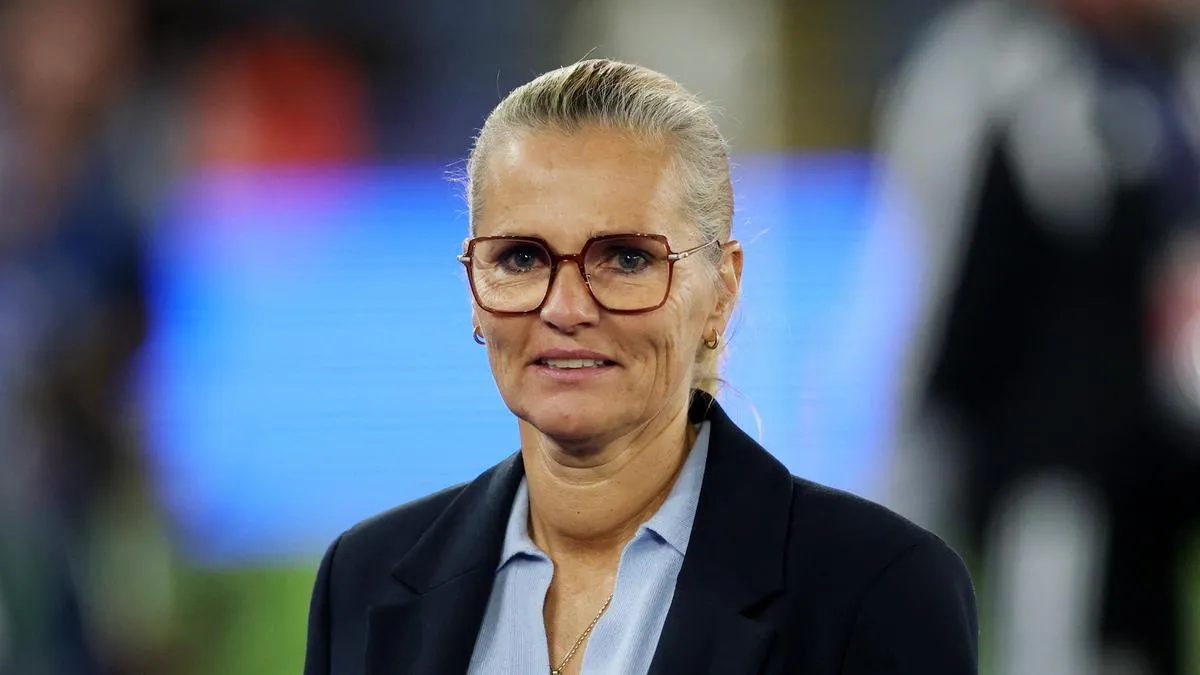
Sarina Wiegman has sealed her place as England Women’s manager through to the end of Euro 2029, extending her contract by two years after a tenure that has already rewritten the team’s history. The 56-year-old’s previous agreement was set to expire following the 2027 World Cup, but her decision to remain—alongside the contract extensions for her assistants Janneke Bijl, Arvid Smit, and goalkeeper coach Darren Ward—underscores a collective commitment to sustaining England’s unprecedented form. The move also opens the door for Wiegman to guide Team GB at the 2028 Los Angeles Olympics, further embedding her influence across the women’s game.
Wiegman’s leadership has already delivered two back-to-back European Championship titles, including a dominant 2–1 victory over Spain in the Euro 2025 final, a result that silenced critics who once doubted England’s ability to compete at the highest level. Her 2023 World Cup final defeat to Spain—where England’s tactical resilience and individual brilliance were on full display—only reinforced her status as a manager who thrives under pressure. The new contract extension reflects not just personal ambition but a strategic vision: to build on this momentum, refine the squad’s depth, and target a third consecutive major trophy by 2029.
The FA’s offer to Wiegman reportedly represents the most lucrative contract ever extended to a Lionesses manager, a testament to her unparalleled impact on the team’s culture and performance. Her ability to blend tactical discipline with player empowerment has fostered an environment where England’s young stars—from the defensive solidity of Rachel Daly to the creative menace of Lauren James—can flourish. The extension of her coaching staff’s contracts ensures continuity in Wiegman’s system, a rare stability in a sport where managerial transitions often disrupt momentum.
Beyond the immediate implications for England’s squad, Wiegman’s decision carries broader significance for women’s football in England. Her tenure has coincided with a surge in participation, media coverage, and commercial investment, positioning the Lionesses as global ambassadors for the game. With Euro 2029 looming, the challenge will be maintaining this peak performance while navigating the inevitable scrutiny of another tournament cycle. Yet for Wiegman, the path forward is clear: to leave no stone unturned in England’s pursuit of greatness, and to ensure the foundations she’s built endure long after her time at the helm.



