

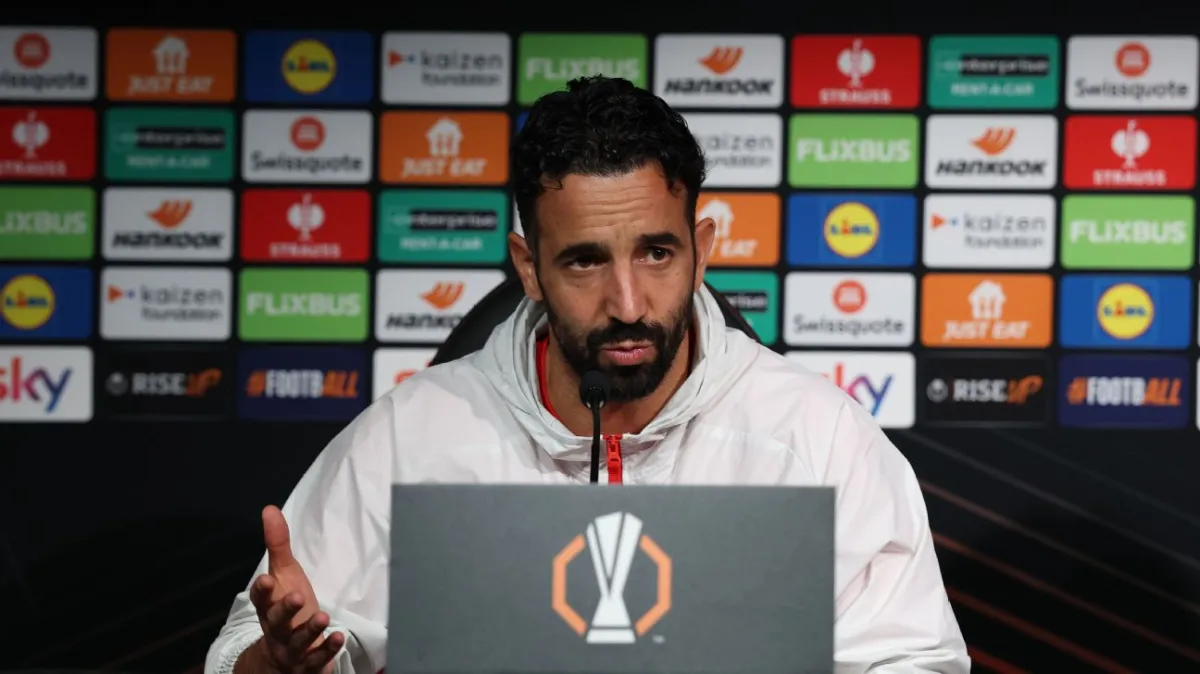
AC Milan’s Europa League campaign is in peril, and Ruben Amorim has delivered a rare moment of candor about the team’s shortcomings. The former Manchester United manager, now in his first full season at San Siro, has admitted he is ‘not satisfied’ with his side’s performance in either Serie A or the continent’s second-tier competition. With Ferencváros looming in Milan on Thursday, the pressure is mounting—especially after a 3-0 demolition by Bournemouth that left the Rossoneri languishing in 24th place in the Europa League table.
Amorim’s frustration is palpable. Despite a hard-fought 1-0 victory over Inter in the derby last weekend—a result that lifted Milan to fifth in Serie A—the manager acknowledged the team’s inconsistency. ‘I think we are not doing really well in Serie A,’ he said, despite the win. ‘Of course, we won the last one, but I think we should have more points.’ The criticism extends to the Europa League, where Milan’s three points from three games are a stark contrast to Ferencváros’s flawless record. The Hungarian side, a 4-2-3-1 formation under a disciplined system, has not lost a single match in the competition, offering a stark tactical contrast to Milan’s struggles.
The recent Bournemouth defeat was particularly damning. A red card, two penalties conceded, and a defensive collapse—compounded by Mike Maignan’s suspension—left the team exposed. Amorim acknowledged the ‘dynamics’ that derailed the game, but the fallout has been immediate. ‘We had good possession, but we can do even better,’ he admitted, though he refused to dwell on the past. ‘Every game has its own story,’ he insisted, yet the urgency is clear. The clash with Ferencváros is not just another fixture; it is a chance to reset, or risk further erosion of confidence.
Amorim’s tactical approach has come under scrutiny, particularly in Serie A. While Milan’s 1-0 win over Inter was a statement of intent, the manager conceded that the team ‘lacking’ in defensive structure against the Nerazzurri’s midfield. ‘Was it nice to win?’ he asked rhetorically. ‘Yes. But I’m still angry about the Bologna game.’ The reference to the 3-0 defeat to Bologna underscores a pattern: Milan’s ability to secure results when it matters remains inconsistent. With Ferencváros arriving with a mandate to win, the Rossoneri must prove they are more than a team that ‘can do better’—they must deliver.
The stakes could not be higher. A loss to Ferencváros would not just dent Milan’s Europa League hopes but also signal a deeper structural issue. Amorim’s words carry weight, but the proof will lie on the pitch. The manager’s insistence that ‘every game is important’ is a reminder of the high expectations at San Siro. Whether Milan can silence the critics—and silence Ferencváros—will define the next phase of this season.



