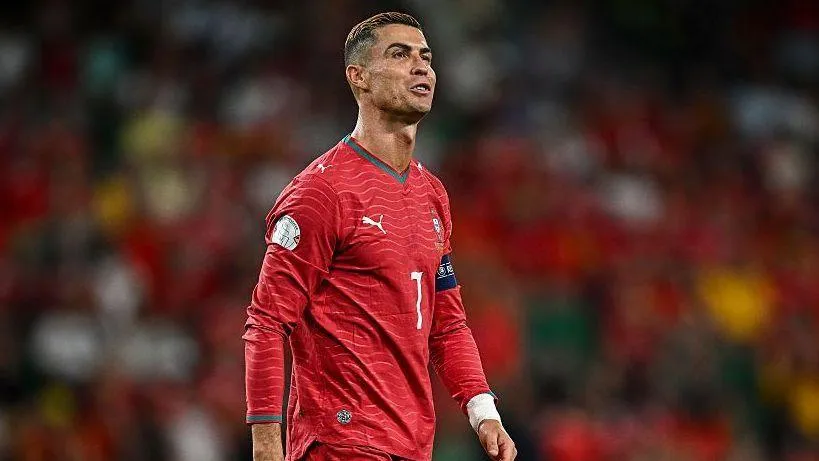
The fallout between Cristiano Ronaldo and Portugal manager Jorge Jesus has reached a breaking point, leaving the nation’s football future in flux. Ronaldo, who holds the records for most goals (146) and caps (234) in Portugal’s history, walked out of the squad after being left out of the starting XI against Denmark—following his earlier frustration at being made to warm up without being called upon in the win over Norway. The decision, made public after the Nations League clash, has not only disrupted Portugal’s campaign but also thrust the veteran forward into a moment of reckoning.
Jesus, who coached Ronaldo at Al-Nassr before taking over Portugal’s reins, has since clarified that the door remains open for the striker’s return. ‘It’s too soon and raw after the match to talk about that,’ Jesus stated, acknowledging the raw emotions of the moment. Yet the incident underscores a deeper tension: Ronaldo’s refusal to be sidelined contrasts sharply with Jesus’ no-nonsense leadership style, a dynamic that has played out before in their shared history. With Portugal now six points clear of Denmark in Group A4, the tactical void left by Ronaldo’s absence has been filled by Gonçalo Ramos, who has scored in each of his three starts since the fallout. But the question lingers: can Portugal’s collective identity survive without its most iconic figure?
The timing of Ronaldo’s potential exit could not be more poignant. As Lionel Messi prepares for what is expected to be a triumphant farewell against Benin on Tuesday, Ronaldo’s own international career hangs in the balance. Messi, 39, chose to retire after the World Cup, but Ronaldo, now 41, has opted to continue—until now. The contrast between the two legends’ legacies is stark: one bowing out with a flourish, the other potentially leaving amid controversy. Portugal’s squad, already divided by the fallout, has signaled a willingness to welcome Ronaldo back if he chooses to return. Yet the damage to morale and the uncertainty over his future have left a nation grappling with the weight of his decision.
What remains unclear is whether Ronaldo’s departure will be temporary or permanent. His absence has already altered the dynamic of Portugal’s Nations League campaign, but the tactical adjustments made by Jesus suggest the squad can function without him—at least for now. The real test will come if Ronaldo decides to retire, leaving Portugal without its most recognizable face. For a nation that has built its identity around his dominance, the prospect of his exit is not just a footballing setback but a cultural one. The fallout between Ronaldo and Jesus may have been personal, but its ripple effects extend far beyond the pitch, challenging the very foundations of Portugal’s sporting narrative.