

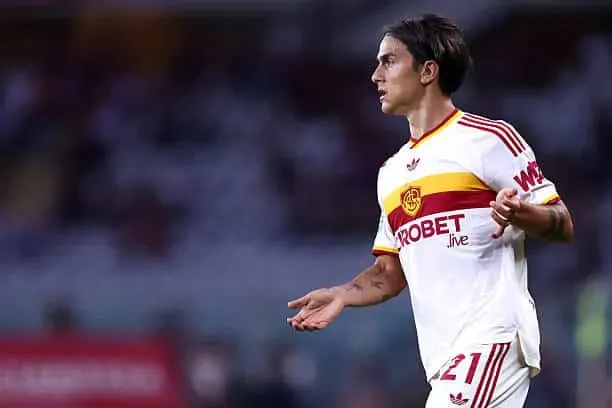
Roma’s attack has taken a significant step forward after Paulo Dybala returned to training today, marking a potential turning point in the club’s injury woes ahead of the Champions League showdown with Manchester United. The Argentine striker, who was forced off at halftime during Roma’s grueling 3-0 defeat to Real Madrid in September, has been working closely with the medical staff to accelerate his recovery from a right calf issue. Early indications suggest his on-field testing was met with positive responses, though Gian Piero Gasperini will now weigh whether Dybala can be trusted for Tuesday’s Serie A fixture against Cagliari—or if his availability will be limited to the away trip to Udine on Saturday.
The timing of Dybala’s return couldn’t be more critical. With Roma’s Champions League campaign hanging in the balance, the absence of their primary striker has left Gasperini scrambling for solutions in a tournament where goals are scarce and momentum is everything. Dybala’s return to training follows a string of setbacks, including the prolonged sidelining of Mile Svilar (broken finger), Federico Chiesa (suspension), and the lingering concerns over Manuel Koné’s fitness. The Frenchman’s bruising from the Madrid clash has delayed his medical assessments, adding another layer of uncertainty to a squad already depleted by injuries. Yet Dybala’s progress offers a glimmer of hope: if his calf holds up, he could rejoin the squad for the Old Trafford match, where Roma will need every available weapon to challenge United in a game that will define their season.
The tactical implications of Dybala’s return are immense. Roma’s attack has been stifled this season, with the striker failing to find the net in either Serie A or the Champions League despite his clinical finishing pedigree. His absence has forced Gasperini to experiment with formations and rotations, but Dybala’s presence would restore balance to a front line that has struggled to dominate possession or convert chances. The Argentine’s ability to link play, hold up the ball, and deliver pinpoint crosses—qualities that made him a nightmare for defenders in his prime—would be invaluable against United’s disciplined defense. Even if he doesn’t start, his availability as a substitute could provide the spark Roma needs in a game where a single goal could shift the momentum of the group.
Gasperini’s decision-making will be scrutinized closely over the next 48 hours. The manager has already signaled flexibility, acknowledging that Dybala’s return to Cagliari is not guaranteed but could be possible for the Udine match. The timing of his availability will depend on the medical staff’s assessment of his calf, but the stakes are too high to delay his return indefinitely. With Roma’s Serie A campaign also in flux—having dropped points against Genoa and Napoli—every player’s fitness is under the microscope. Dybala’s return would not only bolster Roma’s attack but also send a message to the squad that consistency is returning, a crucial psychological edge in a tournament where confidence is often the difference between qualification and disappointment.
For Dybala himself, the pressure is immense. The 29-year-old has carried Roma’s hopes for years, and his ability to bounce back from injury will be a litmus test for his longevity at the club. His return to training is a sign that the medical team remains optimistic, but the road back to full fitness is never straightforward. If he can rejoin the squad in time for Old Trafford, it would be a statement of intent—not just for Dybala, but for Roma’s entire project. The Champions League is a crucible, and with United’s defensive solidity and Manchester City’s dominance in Serie A, Roma’s ability to compete hinges on their ability to return their best players at the right moment. Dybala’s progress is just the first step in what could be a pivotal week for the Giallorossi.



