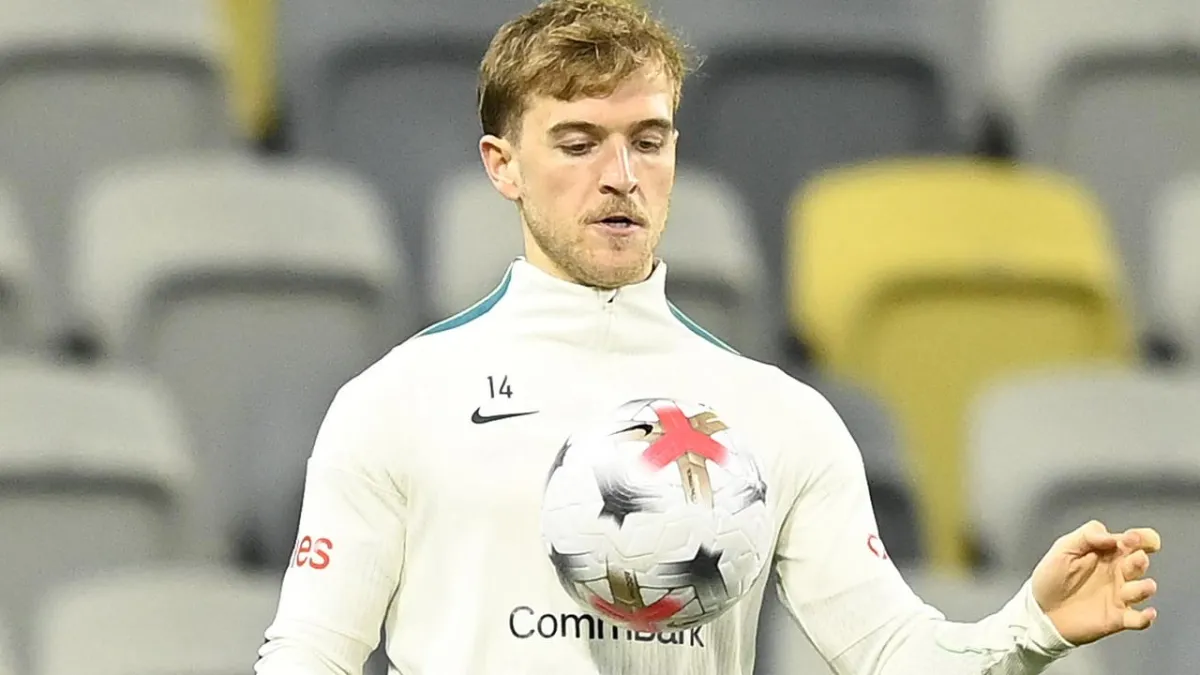
The pain of missing the World Cup never truly fades for a Socceroo. For midfielder Riley McGree, the chance to address his teammates at this year’s tournament—even as a spectator—was a rare consolation. But the emotional toll of sitting on the bench while his nation sought redemption in Qatar has only sharpened his determination to return stronger. Now, with the 2026 World Cup on the horizon, McGree’s focus is unwavering: he will not let another tournament slip through his fingers.
Yet Australia’s collective pain extends far beyond individual regret. Striker Mohamed “Mo” Toure’s shoulder injury—a setback so severe it requires surgery and months of rehabilitation—has cast a shadow over the Socceroos’ immediate future. The Asian Cup, the region’s premier tournament, looms in January 2027, and Toure’s absence could be catastrophic. His absence would not only strip Australia of a key creative force but also force a tactical overhaul at a time when the team is still searching for consistency. The Socceroos were seconds from history in their last encounter with Brazil, only to be denied by a late penalty—heartbreak that now feels like a warning. Without Toure, the margin for error in the Asian Cup would vanish entirely.
The stakes could not be higher. Brazil’s arrival in Australia this month is not merely a friendly; it is a reckoning. Five‑time world champions, still nursing their own World Cup disappointment, will demand answers from a Socceroos side that has struggled to find its rhythm. The pressure on coach Tony Popovic’s squad is immense: prove they are more than a one‑match wonder, or risk being written off as a team in transition. The loss of Toure would not just be a personnel issue—it would be a confidence crisis. His ability to dictate play, link midfield and finish chances is irreplaceable in the short term, and his prolonged absence could derail Australia’s push for a deeper run in the Asian Cup.
The injury’s severity is a reminder of how fragile football’s elite can be. A single misstep, a bad bounce, a moment of weakness—any of these can end a career or, at the very least, a tournament. For Toure, the road back will be long. Surgery is just the first step; rehabilitation, fitness testing and gradual return to full training will take months. The Socceroos’ calendar is already packed, and the Asian Cup is non‑negotiable. If Toure cannot be ready, Australia will have to rebuild around him, a process that could leave the team vulnerable in the meantime.
This is not just about one player. It is about the future of a nation’s football. The Socceroos have spent years chasing respect, and every setback—whether it’s a missed World Cup, a key injury or a late penalty—feels like a step backward. But the resilience of this generation has always been their defining trait. McGree’s determination, Toure’s fighting spirit and the collective will of the squad will determine whether Australia can turn this crisis into a catalyst for change. One thing is certain: the Socceroos will not fold under pressure. They will adapt, they will fight, and they will demand their moment in the spotlight. The question is whether they can do it without their most vital piece.