

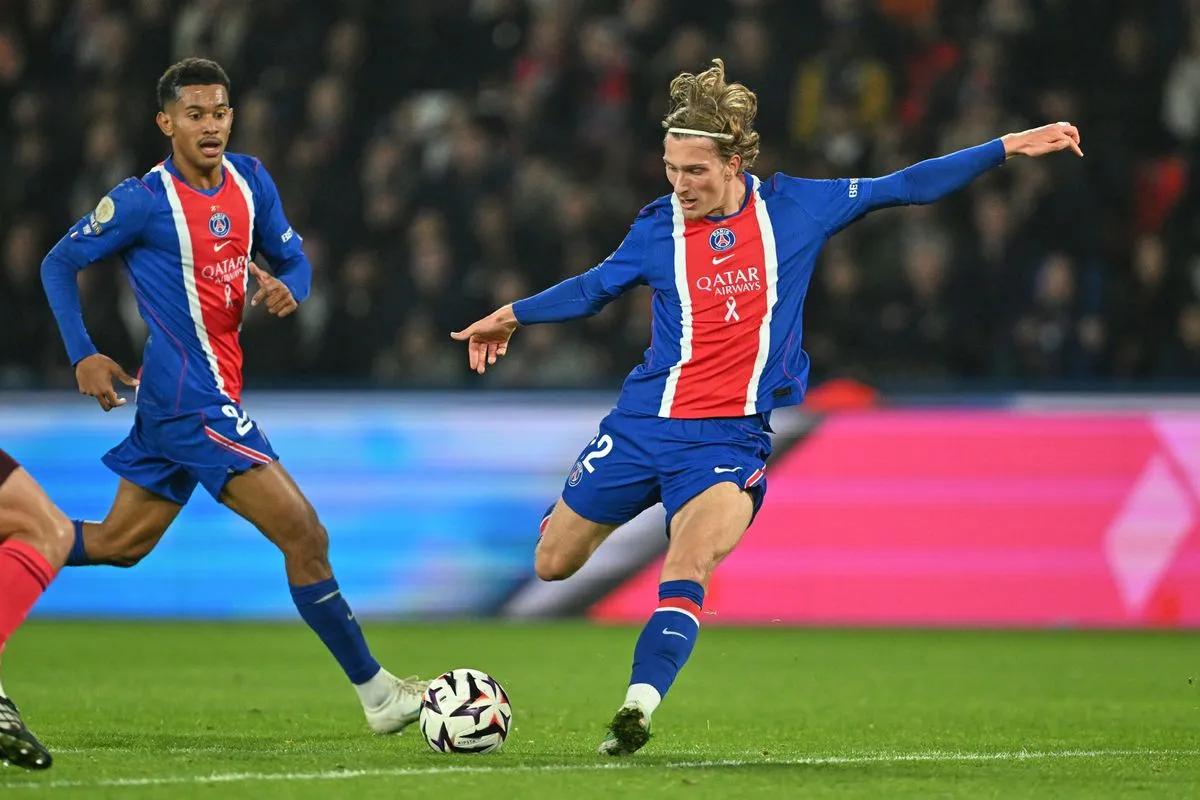
Paris Saint-Germain’s return to the top of Ligue 1 was never in doubt after Monday’s 2-0 victory over Lyon, but the manner of their victory—two late goals in the second half—underlined the tactical resilience of a side that refuses to be dictated to. Senny Mayulu’s 18-meter strike seven minutes after coming off the bench shattered Lyon’s defensive resolve, while Mika Godts added the second goal just 12 minutes later, capping a performance that saw PSG extend their unbeaten run in all competitions to eight games. The win wasn’t just a statement of intent; it was a reminder that even in a league where consistency is the currency, PSG’s ability to turn games on their terms remains unmatched.
The second-half surge was the defining feature of PSG’s campaign, with Lyon’s early dominance—dominated by a compact defensive block—finally broken by Mayulu’s clinical finish. The Belgian’s goal, a product of quick thinking and composure, was the moment PSG’s attack found its rhythm after a period of controlled pressure. Godts’ follow-up, a composed finish after a well-worked through-ball, completed the job with efficiency. The win also marked a return to form for PSG’s substitute options, with both players contributing decisively in their first starts of the season. For Lyon, the defeat exposes vulnerabilities in their defensive structure, particularly in transition, as PSG’s midfield dictation and late substitutions exposed gaps that were too difficult to close.
Across the border in La Liga, Sevilla’s 2-0 victory over Osasuna was a rare moment of redemption for a side that had struggled to find consistency in recent weeks. The win, Sevilla’s first in over a month, was secured by Felix Correia’s second goal of the season, a strike that mirrored his performance in the 3-3 draw with Levante two weeks prior. The result also marked the end of a four-game losing streak, with the defeat to Aston Villa in the Champions League having been the most painful. Sevilla’s victory was built on defensive solidity—Osasuna’s attack, which had caused problems elsewhere, was neutralized by Sevilla’s organized backline—and a clinical finish in the final 10 minutes. The win not only restored confidence but also widened the gap to seventh-placed Alaves, reinforcing Sevilla’s position as a title contender in a league where form dictates fate.
The tactical contrasts between PSG’s late flair and Sevilla’s disciplined approach highlight the different paths to success in Europe’s top leagues. PSG’s victory was a masterclass in patience, with their attack waiting for the right moment to strike, while Sevilla’s win was a testament to defensive organization and composure. Both results underscore a broader trend: in modern football, consistency is not just about winning; it’s about seizing control when it matters most. For PSG, reclaiming the Ligue 1 title is now a formality, but the challenge will be maintaining this level of dominance in the coming weeks. For Sevilla, the win is a crucial step, but the real test will be translating this form into the Champions League, where their recent struggles have been exposed.
The immediate fallout from these results will be felt in the transfer markets and tactical adjustments across Europe. PSG’s late goals suggest their bench strength is a weapon, while Sevilla’s defensive resilience points to a side that can compete with the league’s elite. Both victories also serve as a reminder that in football, momentum is everything—PSG’s return to the top of Ligue 1 is a statement, but Sevilla’s return to winning ways is a warning to those who underestimate their determination.



