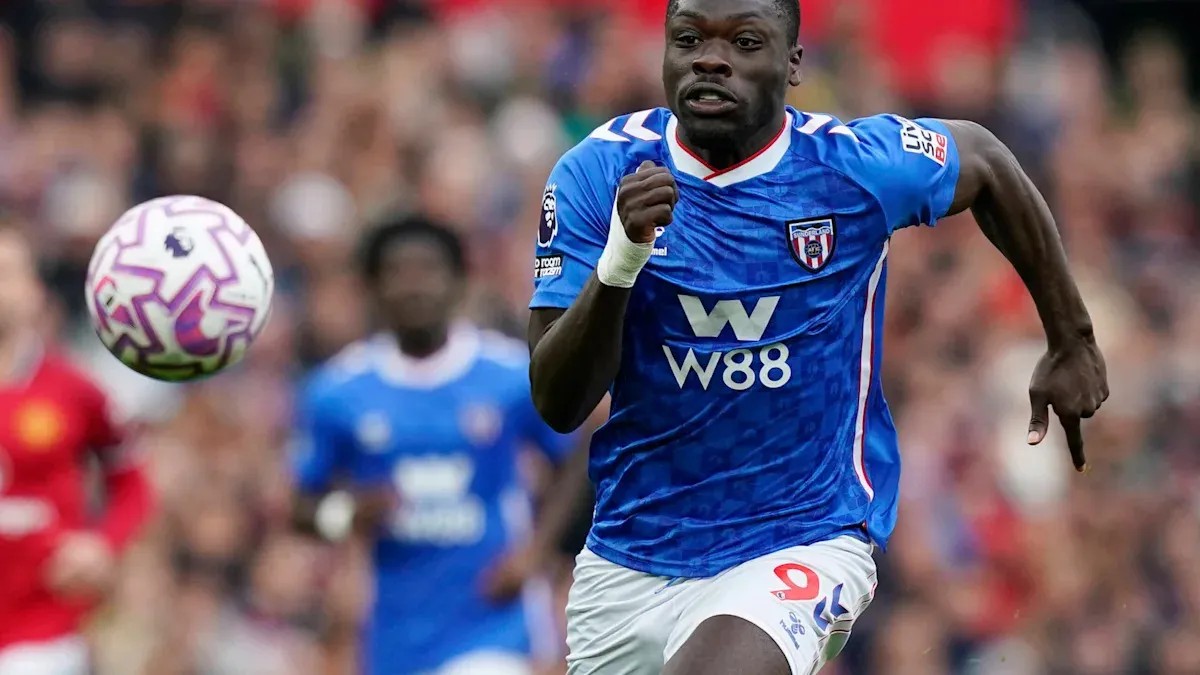
The Premier League’s most talked-about striker isn’t the one who’s been linked to a £100m move. It’s the one who’s already here—and thriving. Brian Brobbey’s arrival at Sunderland has done more than just fill a void; it’s forced the league’s elite to reconsider their forward options. Insiders now argue that the 23-year-old’s blend of raw power, positional intelligence and clinical finishing makes him a *must-sign* for clubs searching for a modern No.9 who can dominate physically while still contributing to build-up play.
Brobbey’s case is built on three pillars: his ability to break down defenders with his strength, his knack for scoring decisive goals, and his versatility in attacking systems. At Sunderland, he’s already demonstrated the kind of impact that typically takes years to develop. For Arsenal, where Mikel Arteta has repeatedly stressed the need for a ‘wrecking ball’ to complement Bukayo Saka and Martin Ødegaard, Brobbey’s profile aligns perfectly. His physicality—particularly in the air—mirrors the kind of target striker Arteta has hinted he’d prioritise, though the Gunners’ squad depth (with Gabriel Jesus and Oleksandr Zinchenko also capable of dropping into midfield) could complicate any move. Liverpool, meanwhile, face a different dilemma: with Alexander Isak’s resurgence and Hugo Ekitike’s impending return, the Reds may not need an immediate replacement. But if Andoni Iraola’s forward line evolves to prioritise directness, Brobbey’s directness—both in his movement and his finishing—could make him an intriguing option.
Manchester United’s situation is the most urgent. Benjamin Sesko and Joshua Zirkzee have struggled to carve out a role, and while Matheus Cunha and Bryan Mbuemo have provided creativity, the club’s attack lacks a consistent goal threat. Brobbey’s arrival at Sunderland—where he’s already scored crucial goals—suggests he could fill that void. His ability to hold up play and link with wingers would allow United’s midfielders to operate more freely, while his physicality would neutralise Premier League defences. The question isn’t whether he’s good enough; it’s whether the Red Devils can afford the £50m+ price tag that’s now being floated. Given their financial constraints, a move would require a trade-off—perhaps selling a player like Alejandro Garnacho or prioritising a long-term project over an immediate fix.
The tactical nuances add another layer. Brobbey’s strength isn’t just about power; it’s about intelligence. He’s shown an understanding of when to hold the ball, when to make a run, and when to exploit space behind defences. For a club like Liverpool, which has experimented with high-pressing systems, his ability to dictate play in tight spaces could be a game-changer. Arsenal, with their possession-heavy approach, might prefer a more technical striker—but Brobbey’s goalscoring record suggests he can still thrive in that environment. The debate isn’t just about his attributes; it’s about how each manager’s system could maximise his strengths.
One thing is clear: Brobbey’s form has put him in the same conversation as the Premier League’s most sought-after forwards. Whether it’s Liverpool’s tactical flexibility, Arsenal’s need for a physical presence, or Manchester United’s search for a goal-getter, the clock is ticking. The question isn’t if he’ll leave Sunderland—it’s when. And for the clubs watching, the answer could redefine their seasons.