

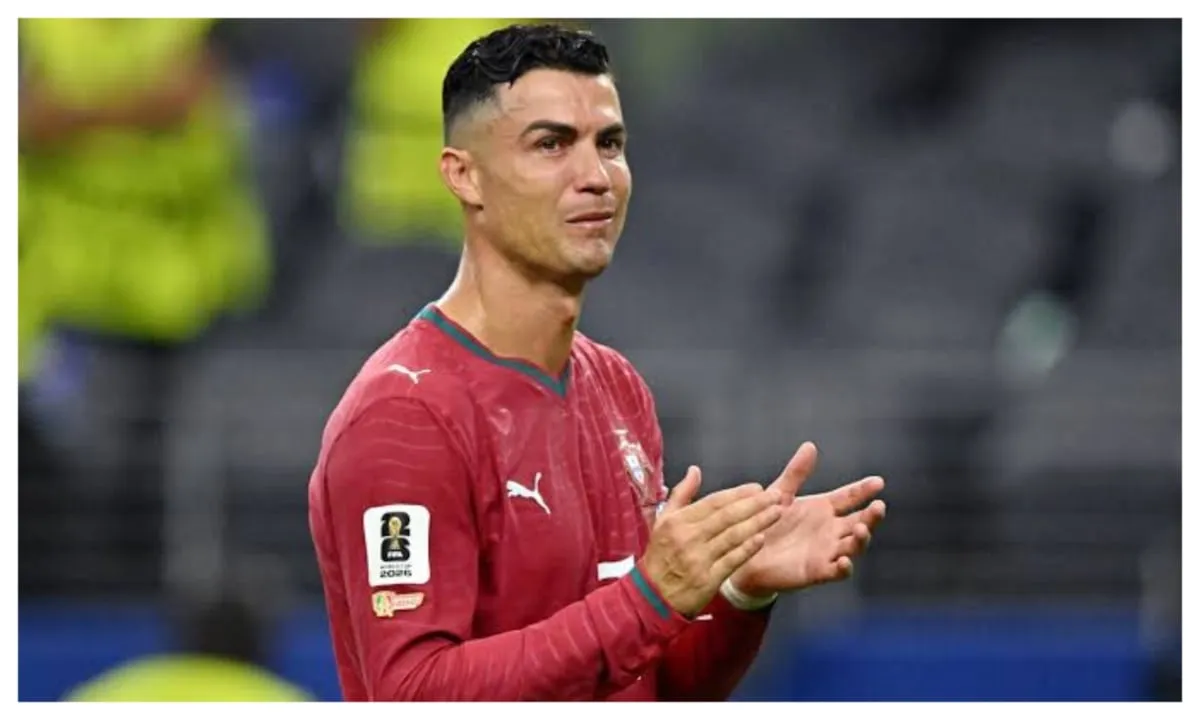
Portugal’s Minister of Economy and Territorial Cohesion, Manuel Castro Almeida, has described Cristiano Ronaldo as a major asset to the country’s international image, arguing that the footballer’s influence extends beyond sporting results. “Many people only know Portugal thanks to Cristiano Ronaldo,” he said in comments reported by several outlets.
Speaking to Now Canal, Castro Almeida said Ronaldo had an “enormous impact on the projection and enhancement of the Portugal brand” and described him as “Portugal’s best-known company.” His remarks framed the forward as a source of international recognition whose value reaches beyond the pitch. They did not include figures quantifying his contribution to tourism, investment or national income.
The comments came amid reporting about Ronaldo’s departure from Portugal’s national-team camp and friction with coach Jorge Jesus. Castro Almeida said he was “not an expert” on the tactical disagreement, distinguishing his support for Ronaldo’s promotional importance from a judgment about team selection.
Ronaldo’s profile rests on a career spanning some of football’s most prominent clubs. Born in Funchal, Madeira, on 5 February 1985, he developed at Sporting CP before playing for Manchester United, Real Madrid and Juventus, later joining Al-Nassr. He won five Ballon d’Or awards and became the first men’s player to reach 900 goals in official matches in 2024.
His international career began in August 2003, and he became Portugal’s full-time captain in 2008. He helped the country win the 2016 European Championship and remained involved with the national team after the 2022 World Cup, including selection for the 2026 tournament. That history directly contradicts the draft’s claim that he retired from international football in 2022.
The minister’s argument illustrates how a globally recognised athlete can become closely associated with his country of origin. However, describing Ronaldo as an influential ambassador is different from establishing that his brand eclipses diplomacy or that Portugal’s football infrastructure owes its development to him. Those broader claims require evidence the quoted remarks do not provide.
The immediate story is therefore the government minister’s public endorsement of Ronaldo’s value to Portugal’s international image during a debate about his national-team role. Questions about his future selection remain sporting matters; the minister’s intervention highlights a separate concern about the visibility he brings to the country.



