The verdict has arrived, and with it, a seismic shift in Manchester City’s institutional narrative. An independent commission has delivered a damning ruling, finding the club guilty of all charges related to breaches of Premier League financial regulations between 2009-10 and 2017-18, including the use of ‘sham contracts’ to disguise over £830m in secret funding. The ruling, which covers all but one charge—failure to cooperate—has plunged the club into uncharted territory, forcing them to confront the fallout of a scandal that stretches across a decade of dominance.
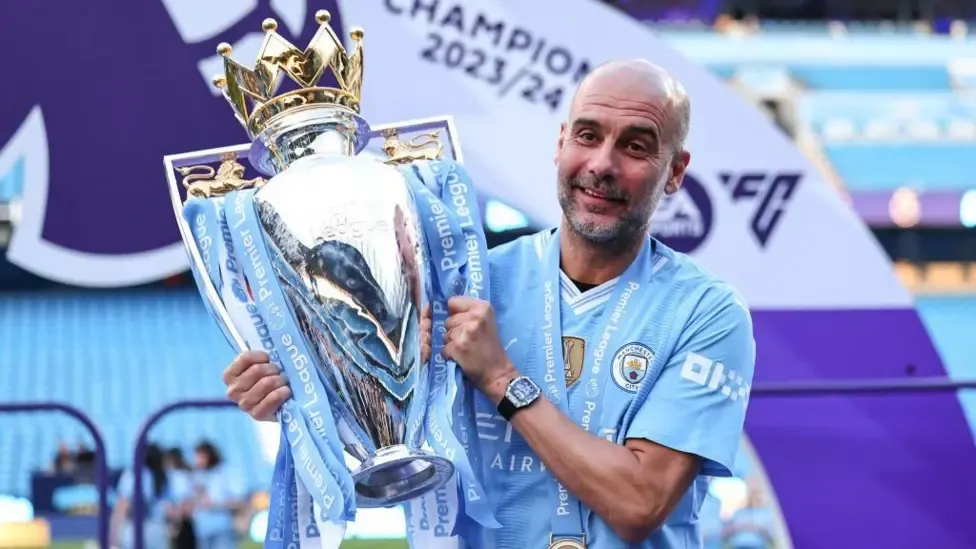
Pep Guardiola, whose tenure at City (2016–2024) was defined by six Premier League titles, three FA Cups, five League Cups, and a Champions League triumph, has emerged as the most vocal defender of the club’s leadership. In a statement that resonates with the loyalty of a fanbase that has stood by him through triumph and controversy, Guardiola declared his unwavering allegiance: ‘I am here, more than ever. I am, always have been, always will be, behind my club, my owner, my chairman, Ferran Soriano, the players, staff, Enzo Maresca, and you, our unique supporters.’ His words carry particular weight given his history of confronting institutional scrutiny—most notably during UEFA’s financial control hearing, where City ultimately prevailed. Yet this time, the stakes feel higher. The Premier League’s decision, which the club continues to deny, has triggered an appeal process with a deadline of October 2, leaving the future of City’s financial standing—and potentially its competitive integrity—hanging in the balance.
The emotional toll of the verdict has been palpable, even among those closest to the club. Micah Richards, a former defender who played under Guardiola, described the report’s language—particularly the term ‘sham contracts’—as devastating, reflecting the personal and institutional pain the scandal has inflicted. Meanwhile, the club’s leadership has framed the ruling as a miscarriage of justice, with chairman Khaldoon Al Mubarak and CEO Ferran Soriano insisting that ‘irrefutable evidence’ was ignored by the commission. Their confidence in an appeal underscores the high-stakes nature of the case, but the road ahead is fraught with uncertainty. The financial penalties alone could amount to millions, while the reputational damage risks fracturing the trust that has underpinned City’s rise to global prominence.
Tactically, the timing of this verdict could not be worse for City. With a crucial Premier League fixture against Liverpool looming on October 11—a match that will test their resolve both on and off the pitch—the club must navigate the fallout without derailing its competitive momentum. Guardiola’s presence, even as a former manager, remains a unifying force, but the broader implications extend beyond the dressing room. The Women’s team, led by head coach Andrée Jeglertz, has already signaled its commitment, stating that ‘business as usual’ will prevail as they prepare for their Champions League clash with Real Madrid. Yet for the men’s side, the pressure to maintain dominance amid this crisis will be immense. The question now is whether City can weather the storm—or if this verdict marks the beginning of a reckoning that could reshape the club’s trajectory for years to come.
One thing is certain: Guardiola’s stance is not just a personal endorsement but a strategic one. His legacy at City is undeniable, and his refusal to abandon the club—even in the face of adversity—sends a clear message to fans, players, and rivals alike. Whether the appeal succeeds or the penalties are upheld, the fallout from this verdict will define the next chapter of Manchester City’s story. For now, the club’s future hangs in the balance, and the world watches to see how they will rise to the challenge.