

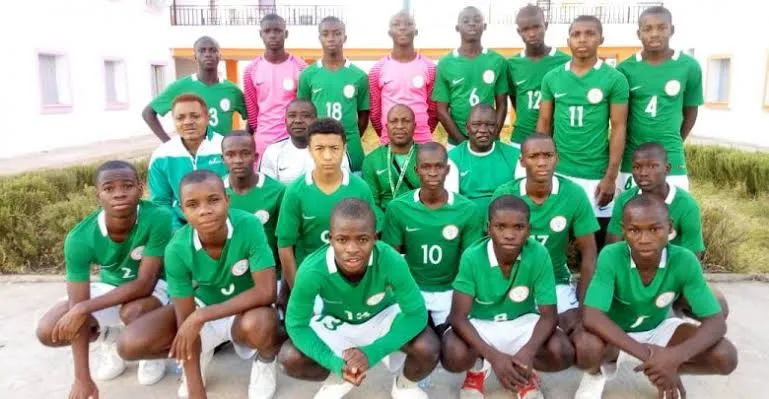
Nigeria’s Future Eagles have begun their inaugural FIFA U15 World Cup & Festival campaign with a pair of draws that have left their future in doubt. The youngsters, who have already faced two opponents in Baku, Azerbaijan, have yet to secure a victory, instead settling for a 3-3 draw against South Sudan in their opening match and a 2-2 draw with Jordan in their second. The pattern of results has sparked early concerns about consistency, particularly as the team prepares to face fellow West African rivals, The Gambia, on Sunday evening.
The opening fixture against South Sudan was a tactical battle that ended in a hard-fought draw. Nigeria’s U15s, managed by a coaching staff focused on developing young talent, managed to hold their own despite the scoreline. The match was a microcosm of the challenges ahead: South Sudan’s resilience in the face of Nigeria’s experience, and the Future Eagles’ struggle to break down a stubborn defense. The 3-3 result was not just a draw—it was a statement of intent, but one that left little room for optimism about immediate progress.
The second match, against Jordan, was no easier. The Future Eagles again found themselves locked in a midfield battle, with neither side able to impose their will. Jordan’s disciplined approach in defense and Nigeria’s inability to exploit gaps in the opposition’s structure led to a 2-2 draw that mirrored the first. The lack of decisive moments was telling: Nigeria’s young forwards struggled to find the net, while Jordan’s midfielders dictated the tempo without allowing Nigeria’s attacking players to thrive.
With two draws under their belts, the Future Eagles now face a critical test against The Gambia. The match, scheduled for Sunday evening, will be their first against a West African opponent and a chance to prove their mettle against a team from the same region. The pressure is on, not just for Nigeria’s young players but for the entire campaign. The Future Eagles have shown they can compete, but their inability to convert draws into wins could define their early tournament narrative.
The road ahead is fraught with challenges. Nigeria’s U15s must now find a way to break through defensively and capitalize on opportunities when they arise. The Gambia, a team with its own depth of talent, will not be an easy opponent. If Nigeria’s youngsters fail to secure a victory in their next match, the early signs of their campaign could set a tone of inconsistency that will be difficult to shake off. The stakes are high, and the Future Eagles will need more than just resilience—they will need tactical refinement and clinical finishing to turn the tide.



