

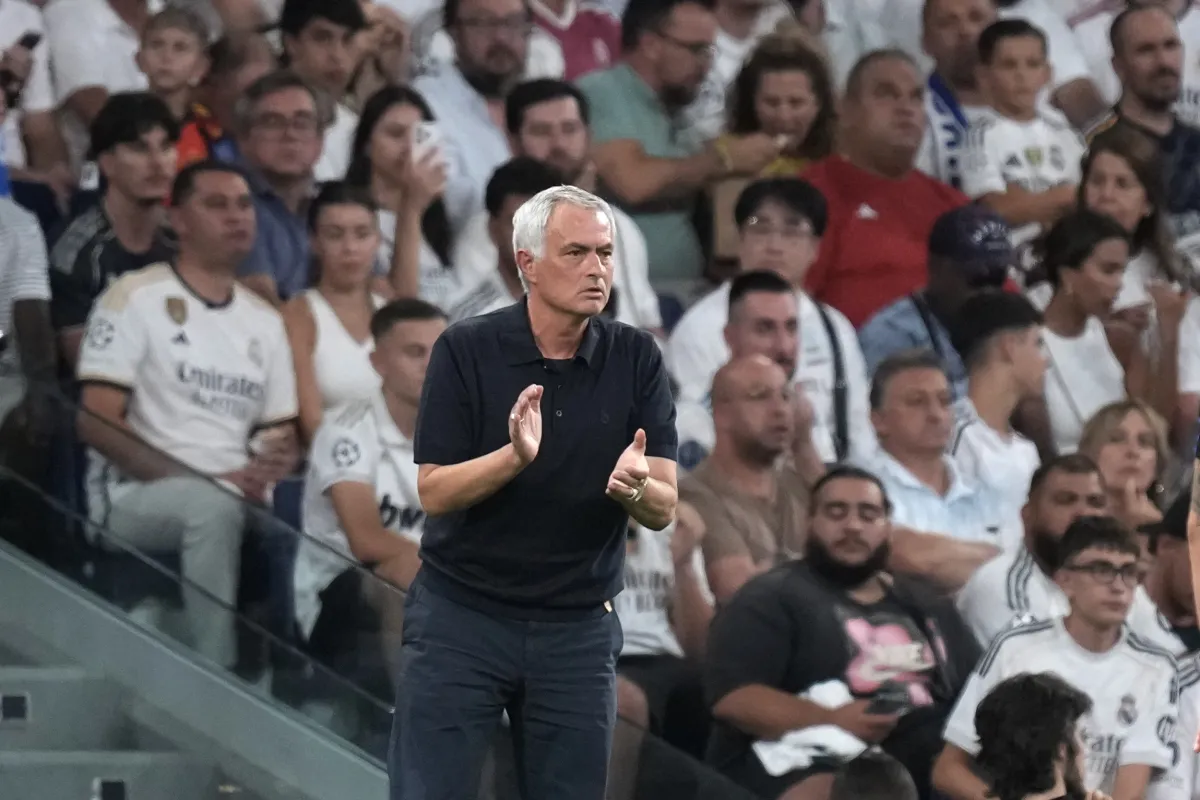
José Mourinho has delivered a seismic shift in tone at Real Madrid, rejecting the very idea of ‘untouchable’ players—including his own star names—with a bluntness that has sent ripples through the dressing room. In a press conference ahead of Wednesday’s Champions League clash against RB Leipzig, the manager made it unequivocally clear: no player, regardless of reputation, contract value, or armband, is guaranteed a place in the starting XI. The only thing untouchable, he insisted, is the club’s badge. The message was directed at Vinicius Jr, whose form has plummeted this season to the point where he has failed to score since August, and who now sits suspended for four La Liga matches following a disciplinary incident. Yet Mourinho’s words carry far greater weight than a passing rebuke. They mark a deliberate pivot in how the squad is managed, one that places performance above all else—even when that performance is delivered by a player who, just months ago, was the club’s most celebrated talent.
The timing of Mourinho’s intervention is no accident. Vinicius Jr’s absence has coincided with a rare period of cohesion for Real Madrid, particularly in La Liga, where the team secured a 4-1 victory over Sevilla on Sunday—a result that would have been unthinkable with the Brazilian winger in the side. Yan Diomande, the club’s record-breaking €140 million signing, has stepped into the breach with authority, scoring the decisive goal against Sevilla and proving he can thrive in the high-pressure environment of the Santiago Bernabéu. His emergence has not gone unnoticed, and Mourinho’s refusal to shield Vinicius Jr from scrutiny signals a broader strategy: the manager is demanding accountability from every player, regardless of their track record. ‘What makes a player untouchable is their performance on the pitch,’ Mourinho stated, a philosophy that directly contradicts the narrative that certain players are untouchable by virtue of their status. The message is simple—Vinicius Jr must earn his place back, and if he cannot, the squad will adapt.
The stakes could not be higher. Real Madrid enters the Champions League group stage with two wins from two, but the path to the top eight remains treacherous. RB Leipzig, though humbled by Bayern Munich’s 6-1 demolition in the Bundesliga, are not the same side that lost so heavily in Munich. They have three points from their opening two fixtures, and their ability to exploit Madrid’s midfield transitions—particularly with Mbappé and Espínola deployed in a risky 4-2-4 formation—could prove decisive. Mourinho’s warning against underestimating the German side underscores the reality that no team in this competition is a foregone conclusion. Yet even as he prepares for Leipzig, the manager’s focus remains on the bigger picture: securing the points needed to stay in the hunt for the top eight. ‘First, we need to reach the 11 or 12 points required to qualify,’ he said, a pragmatic acknowledgment that consistency, not just brilliance, will dictate their fate.
The implications of Mourinho’s stance extend beyond Wednesday’s match. They represent a fundamental challenge to the idea that star power alone guarantees success. Vinicius Jr’s struggles this season have not been isolated; they reflect a broader struggle for Madrid to balance their attacking options without sacrificing defensive stability. Diomande’s rise, meanwhile, suggests that the club’s investment in youth and high-profile signings is paying dividends—if those players are given the opportunity to perform. The manager’s approach, then, is both tactical and psychological: he is forcing the squad to compete for every position, ensuring that no player becomes complacent. For Vinicius Jr, the pressure is immense. He must not only regain his form but also prove that his value extends beyond his name. For Real Madrid, the message is clear: the badge is a shield, but only performance will carry them forward.



