

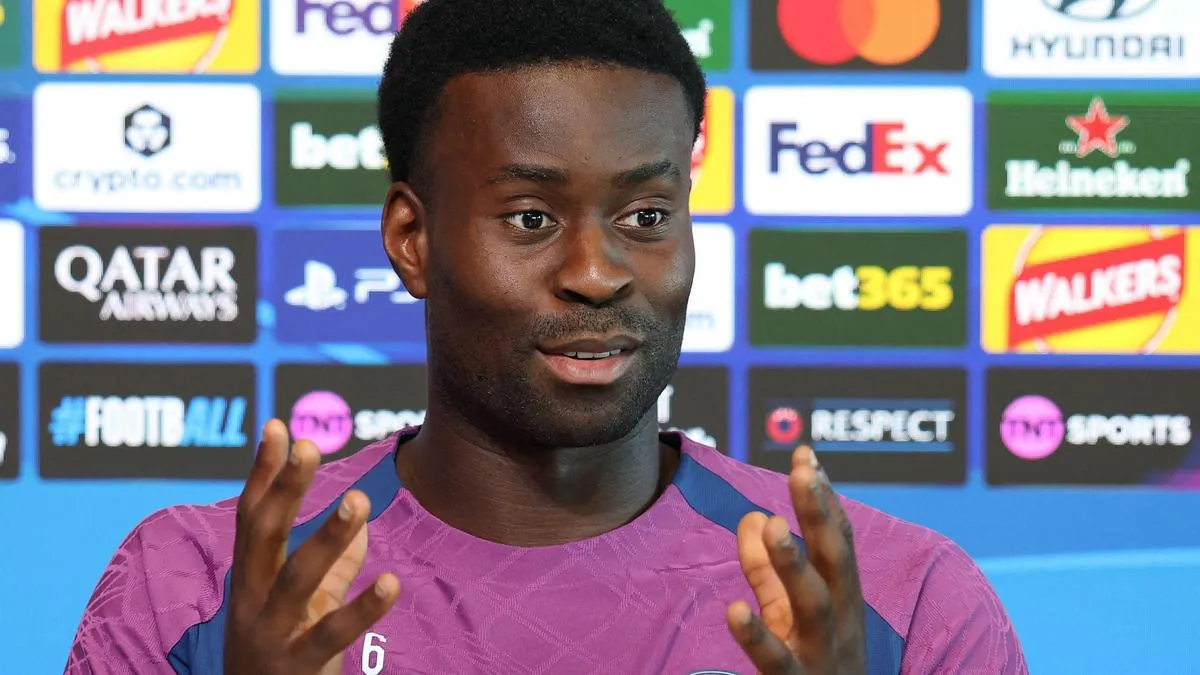
Manchester City’s Marc Guehi has delivered a blunt assessment of the knee-taking gesture, declaring it has ‘lost its impact’ in the Premier League’s ongoing battle against racism. The defender, who did not kneel before Saturday’s home match against Ipswich in the first round of the league’s ‘No Room For Racism’ campaign, framed his decision as a reflection of individual expression rather than defiance. ‘Each individual is different and shows respect for this campaign in a different way,’ he said, a statement that immediately reignited a conversation about the limits—and the evolution—of symbolic activism in modern football.
Guehi’s refusal is not an isolated incident. Earlier this season, teammate Dominic Calvert-Lewin also remained standing before a match, a move that underscored the growing fragmentation within the gesture’s once-unified support. The Premier League’s campaign, which dedicates two rounds annually to anti-racism messaging, has long relied on the knee as its visual centerpiece. Yet Guehi’s words suggest the gesture may no longer resonate as powerfully as it once did, prompting a deeper question: if the knee is losing its edge, what comes next? His perspective aligns with that of Wilfried Zaha, who in 2021 described the act as ‘degrading,’ a sentiment that has since gained traction among a small but vocal minority of players.
The timing of Guehi’s comments is significant. As the Premier League prepares to host its second ‘No Room For Racism’ round this weekend, the debate over the knee’s relevance has become a tactical and moral dilemma for clubs. Manchester City, a team that has consistently led by example in social causes, now faces a dilemma: how to balance individual agency with collective messaging? The club’s approach to this issue will be watched closely, not just by fans but by other institutions grappling with the same questions. The knee was once a unifying symbol, but Guehi’s intervention signals that football’s fight against racism may need more than gestures—it may need action.
What remains unclear is whether Guehi’s stance will inspire further reflection or provoke backlash. The Premier League’s campaign has always been about unity, but unity requires consensus. If players continue to diverge in their methods of protest, the message risks dilution. For Guehi, the issue is personal: as a Black defender in a sport still grappling with systemic racism, his words carry weight. His refusal to kneel is not an endorsement of inaction but a call for football to confront the deeper issues beneath the surface. The challenge now is whether the game will listen—or if the knee, once a rallying cry, will fade into another footnote in the long history of football’s social movements.



