

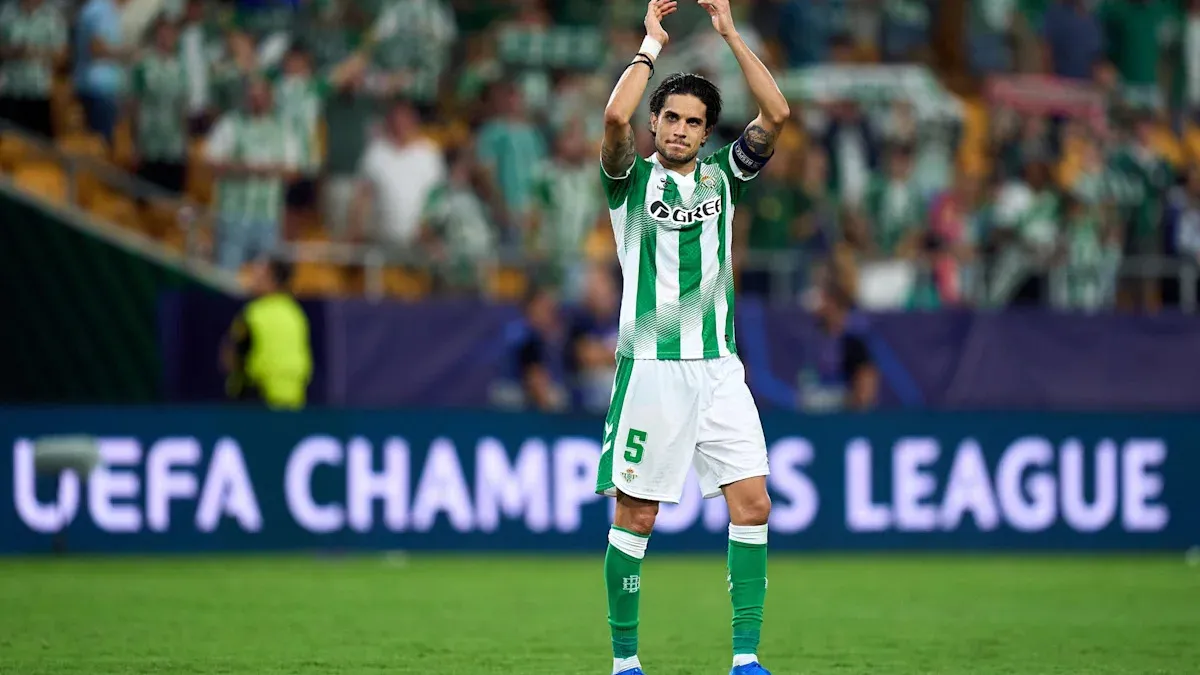
Marc Bartra’s assessment of Barcelona’s current attacking prowess is not just praise—it’s a tactical declaration. The former Barcelona defender, now at Real Betis, has positioned the Catalans as the most decisive team in world football, a claim backed by their clinical efficiency and adaptability. Their ability to dominate in set-pieces, counter-attacks, and structured build-up play has set them apart, with an average of over four goals per match becoming the new benchmark for modern attacking football.
Bartra’s endorsement of Pau Cubarsi as a Golden Boy contender adds another layer to Barcelona’s narrative. The young centre-back’s development under Hansi Flick has been nothing short of remarkable, blending defensive solidity with an offensive influence rarely seen at his position. Bartra, who has firsthand experience facing Cubarsi in competitive fixtures, highlighted the youngster’s potential to elevate Barcelona’s midfield and defensive structure. His words carry weight not just as a former teammate but as a player who understands the demands of elite football.
The tactical flexibility of Barcelona’s attack is what truly distinguishes them, according to Bartra. It’s not merely about individual brilliance—though Raphinha’s creativity and Gavi’s vision are undeniable—but the collective intelligence in movement, positioning, and spatial awareness. Whether transitioning from defence to attack or exploiting counter-attacking opportunities, the squad’s cohesion has been a defining feature this season. This level of precision is what makes them the most ‘decisive’ team, a term Bartra used deliberately to underscore their ability to convert opportunities into goals.
For Cubarsi, the Golden Boy award would be more than an individual accolade—it would signal Barcelona’s continued investment in youth development. His rise under Flick’s system, where defensive responsibility is paired with offensive contribution, reflects the club’s evolving philosophy. Bartra’s prediction that Cubarsi could one day represent Spain at the highest level further cements his potential as a future leader in the Catalan project. The question now isn’t whether Barcelona will remain dominant, but how they’ll sustain this level of attacking mastery in the coming seasons.



