

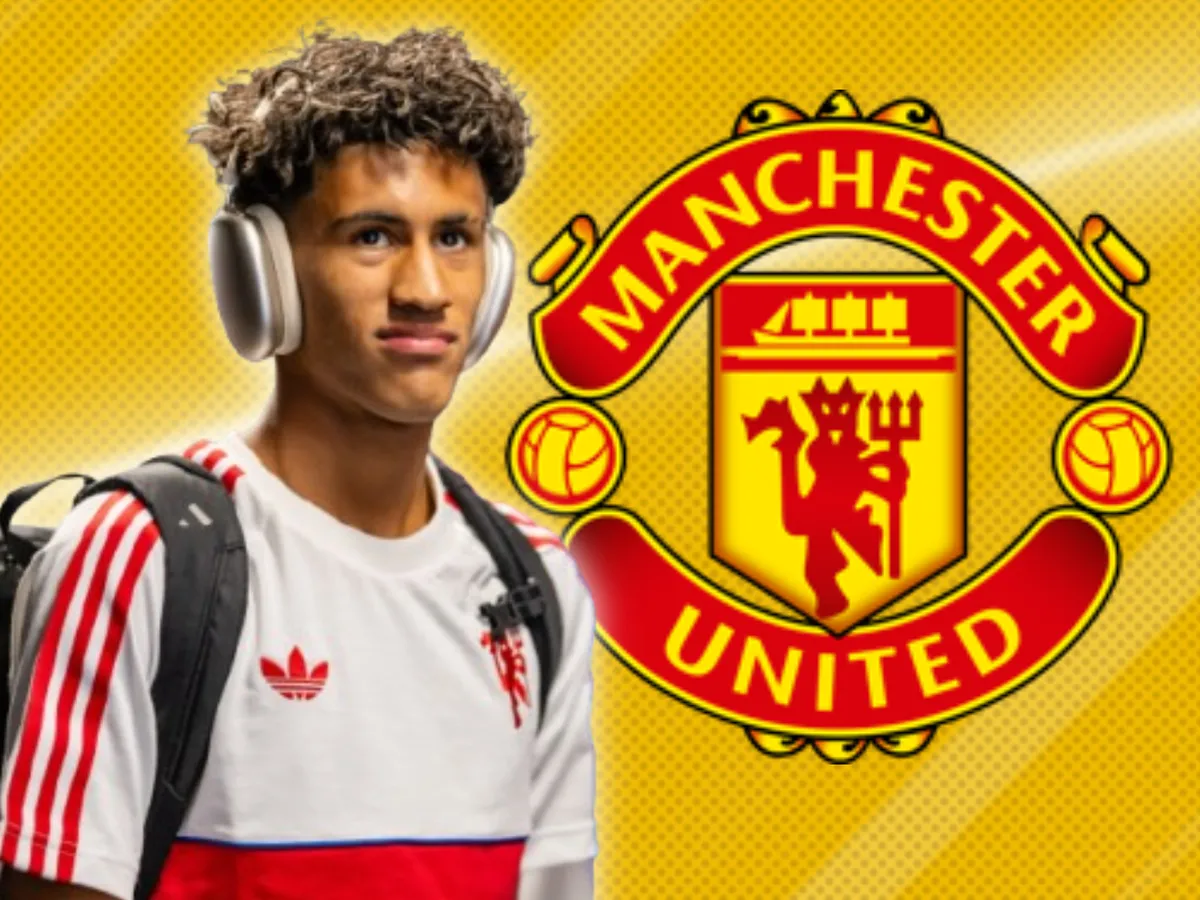
Manchester United’s youth academy has long been a crucible of raw talent, but few prospects have ignited the kind of urgency now surrounding JJ Gabriel. The 16-year-old winger’s 16th birthday on Tuesday didn’t just mark another milestone—it opened a window of opportunity that could redefine his career trajectory. With European giants circling and United’s options narrowing, Gabriel’s impending transfer saga is no longer a question of *if* he’ll leave, but *where* and *when*—and how much his departure will cost the club that shaped him.
The stakes are unprecedented. Sources indicate Chelsea are the most likely destination if Gabriel chooses to remain in the Premier League, though the financial implications would be starkly different from a move abroad. A domestic transfer would trigger a release clause—one that, based on recent precedent, could exceed £2.8 million, as seen in Liverpool’s acquisition of Rio Ngumoha from Chelsea. Yet for a club like Barcelona, where La Masia’s graduates are often valued at £30 million or more, the financial calculus shifts entirely. Gabriel’s potential is undeniable: his dribbling, vision, and composure in tight spaces have already drawn comparisons to United’s own academy alumni, though his commercial appeal now rivals that of the club’s most prized prospects. The question is whether United’s board will accept the premium demanded by a club that has historically treated its academy products as long-term investments rather than quick-flip assets.
The urgency isn’t lost on Gabriel himself. Reports suggest he has requested de-registration from Manchester United, a move that would allow him to sign as a free agent—though the timing remains fluid. Barcelona’s reluctance to loan him out underscores their confidence in his development, while Bayern Munich’s reported interest adds another layer of complexity. The Bavarians, known for their ruthless efficiency in signing young talent (see: Kingsley Coman, Leroy Sané), would likely view Gabriel as a high-upside project to mold into a top-six winger. Meanwhile, Real Madrid’s involvement—rumored to be driven by their desire to strengthen a midfield that has struggled without a true No. 10—adds a tactical dimension to the speculation. Each club approaches Gabriel’s profile differently: Chelsea see him as a Premier League-ready asset; Barcelona as a future star to nurture; Bayern as a long-term investment; and Madrid as a tactical solution.
What remains clear is that United’s handling of Gabriel’s future will be scrutinized as closely as any transfer in recent memory. The club’s reluctance to sell young talent—epitomized by their prolonged negotiations with Barcelona over Alejandro Balde—has left them vulnerable to criticism over missed opportunities. Balde’s recent public signals (reportedly reinforcing his Barcelona ties) have only heightened the pressure on United’s backroom staff to act decisively. For Gabriel, the decision isn’t just about money or prestige; it’s about legacy. The 16-year-old who once trained alongside Bruno Fernandes and Marcus Rashford now stands at the precipice of a choice that could determine whether he becomes another United success story or a cautionary tale about the cost of waiting too long.
The clock is ticking. With the Premier League window closing and European clubs preparing their summer budgets, Gabriel’s next move will be dictated by more than just his own ambitions—it will be shaped by the financial realities of a market where youth transfers are no longer a gamble, but a calculated investment. One thing is certain: whatever path he chooses, JJ Gabriel’s name will be etched into the annals of youth football as a generation-defining prospect—one whose departure could either elevate a club’s legacy or force a reckoning with the consequences of delayed decision-making.



