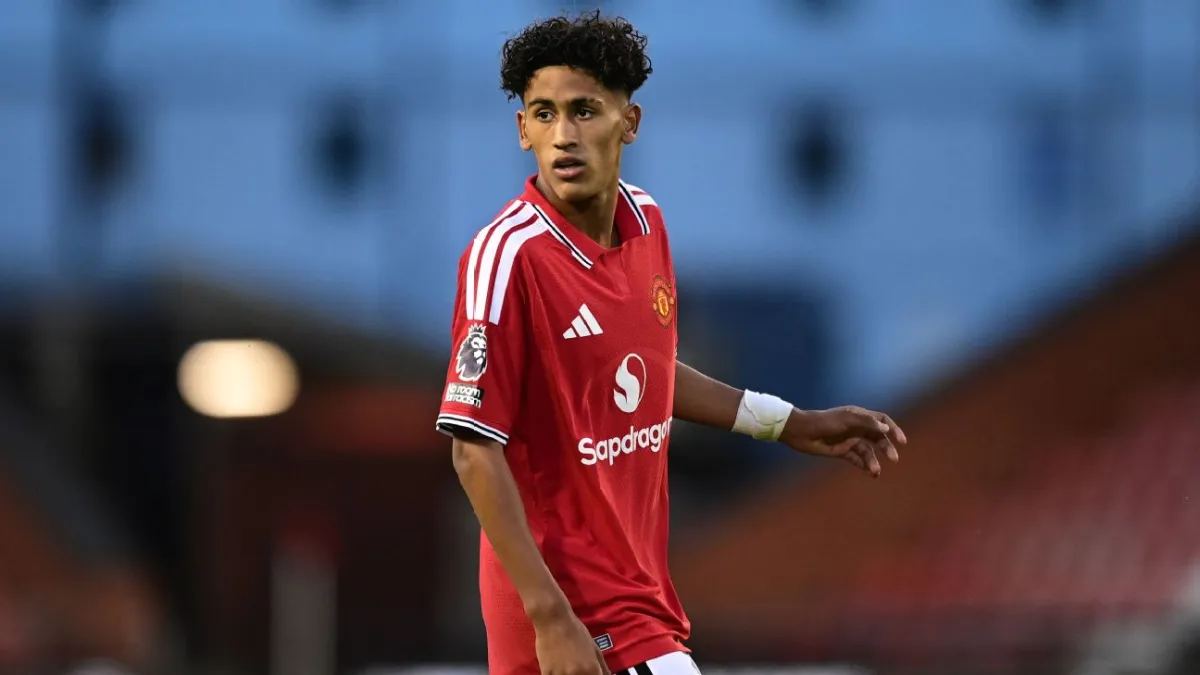
The Premier League’s academy wars have never been more intense, and at the heart of the battle stands JJ Gabriel—a 15-year-old midfield prodigy whose potential has turned Manchester United’s youth development into a high-stakes chess match. Since joining United’s academy at age 11, Gabriel has been groomed as a future world-class player, but his reputation has now transcended even the club’s own walls. Barcelona, Real Madrid, and Paris Saint-Germain are among the elite clubs said to have registered formal interest in securing his signature, a development that has sent ripples through Old Trafford.
For United, the stakes couldn’t be higher. Gabriel isn’t just another academy talent—he’s a player who has already been handed a golden trading card made with 24-carat gold, a symbol of the club’s investment in his future. Yet the pressure is mounting. Reports indicate that Gabriel has privately expressed a desire to leave United, a sentiment that has sparked internal unrest, including protests from fans and speculation about the club’s ability to retain its most prized youth asset. The fear isn’t just about losing a potential star; it’s about the broader implications for United’s academy, which has long been a breeding ground for Premier League talent.
The competition for Gabriel reflects a broader trend in English football, where clubs are now battling for dominance in the academy space long before players reach professional registration. At age 7, the race to secure the next generation begins, with scouts and academies vying to impress parents and players alike. For United, the challenge is twofold: first, to prove they can offer Gabriel the right pathway to success, and second, to prevent him from being poached by a club with deeper resources or a more enticing vision for his development. The fact that Barcelona—known for their rigorous youth system—has been linked with interest only underscores the gravity of the situation.
United’s recent struggles on the pitch haven’t helped. A week defined by internal turmoil, including protests over Gabriel’s future and a disappointing derby defeat, has only intensified the scrutiny. The club’s leadership, including co-owner Ed Ratcliffe, has faced criticism for its handling of the situation, with former players like Ryan Giggs and Gary Neville publicly voicing concerns about the club’s ability to retain its youth. The message is clear: if United fails to secure Gabriel’s future, it won’t just be a loss for the academy—it will be a blow to the club’s legacy as a developer of world-class talent.
What happens next will determine whether Manchester United can reclaim control of this narrative. The options are limited: either Gabriel stays and thrives under United’s guidance, or he becomes the latest example of a Premier League academy product who chose a different path. Either way, his story will be remembered as a turning point in the battle for the league’s most coveted young talent.