

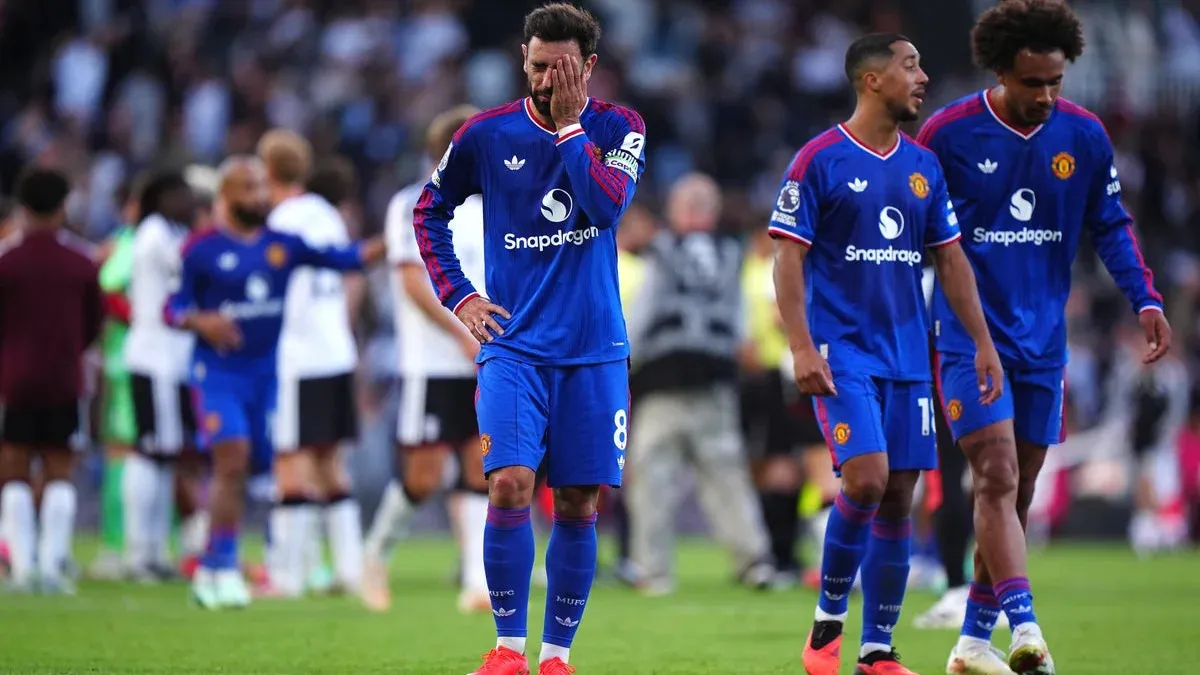
The Premier League’s return has delivered a fixture that transcends the usual narrative of tactical battles and managerial egos. Manchester United and Tottenham Hotspur, two clubs with contrasting but equally troubling starts to the 2026/27 season, face each other at Old Trafford this Saturday in a clash that could expose the fragility of both squads—or, if either side rises to the occasion, offer a glimpse of what’s possible when the pieces align.
For United, the numbers tell a story of potential squandered. Despite leading the league in shots—an average of 22.6 per game—they’ve converted far too few into results. Their dominance in long-range attempts, while statistically impressive, has yielded only eight goals in nine matches, a return that suggests a clinical edge is still elusive. The away trips to Atletico Madrid, Leeds, and Como loom, but the immediate priority is survival against a Tottenham side that has been exposed by their own defensive vulnerabilities. Since the 2025/26 season, Spurs have lost 36 of their last 47 matches in all competitions when trailing at the start of the game—a trend that, if unchecked, could see them languishing in the lower half for months. Their first Premier League win remains elusive, and the pressure on De Zerbi to deliver a breakthrough is mounting.
The managerial stakes are undeniable. Both Carrick and De Zerbi are under intense scrutiny, with some betting markets already positioning them as the next Premier League managers to be dismissed. For Carrick, the challenge is to prove that last season’s third-place finish wasn’t a fluke but the beginning of a resurgence. For De Zerbi, the task is even more daunting: to turn a squad with undeniable quality into a competitive force before the window to address their defensive shortcomings closes. The reality is that neither team has yet demonstrated the resilience required to sustain a title challenge, let alone a mid-table push. United’s struggles against promoted sides and weakened opponents like Fulham have laid bare their inconsistency, while Spurs’ inability to capitalize on their attacking firepower—particularly against weaker defenses—has left them vulnerable to the kind of defensive collapses that define their recent form.
What makes this fixture more than just another Premier League match is the broader context. The Premier League’s early-season chaos, where even the top three are not immune to slumps, has created an environment where underachievement is the norm. Yet, within that chaos, opportunities exist. Tottenham’s fixtures against Coventry City and Palace in October are make-or-break games; a loss to either would signal a season of prolonged disappointment. Meanwhile, United’s upcoming Champions League clash against Roma—a Serie A side currently in pole position—will test their ability to perform on the continent while still managing domestic stability. The question isn’t whether these teams will falter; it’s whether they can muster the composure to avoid a self-fulfilling prophecy of decline.
This match is a crucible. A win for either side could reignite hope, while a defeat would deepen the sense that both clubs are still searching for the formula to succeed. The Premier League’s early-season unpredictability means that no team is safe, but the margin for error is razor-thin. For Carrick and De Zerbi, the pressure isn’t just about points—it’s about proving that their tactical visions can overcome the systemic issues that have plagued their sides. Old Trafford will be the stage where that test begins.



