

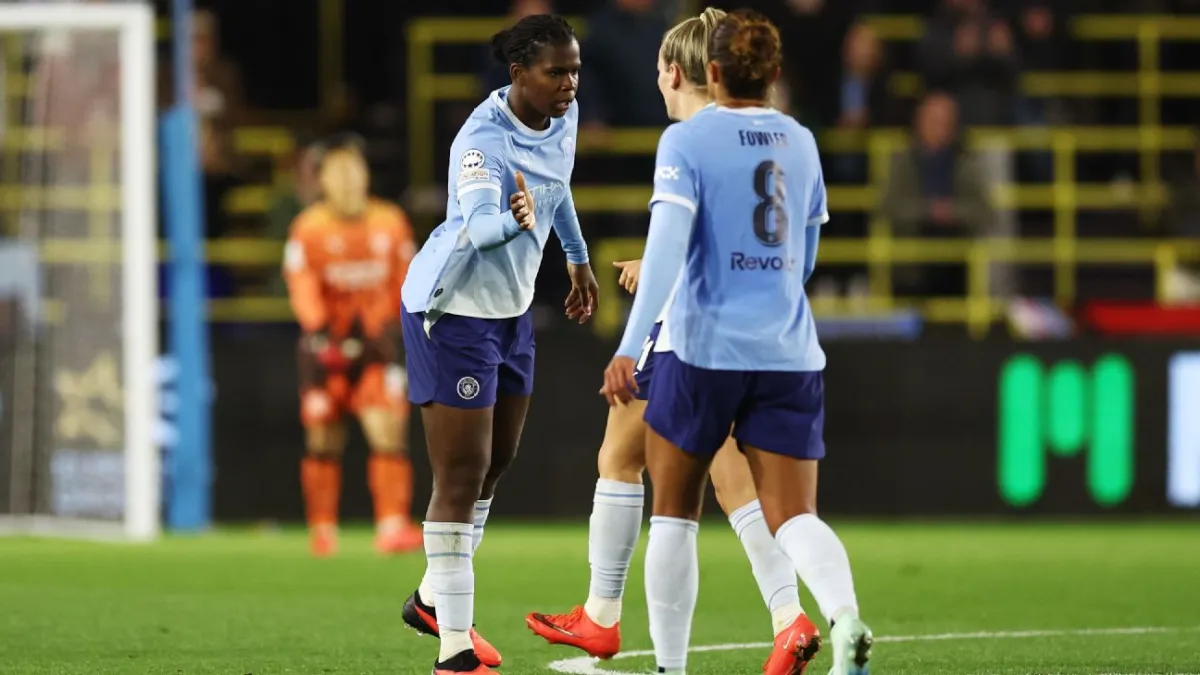
Manchester City’s women’s team has long been the quiet cornerstone of the club’s identity—a unit built on discipline, ambition, and an unshakable belief in the future. Yet this week, as the men’s side became the center of a storm, their women’s team stepped into the spotlight not for headlines, but for results. In a Champions League group-stage clash at Bayern Munich on September 22, they fought back from a deficit to secure a hard-fought 2-2 draw, a performance that would later be overshadowed by the financial revelations that would rock the club’s foundations.
The timing could not have been more brutal. Just three days after that draw, Manchester City’s men’s team faced the fallout of an independent panel’s ruling—over 100 breaches of Premier League financial regulations, a sledgehammer blow to a club that had spent a decade constructing its empire on financial dominance. The women’s team, meanwhile, continued their unbeaten start to the 2026-27 season, proving that even in the face of institutional upheaval, their professionalism remained unbroken. Their next test came on Sunday, a 1-0 victory over Charlton Athletic in the Women’s Super League, a reminder that while the men’s side grappled with scandal, the women’s side was still writing their own narrative.
The contrast between the two teams could not be more stark. Where the men’s side became the subject of public dissection—financial irregularities, governance questions, and the very future of the club’s model—the women’s team operated in near-total obscurity, their work ethic and tactical intelligence going unnoticed by the mainstream narrative. Yet in those 90 minutes at Ashton New Road, the blue side of Manchester delivered something rare: a moment of pure footballing joy. Linda Caicedo’s mazy run and clinical finish were the kind of moments that define greatness, the kind that would have been celebrated had the week not been consumed by controversy.
The real significance of this victory lies not in the result itself, but in what it says about the club’s priorities. While the men’s side’s future hangs in the balance, the women’s team continues to operate with the same relentless focus. Their ability to perform under pressure—whether against Bayern Munich’s defensive solidity or the financial chaos unfolding around them—speaks to a level of maturity that few clubs can match. It is a testament to the work of those who have built this project, who understand that success is not measured by headlines alone, but by consistency, by resilience, and by the quiet strength of those who keep the machine running.
For now, the women’s team has carved out an escape from the turmoil. But the larger question remains: how long can they sustain this level of excellence while the men’s side’s future remains in flux? The answer may lie in the fact that they have done it before—through injuries, through transfers, through the inevitable highs and lows of a club on the rise. This week, they proved they can do it again.



