

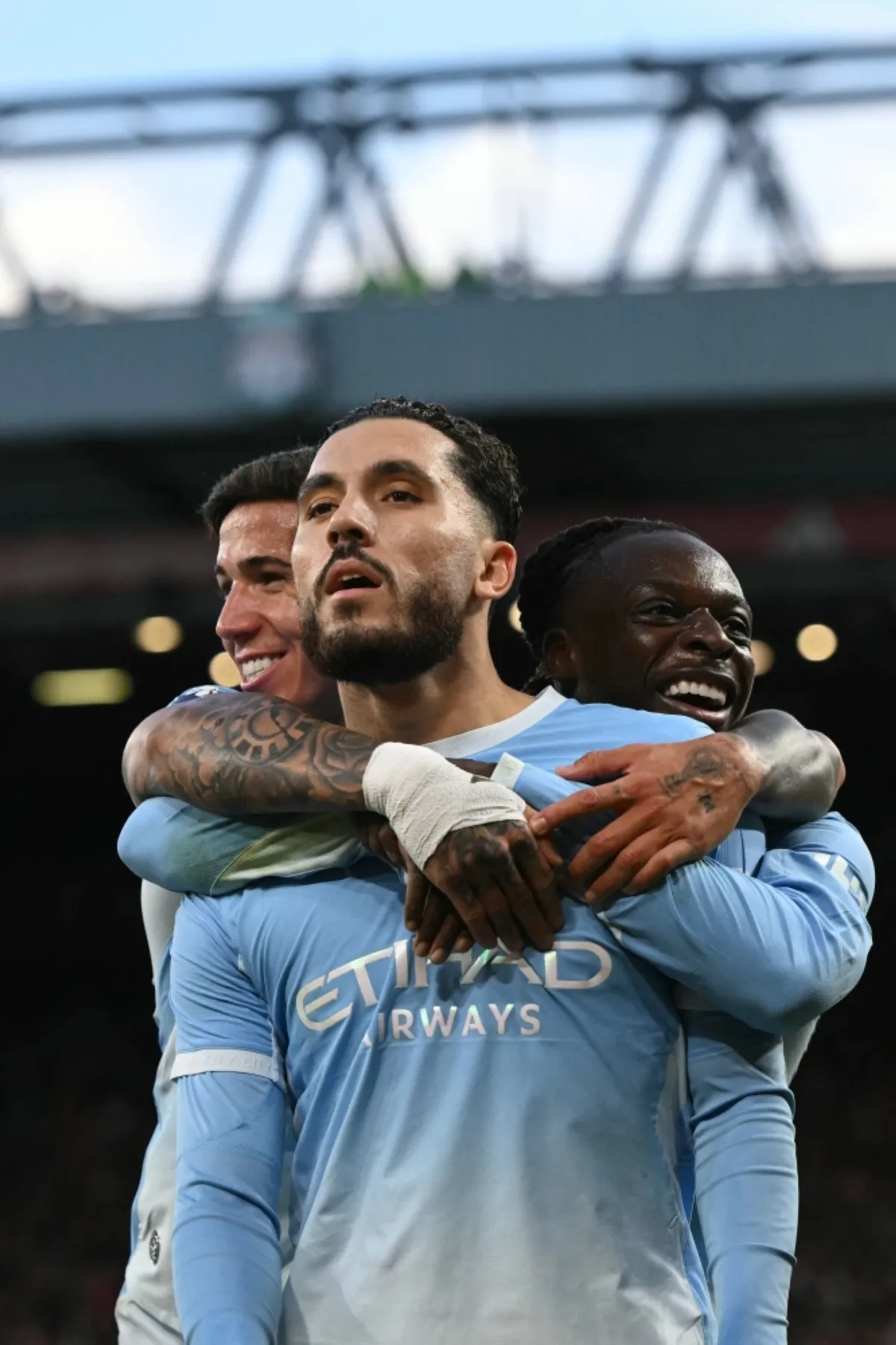
Manchester City’s 3-0 demolition of Liverpool at Anfield was a defiant statement—both on the pitch and off. The victory, secured in the first Premier League game since the club was found guilty of over 100 financial irregularities, underscored the team’s resilience under Enzo Maresca. Yet beneath the clinical execution of Erling Haaland, Jeremy Doku, and Rayan Cherki lay a crisis: the outcome of City’s appeal could determine whether their dominance is preserved or erased. The Premier League’s independent commission concluded that the club and its Emirati owners orchestrated ‘sham’ deals to artificially inflate revenues by over £900 million between 2009 and 2018, a period that coincided with three league titles and a Champions League triumph. The potential sanctions—ranging from points deductions to retrospective title stripping—now threaten to unravel the foundations of a decade of supremacy.
The match itself was a microcosm of the broader conflict. Liverpool, reduced to 10 men after Ryan Gravenberch’s red card, were overwhelmed by City’s clinical efficiency. Doku’s deflected goal and Haaland’s strike in the 75th minute set the tone, while Cherki’s late finish sealed the result with surgical precision. Maresca’s side adapted mid-game by introducing Doku early in the second half, exploiting Liverpool’s defensive frailties. Yet the real drama unfolded outside the stadium. Anfield’s Kop end erupted with chants of ‘cheats’ and ‘going down,’ a visceral reaction to the financial scandal that has fractured the club’s legacy. Liverpool’s new boss, Andoni Iraola, acknowledged the uncertainty: ‘The uncertainty is not good for anyone,’ he said, highlighting how the fallout extends beyond City. The Premier League’s ruling could reshape the competition, with rivals like Liverpool and Manchester United poised to exploit any vulnerability.
The financial impropriety verdict has reignited debates about the ethics of modern football’s economic model. Critics argue that City’s ‘golden era’ under Pep Guardiola was built on deception, with rivals like Liverpool—who finished second three times in the past 12 years—left to question whether fair play ever had a chance. The scale of the alleged fraud—£900 million in manipulated revenues—dwarfs previous scandals, raising questions about the Premier League’s ability to enforce its own rules. Even if City’s appeal succeeds, the damage to their reputation is irreversible. The club’s arrival at Anfield under police escort, amid a hostile fan reception, symbolized the isolation of a team now fighting for its very existence in the eyes of the game’s purists.
For Manchester City, the immediate priority is survival. The 3-0 win extended their three-point lead at the top, but the title race is now secondary to the legal battle. Maresca’s team showed they can still perform under pressure, but the longer the financial uncertainty drags on, the harder it will be to maintain momentum. Liverpool’s defeat—coming after a season of inconsistency under Iraola—has reignited hopes of a resurgence, but the Reds’ path is complicated by injuries and a squad still finding its footing. The Premier League’s next move will determine whether this season becomes a footnote in City’s history or a turning point for the entire competition. One thing is certain: the game’s most dominant force is no longer untouchable.



