

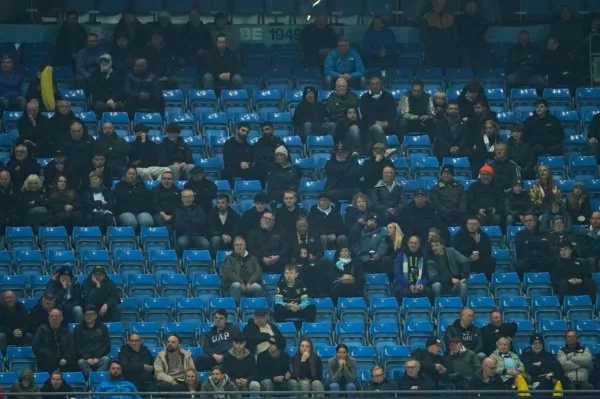
Manchester City’s Champions League campaign resumed with a statement of intent, but the absence of fans at the Etihad Stadium on Tuesday night sent a clear message about the emotional toll of the club’s financial crisis. More than 60,000 spectators had turned out for the last Champions League fixture against Paris Saint-Germain, where City staged a defiant pre-match spectacle—fireworks, screens displaying their greatest moments, and a collective show of solidarity. This time, the stands remained eerily quiet, a stark contrast to the club’s usual electric atmosphere. The decision to stay away wasn’t just a personal choice for some; it was a collective response to the Financial Fair Play ruling that has cast a shadow over the club’s future, with potential punishments including fines, points deductions, or even expulsion from the Premier League.
The result, however, was no less dominant. Phil Foden delivered a hat-trick in just two appearances, his first goal since a solitary strike against Ipswich Town at the weekend. The midfielder’s clinical finishing—two goals from Rico Lewis’ assists—highlighted the precision of Enzo Maresca’s system, which had already dismantled Norwich City 5-0 in the League Cup and Manchester United 1-0 in the Premier League derby. The first half alone saw 10 shots on goal, with Allan’s header narrowly missing the target and Rayan Cherki’s effort adding to the pressure on AEK Athens’ defense. Elliot Anderson also found the net, reinforcing the narrative of a team that has transitioned seamlessly from domestic dominance to continental form. Yet, the absence of Erling Haaland—named on the bench but unused—raised questions about tactical flexibility, though Maresca’s rotation strategy appeared calculated rather than reactive.
The tactical execution was flawless, but the emotional subtext was impossible to ignore. City’s Champions League campaign had already begun with a 1-0 defeat to PSG, a result that left the club’s supporters questioning their manager’s approach. This victory, while decisive, did little to erase the lingering doubts about the club’s future. The financial fallout has fractured the relationship between City and its fans, who once rallied around the club through thick and thin. The empty stands were a silent protest, a visual representation of the disillusionment that has set in since the ruling. For a club that has built its identity on spectacle and unity, the absence of fans was a painful reminder of how far things have fallen.
What remains clear is that Manchester City’s footballing project is still operating at an elite level, even as its institutional foundations tremble. The 5-1 victory over AEK Athens was a reminder of why the club is a constant threat in Europe, but the long-term implications of the financial ruling loom larger than any tactical masterclass. The question now is whether the club can maintain its momentum while navigating the fallout, or if the cracks in its relationship with supporters will widen beyond repair. One thing is certain: the football will continue to be world-class, but the narrative around it has shifted irrevocably.



