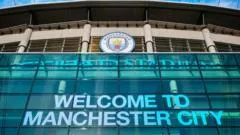
The moment Manchester City’s 1-0 half-time lead at the Etihad Stadium on May 13, 2012, felt like the beginning of a new era. Fourteen years later, that era is under siege—not by rivals, but by a verdict that threatens to unravel the very foundations of their success. An independent panel has found the club guilty of 114 out of 115 financial breaches alleged by the Premier League, spanning the period from 2009 to 2018. The charges, if upheld, accuse City of systematically manipulating financial regulations to sustain a spending spree that reshaped English football, acquiring world-class talent like Kevin De Bruyne, David Silva, and Erling Haaland while masking the true origins of their revenue.
The implications are staggering. Six Premier League titles in seven seasons, two Champions League trophies, and a period of unmatched dominance—all built on a structure now deemed to have violated the spirit of fair play. The ruling doesn’t just target City’s recent trophies; it casts doubt over the entire trajectory of their rise under Sheikh Mansour’s ownership, where hundreds of millions were funnelled through opaque deals tied to Abu Dhabi. The club’s defense has been steadfast, with chairman Khaldoon Al Mubarak insisting they remain ‘a long way from the finish line’ in their appeal process. Yet the weight of the allegations—allegedly 130 breaches in total, though only 115 were formally charged—suggests a pattern of behavior that went beyond isolated errors.
The Premier League’s response has been deliberately measured, refusing to confirm or deny the ruling’s specifics while awaiting the panel’s final decision. This delay is deliberate, but the silence itself is telling. If the appeal fails, the question becomes: what sanction fits a club whose entire model was built on financial flexibility? Points deductions, title stripping, or even expulsion from the Premier League are all on the table—each carrying seismic consequences for the league’s balance. For rivals like Liverpool and Arsenal, who have spent years clawing back from City’s shadow, the uncertainty is a rare moment of leverage. But for the Premier League itself, the ruling forces a reckoning: can the game’s most profitable competition survive if its most successful club is deemed to have operated outside its rules?
The fallout extends beyond trophies and points. The ruling has already fractured the narrative of City’s dominance, exposing the fragility of their financial foundation. Analysts like Paul Merson, who once dismissed City’s chaotic style as unsustainable, now find their warnings eerily prescient. The club’s ability to attract talent, once seen as invincible, now hinges on whether they can navigate this crisis without losing credibility. And for the Premier League, the ruling forces a choice: double down on enforcement to restore faith in the system, or risk alienating its most successful franchise in the process.
What remains clear is that this is not just a story about Manchester City. It is about the soul of the Premier League—a league that has long prided itself on its commercial success but now faces a test of its moral authority. The next chapter will be written in the coming months, but one thing is certain: the legacy of City’s golden era will never be the same.