

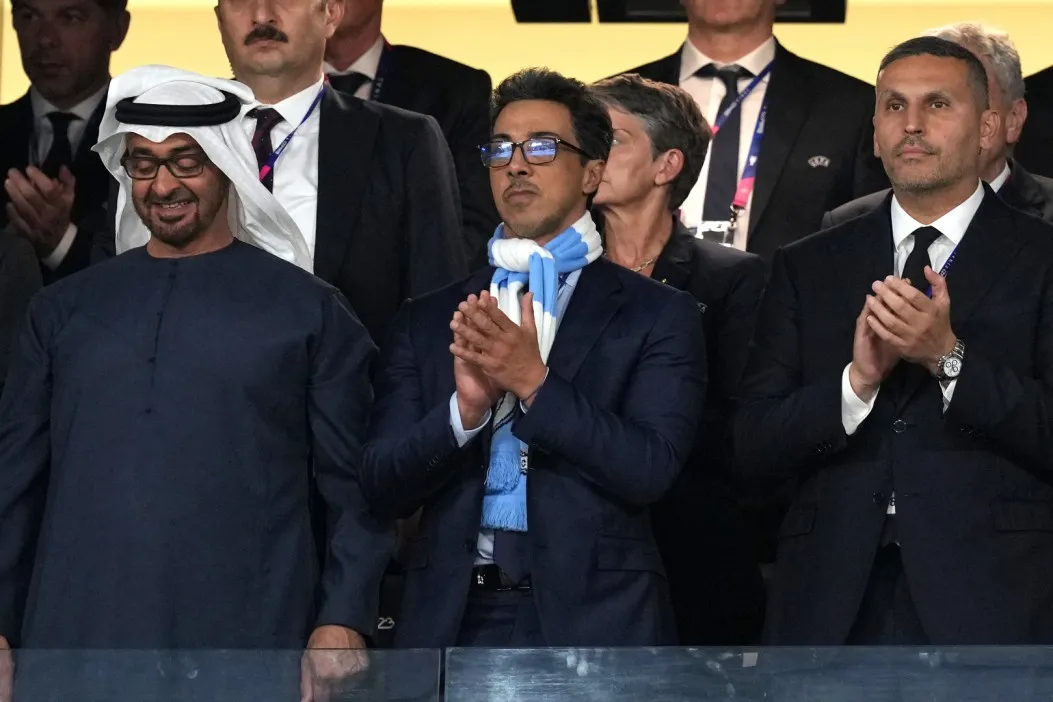
The Premier League’s damning verdict against Manchester City has done more than tarnish the club’s reputation—it has triggered a full-blown diplomatic crisis between the UK and the United Arab Emirates, with trillions of pounds in economic ties hanging in the balance. The ruling, which found the Abu Dhabi-owned club guilty of systematically inflating its financial results over a decade, has prompted Emirati officials to issue a direct warning: future major investments in Britain—already worth over £30 billion across defense, life sciences, and technology—are now at risk. The stakes could not be higher. A single investment summit scheduled for this month may now become a battleground, with both sides scrambling to salvage a partnership that has underpinned the UK’s post-Brexit economic strategy.
At the heart of the fallout is a fundamental question: how much political interference can be tolerated in a case that has already dragged on for four years? UK Prime Minister Andy Burnham’s recent comments—where he expressed ‘concern’ over the potential loss of Manchester City’s Emirati owners—have stoked frustration among government officials who insist the process must remain independent. The Premier League’s decision to strip the club of three points and impose a £50 million fine was a legal verdict, not a political one. Yet Burnham’s intervention has only deepened skepticism about whether the UK is prioritizing accountability or economic stability. The irony is not lost on observers: a club owned by a sovereign wealth fund backed by the UAE’s deputy president has become a litmus test for how far London will go to protect its financial interests.
The timing of Khaldoon Al Mubarak’s meeting with a senior UK minister—just days before the verdict was announced—has added another layer of controversy. As CEO of Abu Dhabi’s Mubadala Investment Company, Al Mubarak’s discussions with Business Secretary Jonathan Reynolds were framed as a routine update on UAE investments. But the coincidence has fueled speculation that diplomatic channels may have been used to influence the outcome. While the UK government has refused to disclose any correspondence between its embassy in Abu Dhabi and the Foreign Office—citing the risk to bilateral relations—whispers of behind-the-scenes lobbying have only intensified the perception of a conflict of interest. The Premier League’s ruling, while legally sound, now carries the weight of a political minefield.
What remains unclear is whether this crisis will force a reckoning over the role of foreign ownership in English football. The Premier League’s financial regulations were designed to prevent exactly the kind of accounting irregularities Manchester City was found guilty of. Yet the club’s ownership structure—rooted in the UAE’s strategic investments—has made it a symbol of the broader tensions between global capital and domestic governance. For Abu Dhabi, the ruling is not just about three points or a fine; it’s a test of whether the UK will treat its investors as partners or pariahs. The answer could reshape not just football, but the entire economic relationship between two nations that have long relied on each other’s stability.
One thing is certain: the fallout will extend far beyond the Premier League. The UAE’s warning about future investments is a direct challenge to the UK’s post-Brexit economic narrative. With billions in infrastructure projects, defense contracts, and tech collaborations on the line, the government’s response to this crisis will be watched closely by investors worldwide. For Manchester City, the immediate focus is damage control—both on the pitch and in the boardroom. But for the UK and the UAE, the real game has only just begun.



