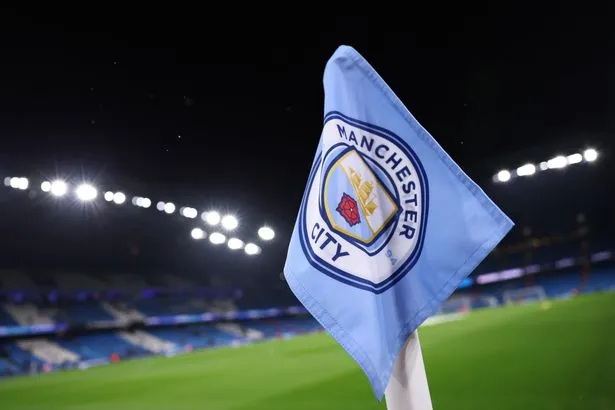
The verdict has arrived, and with it, the unthinkable: Manchester City have been found guilty of 114 out of 115 charges in the Premier League’s long-running financial investigation.
The ruling, delivered after years of legal wrangling, has not only shattered the club’s denials of wrongdoing but has also ignited a firestorm of public outrage—most notably from Manchester United supporters, who are now calling for City’s outright expulsion from football.
The demand, though extreme, reflects the scale of the fallout from a case that has exposed systemic failures in English football’s regulatory framework.
The charges, spanning a decade from 2009 to 2018, allege a pattern of financial misconduct that allegedly gave City an unfair competitive advantage.
While the Premier League’s rules do not explicitly outline expulsion as a sanction, the discretionary powers of the independent panel could still deliver a punishment of historic proportions—whether through retrospective points deductions, title stripping, or even the club’s removal from the league entirely.
The panel’s deliberations, however, are far from immediate.
A sanctions hearing has yet to be scheduled, meaning the club retains the right to appeal while fans and rivals brace for a decision that could redefine English football’s landscape.
The political and emotional repercussions are already palpable.
Manchester United’s fanbase, long a vocal critic of City’s perceived dominance, has seized on the verdict as proof of systemic unfairness.
Statements from fan groups now demand not just punishment but erasure, framing the case as a moral imperative rather than a legal one.
Beyond the immediate fallout, the ruling threatens to expose deeper tensions between British football and its Gulf-backed investors, with the UK now forced to confront how it regulates foreign capital in a sport increasingly dominated by billionaire ownership.
The timing could not be worse for Manchester, as the city itself grapples with economic and social pressures—making the club’s defiance of regulatory authority a symbol of broader institutional hubris.
Erling Haaland’s sudden withdrawal from media duties with Norway adds another layer of complexity.
The striker’s absence, reportedly tied to the club’s legal troubles, underscores how the fallout extends beyond Manchester.
With Norway’s national team preparing for a Nations League match, Haaland’s exclusion—once a routine part of international duty—now carries the weight of a club embroiled in controversy.
The Premier League’s silence on the verdict’s implications only fuels speculation, while City’s defiant statements, including Chairman Khaldoon Al Mubarak’s vow to “prevail,” reveal a club determined to fight every step of the way.
What remains unclear is whether the punishment will be proportional to the charges or a symbolic rebuke to a club that has long operated beyond traditional boundaries.
The independent panel’s decision, whenever it comes, will not just shape Manchester City’s future but could redefine the rules of the game itself.
For now, the football world watches as the first domino falls—and the consequences ripple far beyond Manchester.