

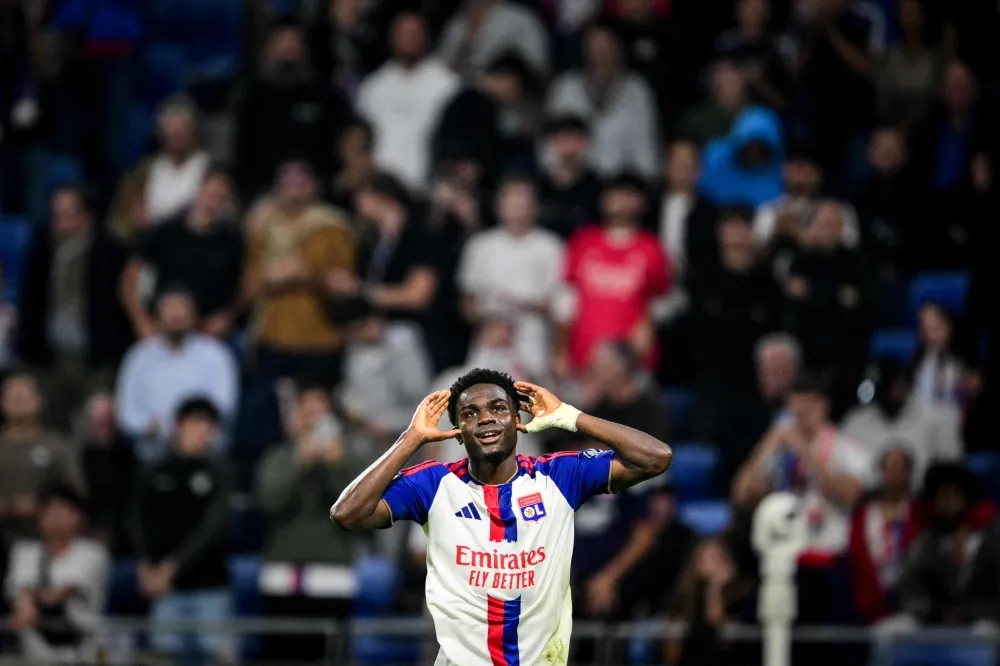
Lyon’s Europa League campaign took another decisive step forward with a hard-fought 3-2 victory over Crystal Palace, a result that exposed the tactical depth of both sides in a clash where possession and counter-attacking precision dictated the outcome. The French giants, led by their experienced midfield, controlled the tempo throughout, but Crystal Palace’s resilience in the final third forced Lyon into defensive adjustments that ultimately proved costly. The match was a study in contrast: Lyon’s structured build-up play, anchored by their defensive midfielders, contrasted sharply with Palace’s direct, high-risk approach, which yielded moments of danger but failed to convert on the biggest occasions. The final whistle marked another demonstration of why Lyon remain a consistent force in Europe’s secondary competitions, their ability to absorb pressure and deliver in crunch moments a hallmark of their recent form.
The Europa League’s unpredictability was further underscored by Sunderland’s late comeback victory over Torreense, a result that sent shockwaves through the Portuguese club’s campaign. Sunderland, who entered the match as underdogs, turned the tide in the final 10 minutes, their attacking fluidity and clinical finishing proving decisive. The goal, a product of well-timed pressing and a single, decisive moment of individual brilliance, encapsulated the kind of drama that defines the competition’s knockout stages. Torreense, despite their defensive organization, were unable to contain Sunderland’s relentless forward momentum, a testament to the visitors’ tactical adaptability. The win not only secured Sunderland’s place in the next round but also reinforced the Europa League’s reputation as a platform where underdog stories thrive, where tactical intelligence and composure often outweigh traditional power dynamics.
The tactical battles of Thursday’s matches extended beyond the results, offering a glimpse into the evolving strategies of Europe’s mid-tier clubs. Lyon’s approach—rooted in positional play and defensive solidity—mirrored their recent form in domestic and continental competitions, where they’ve consistently navigated challenges with methodical precision. In contrast, Crystal Palace’s aggressive, counter-attacking style, while effective in creating chances, lacked the finishing consistency to break down Lyon’s organized defense. The result was a microcosm of the Europa League’s tactical diversity, where clubs must constantly adjust to exploit opponents’ weaknesses while mitigating their own vulnerabilities. For Palace, the defeat serves as a reminder that in Europe’s knockout stages, even the most promising campaigns can be derailed by a single tactical miscalculation.
The broader implications of these results extend beyond the immediate match outcomes, shaping the narrative of the Europa League’s knockout phase. Lyon’s victory reinforces their status as one of the competition’s most reliable teams, their ability to absorb pressure and deliver in high-stakes moments a key factor in their pursuit of deeper runs. Meanwhile, Sunderland’s late winner underscores the Europa League’s capacity to produce unexpected narratives, where resilience and tactical acumen can elevate underdog stories to new heights. As the competition progresses, these matches serve as a reminder that in Europe’s secondary competitions, where the margin for error is thin, it is often the teams that combine tactical intelligence with composure who emerge victorious. The stage is now set for the next round, where these lessons in adaptability and precision will be tested anew.



