

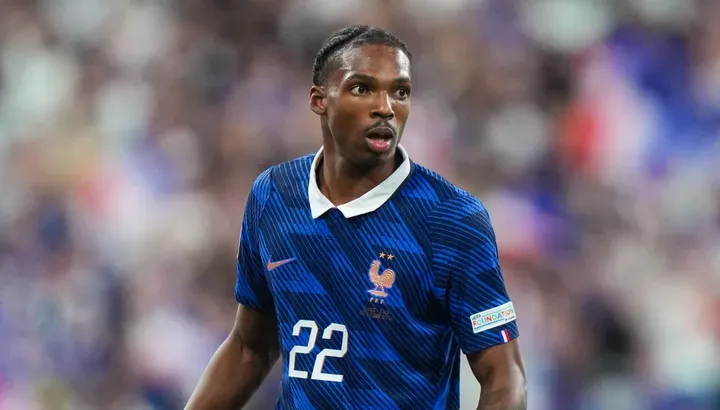
Liverpool’s Premier League season has barely begun, but the club’s defensive vulnerabilities are already under intense scrutiny. Jeremy Jacquet, the £60 million center-back who arrived from Rennes in January, was sidelined by a left hamstring strain after France’s 4-1 Nations League victory over Belgium—a setback that now threatens to disrupt Liverpool’s preparations for their high-stakes clash with Manchester City. The French Football Federation confirmed the injury as a ‘strain,’ while Zinedine Zidane described Jacquet as ‘slightly injured’ in his post-match press conference, a phrasing that underscores the seriousness of the situation.
The timing could not be worse. With Manchester City looming in Anfield, Liverpool’s defensive shape is already compromised by the absence of Joe Gomez, who has battled fitness issues throughout the summer. Ronald Araujo, on loan from Barcelona, and Andoni Iraola—who has been thrust into the starting XI—provide cover, but neither offers the same defensive intelligence or experience as Jacquet. The 21-year-old’s development has been a topic of debate since his arrival, with his performance in Liverpool’s 1-0 win at Bournemouth described as ‘a step forward’ by the club. Yet steps forward are not enough when the stakes are this high. A prolonged absence would force Liverpool into untested formations, potentially exposing their backline to City’s relentless pressing and counter-attacking threat.
The injury dilemma extends beyond Jacquet. Liverpool’s squad depth remains a pressing concern, particularly after the departures of Mohamed Salah, Andy Robertson, and Ibrahima Konate. Only two new signings—Jacquet and Victor Muñoz—have joined this summer, a tally that feels woefully inadequate given the scale of the challenges ahead. Andoni Iraola, who has taken on a leadership role in the absence of Salah, acknowledged the urgency during a press conference in Chicago: ‘There are obvious situations where we know we need to sign players. Winger, for example. We definitely need to sign a winger.’ Replacing Salah remains the most critical priority, but the broader issue is one of defensive solidity. Gomez’s inconsistent fitness and the unproven nature of Jacquet and Leoni mean Liverpool are relying on youth and adaptability in a league where defensive errors are punished harshly.
The pressure is compounded by the fact that Liverpool’s Premier League opener against Newcastle United is still four weeks away. That window offers little time to address the squad’s shortcomings, especially when key players like Gomez and Salah are already operating under the weight of age and injury. The club’s financial investment in Jacquet was meant to provide stability at the heart of the defense, but his current form and fitness status suggest that stability is still a work in progress. Without a swift recovery, Liverpool’s defensive structure could fracture at a critical moment, leaving them vulnerable to the kind of defensive lapses that have haunted them in recent seasons.
For now, the focus remains on Jacquet’s return. If he is fit for the Manchester City game, Liverpool will have a fighting chance to maintain their defensive shape. But if the injury persists, the consequences could be severe. The Reds are already playing catch-up in the title race, and defensive fragility is a luxury they cannot afford. The next few weeks will determine whether Liverpool’s summer signings can deliver on their promise—or if the club will be forced to make further moves to shore up a defense that has been a recurring weakness under Jürgen Klopp.



