

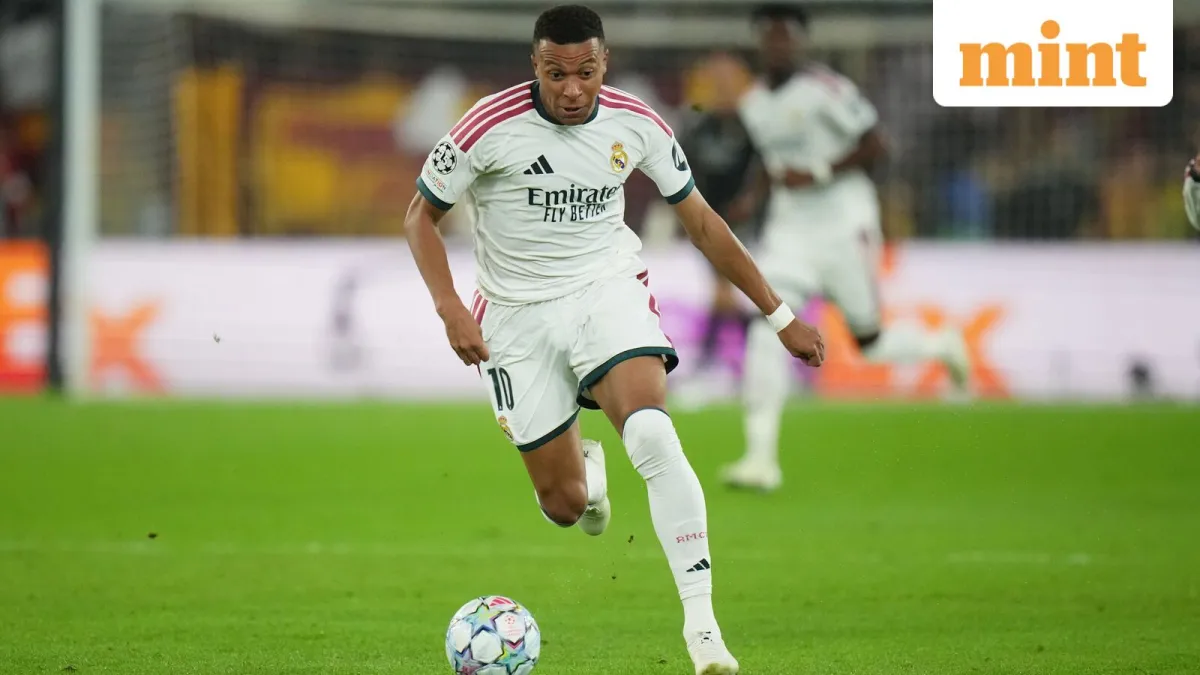
Kylian Mbappé didn’t just add another chapter to his already legendary Champions League career—he rewrote the record books. At the Stadio Olimpico on Wednesday, the 27-year-old became the youngest player in history to reach 100 appearances in the competition, eclipsing Lionel Messi’s mark by a full year. Messi had set the previous record at age 28 in a 2015 encounter against Roma, the same team Mbappé faced in Madrid’s 4-3 victory. The French forward’s achievement wasn’t just statistical; it was a statement of dominance, arriving in a match where he also scored Madrid’s first-half equalizer with his 72nd Champions League goal—a tally that now places him ahead of Raúl González in fifth position on the all-time scoring list.
Mbappé’s record-breaking performance wasn’t an isolated moment but the culmination of a season where he has been the tournament’s most lethal force. Last campaign, he led the scoring charts with 15 goals, including the second-fastest hat trick in Champions League history—a blistering three-goal burst in just 6 minutes and 42 seconds against Olympiacos. His versatility and finishing precision have made him a constant threat, whether deployed as a winger, a false nine, or, as in this match, a traditional center-forward under José Mourinho’s tactical guidance. The Frenchman’s ability to adapt his role while maintaining an elite level of consistency has been a defining trait of his Madrid tenure, a tenure that now includes another milestone: the youngest player to reach 100 appearances.
The significance of this achievement extends beyond the individual. Mbappé’s record-breaking moment arrived against Roma, a club with deep Champions League pedigree and a history of hosting some of the competition’s most iconic matches. The Stadio Olimpico, where Messi had etched his name into the record books, became the stage for Mbappé’s own legacy. The French forward’s arrival at Madrid in 2021 marked a turning point for the club, injecting youthful energy and a new dimension to their attacking arsenal. His partnership with Jude Bellingham, visible in the post-goal celebrations captured in the stands, underscores the synergy that has defined Madrid’s resurgence under Mourinho. This wasn’t just a personal triumph; it was a testament to how Mbappé’s arrival has redefined the club’s identity in Europe’s premier club competition.
For Messi, the comparison is inevitable. The Argentine’s own record at Roma in 2015 remains one of the most celebrated moments in Champions League history, a testament to his dominance during his Barcelona era. Mbappé’s achievement, however, carries a different weight—it’s the mark of a player who has transcended his early years of prodigious talent to become a consistent, world-class performer at the highest level. His ability to deliver in high-pressure moments, from the second-fastest hat trick to the record-breaking appearance, speaks to a maturity that sets him apart. As he continues to evolve, his place in the Champions League’s record books will only grow, further solidifying his status as one of the competition’s all-time greats.
The implications of Mbappé’s record are far-reaching. At 27, he has already achieved what many players dream of in their careers—dominating the Champions League at the peak of their powers. His journey, from a 17-year-old debut with Monaco to becoming Madrid’s most decorated forward, reflects a career built on relentless ambition and tactical intelligence. As the competition progresses, his influence will only deepen, whether as a goal threat, a playmaker, or a leader on the field. For now, the Stadio Olimpico will remember him as the player who didn’t just chase Messi’s record—he surpassed it, and in doing so, added another layer to his already extraordinary legacy.



