

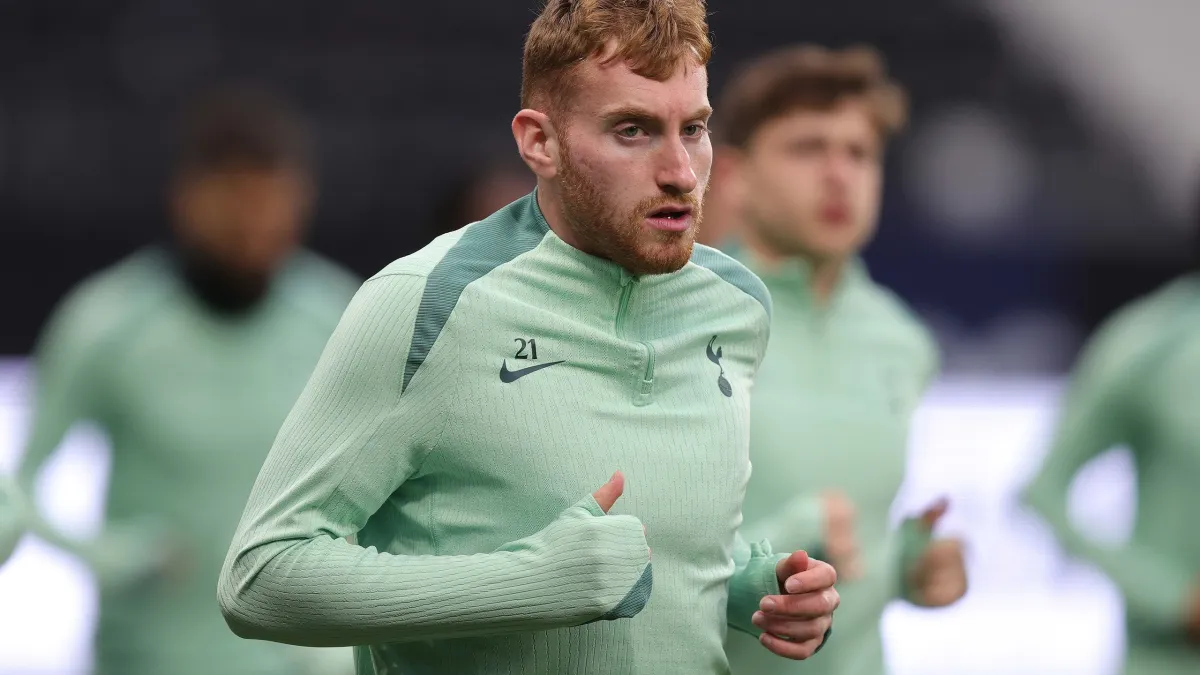
Dejan Kulusevski’s return to Tottenham Hotspur’s first team is the kind of moment that defines a season. After enduring one of the most grueling injury absences in recent Premier League history—a 17-month layoff caused by a right patella surgery and multiple setbacks—the Swedish winger is now cleared to take his place on the bench for Monday’s Premier League clash against Coventry City. Roberto De Zerbi didn’t mince words when confirming the news, describing it as ‘probably the greatest since the Everton game,’ a reference to the emotional highs that have kept Spurs fans hopeful amid a season of frustration.
The psychological weight of Kulusevski’s return cannot be overstated. The 26-year-old has been a cornerstone of Tottenham’s attacking identity, a player whose creativity and goal-involvement were among the squad’s most reliable last season. Before his injury, he ranked second in the team for goal involvements, with 15—just behind Richarlison—and his ability to create 2.45 chances, complete 1.43 dribbles, and win 4.93 duels per 90 made him the kind of player De Zerbi’s system thrives on. His absence has left a gaping hole in Spurs’ midfield and winger roles, particularly in a campaign where the club has struggled to find consistency. Even James Maddison, another key creative force, has been sidelined for extended periods, leaving De Zerbi with a depleted attacking arsenal. Kulusevski’s return, even if initially from the bench, is a reminder that the pieces De Zerbi has assembled are still there—it’s just a matter of getting them to function as a cohesive unit.
The timing of Kulusevski’s comeback is bittersweet, however. While his return is a major boost, it comes against the backdrop of another setback: Savio, the Brazilian winger who joined Spurs this summer, is now out with a muscular injury picked up during the mid-season break. The timing couldn’t be worse for De Zerbi, who had hoped to have a full complement of attacking options for the Coventry game. Savio’s absence adds another layer of complexity to a squad that has already struggled with depth in the wide areas. Kulusevski’s return, while crucial, won’t immediately solve the problem—it will simply shift the burden to other players like Lucas Bergvall, who is also expected to miss time. The challenge for De Zerbi now is to integrate Kulusevski seamlessly while managing the expectations of a fanbase that has grown increasingly impatient with the club’s lack of results.
De Zerbi’s personal investment in Kulusevski’s recovery is evident in his public statements. The Italian manager has repeatedly emphasized the human cost of the injury, describing Kulusevski as a ‘good guy’ and a ‘different player’ who deserves to be back after suffering ‘too much’ for his age and level. His decision to include Kulusevski in the squad for the Coventry game—even if only as a substitute—is a testament to the faith he places in the winger’s ability to contribute immediately. The question now is whether Kulusevski can replicate the form that made him a Premier League regular before his injury. His last competitive appearance came under Ange Postecoglou’s tenure, and since then, he has been absent during the tenures of Thomas Frank and Igor Tudor. The pressure is on for him to prove that his physical recovery has translated into tactical readiness, especially in a league where fitness and adaptability are often the difference between success and failure.
For Tottenham, Kulusevski’s return is more than just a personal milestone—it’s a potential catalyst for the club’s title ambitions. The Premier League’s competitive balance has shifted dramatically this season, with teams like Manchester City and Arsenal dominating the top spots while Tottenham languishes in the lower half of the table. The absence of key players has left Spurs vulnerable, and the return of Kulusevski, even if it’s a gradual process, could inject the momentum the club desperately needs. The challenge for De Zerbi will be to channel that momentum into results, turning the emotional high of Kulusevski’s comeback into tangible points on the board. If he succeeds, it could mark the beginning of a resurgence for a side that has been searching for its footing since the summer transfer window.



