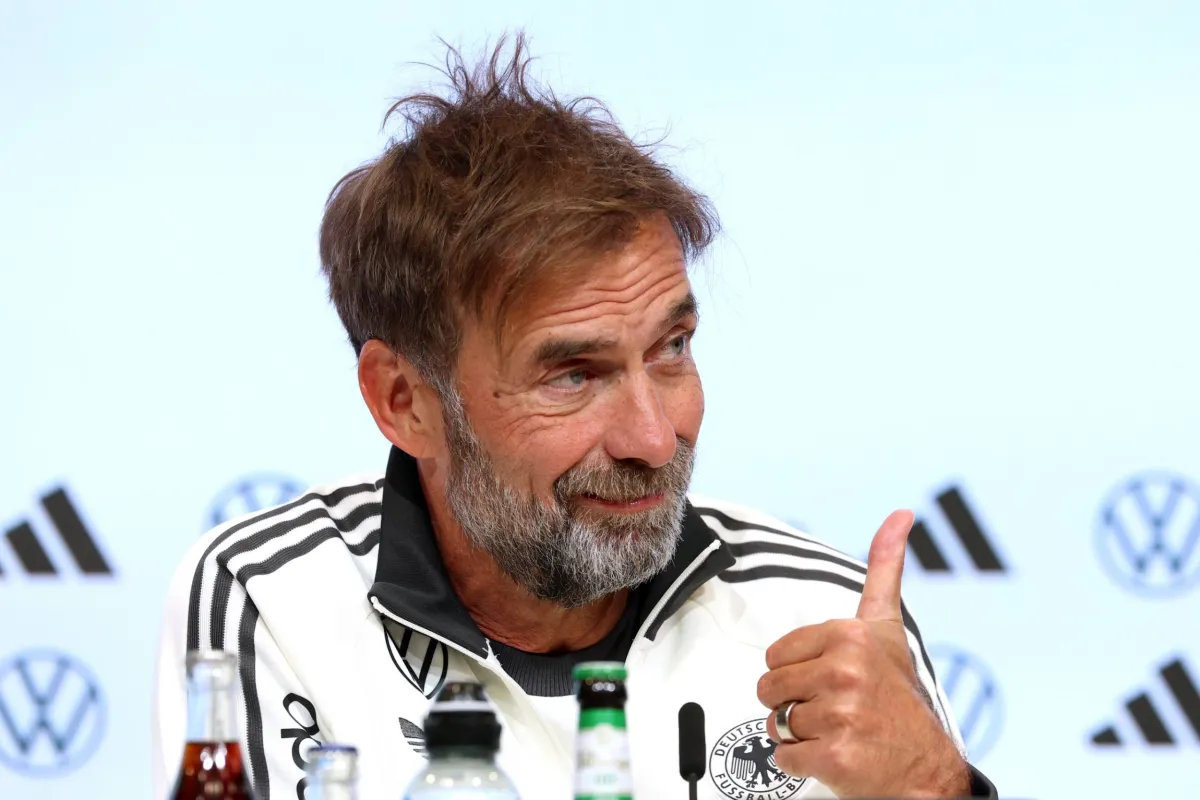
The Premier League’s verdict against Manchester City has cast a long shadow over English football, but Jurgen Klopp’s response to the ruling has done more than clarify Liverpool’s stance—it has underscored the enduring complexity of Pep Guardiola’s legacy. In a statement that avoided the defensive posturing of Manchester, Klopp’s words carried the weight of a man who has spent a decade watching Guardiola’s revolution unfold. ‘I’m far from preparing for a title or anything like that,’ he said, his focus unwavering on Liverpool’s achievements. Yet his refusal to engage with the specifics of the case—‘I don’t know the details and I’m not interested in them’—was less a dismissal than a deliberate act of separation. For Klopp, this is not a personal or tactical debate; it is a matter of principle, one that preserves the respect he has long held for Guardiola’s tactical genius, even as the club he manages now finds itself in uncharted territory.
The contrast between Klopp’s measured tone and Guardiola’s defiant public stance could not be sharper. While the Manchester manager pledged ‘total allegiance’ to Khaldoon Al Mubarak and Ferran Soriano, framing the ruling as a test of unity, Klopp’s silence on sanctions—‘I have nothing to do with it’—was a quiet assertion of Liverpool’s autonomy. His refusal to speculate about the fallout, combined with his insistence on the club’s on-pitch success, signals a deliberate strategy: to let the legal and financial battles play out without Liverpool becoming entangled in the narrative. This is not indifference; it is tactical detachment. Klopp understands that the Premier League’s ruling, while historic in its scope, does not define the game’s future. His teams have already proven they can compete without the financial firepower of their rivals, and his words today were a reminder that Liverpool’s identity is forged on the pitch, not in the boardrooms of Manchester.
The legal framework behind the ruling—nine seasons of scrutiny, allegations of financial irregularities, and a failure to cooperate—has dominated headlines, but Klopp’s response cuts deeper. His admiration for Guardiola is not performative; it is rooted in the tactical evolution of modern football. The ‘garden parade’ era, with its relentless pursuit of dominance, was built on Guardiola’s blueprint, and Klopp’s own managerial philosophy owes a debt to that same pursuit of positional intelligence. Yet where Guardiola’s City became synonymous with financial power, Klopp’s Liverpool has thrived on adaptability and resilience. The Premier League’s decision to strip titles or impose sanctions, if it comes, will test whether football’s governing bodies can separate the man from the institution. Klopp’s silence on the matter is not a rejection of Guardiola’s work; it is a recognition that the game’s future belongs to those who can innovate within the rules, not those who bend them.
The fallout from this ruling will be felt for years, but the immediate reaction from Klopp offers a crucial perspective: football’s greatest rivalries are not just about trophies or money, but about the ideas that shape the game. Guardiola’s legacy is already secure, and Klopp’s words today were a quiet affirmation that his own path—one built on tactical brilliance and emotional connection—will not be derailed by legal battles in Manchester. The Premier League’s challenge now is to ensure that the punishment fits the crime without erasing the progress that Guardiola’s City helped define. For Klopp, the message is clear: respect the past, but never let it dictate the future. And in a league where the next chapter is already being written, that distinction matters more than ever.